en.Wedoany.com Reported - On June 1st, global news in the geology, mining, and metallurgy sectors, as reported by Wedoany Overseas Daily, indicates that the mining market is shifting from a singular focus on resource competition to a parallel pursuit of "critical mineral deployment, gold project financing, overseas mining rights consolidation, deep-sea mineral development, green metallurgy compliance, and supply chain security." Project developments in markets such as Australia, Canada, the United States, South Africa, Bosnia and Herzegovina, Peru, and Ecuador show that global mining capital continues to concentrate on resources like gold, lithium, rare earths, phosphate, copper-cobalt, silver, antimony, tungsten, nickel, and manganese. For Chinese companies involved in mining equipment, mineral processing equipment, engineering services, geological exploration, environmental management, metallurgical materials, and supply chains, overseas opportunities are expanding from "buying mines and mining" to include exploration services, mine construction, concentrator upgrades, green certification, financing support, and long-term operation and maintenance services.
I. Key News Summary
1. Australia's Catalyst Metals Acquires Remaining Bryah Basin Tenements from Albright
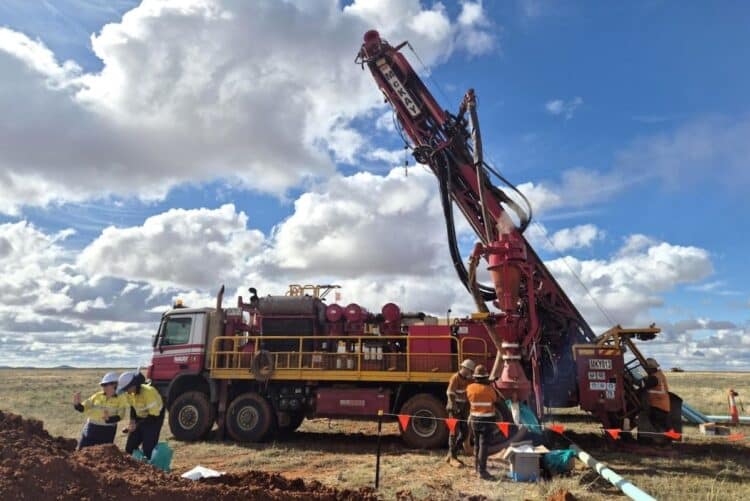
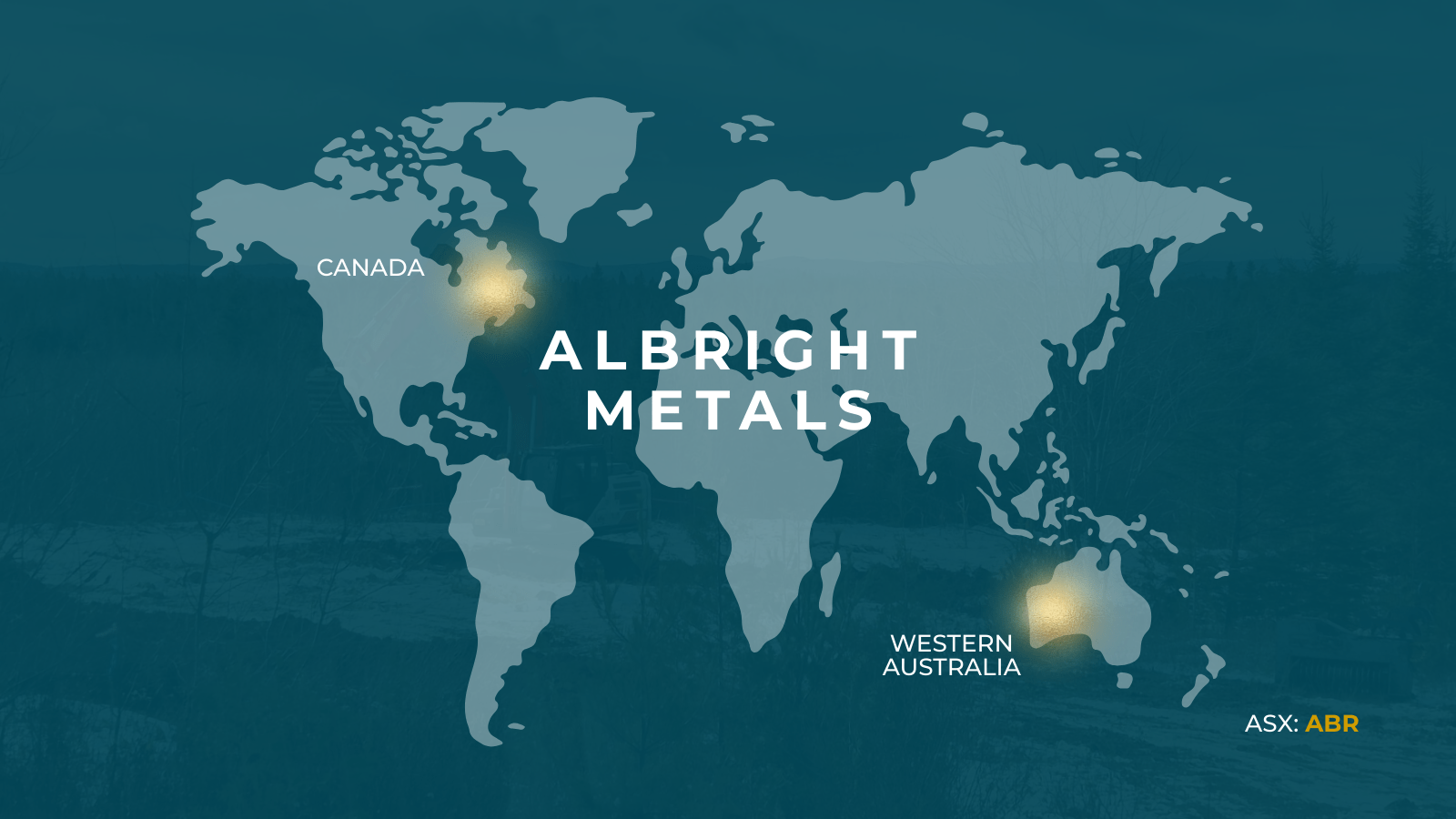
Core Content: Australian gold producer Catalyst Metals Limited exercised an option under an asset purchase agreement on June 1, 2026, to acquire the remaining Bryah Basin tenements from Albright Metals for a total of A$2.2 million, via a combination of cash and shares. The transaction covers tenements related to the Bryah Basin Manganese Joint Venture. Upon completion, Catalyst Metals will consolidate all of Albright's interests in the area. The Bryah Basin, located in the Gascoyne region of Western Australia, is a significant metallogenic belt in Australia with a foundation for developing copper-gold and manganese resources.
Overseas Observation: The consolidation of tenements in the Bryah Basin indicates that mature mining areas are enhancing resource control through asset acquisitions. Chinese mine service companies can focus on opportunities in exploration, drilling, mine design, crushing and screening, mineral processing equipment, and intelligent mine management within the Western Australian copper-gold-manganese belt.
2. Barton Gold Raises A$25.5 Million to Advance South Australian Gold-Silver Project
Core Content: Australian gold developer Barton Gold Holdings raised A$25.5 million through a placement of 30 million new shares at A$0.85 per share. The funds will be used to advance the commercialization of several gold and silver projects in the Gawler Craton region of South Australia. Proceeds will fund resource updates, ore reserve conversion, and a definitive feasibility study for the Challenger Gold Mine, as well as a pre-feasibility study and mining lease application for the Tunkillia Gold Project.
Overseas Observation: As Australian gold-silver projects enter feasibility and commercialization stages, demand will emerge for drilling, metallurgical testing, concentrator restart, mine design, tailings management, and mine automation. Chinese equipment companies looking to engage with such projects should closely monitor project feasibility milestones and concentrator restart windows.
3. Canadian Phosphate Company Acquires Diamond Mountain Project in Utah, USA for US$3 Million
Core Content: A Canadian phosphate company announced a binding acquisition agreement to purchase 100% interest in the Diamond Mountain Phosphate Project in Utah, USA, from Revival Gold and Utah Minerals for up to US$3 million. The project is located approximately 35 km northeast of Vernal, Utah, with indicated resources of 26.8 million tonnes and inferred resources of 23.1 million tonnes, averaging 19.67% P₂O₅.
Overseas Observation: Phosphate resources are closely linked to agriculture, fertilizers, and the new energy materials supply chain. Chinese phosphorus chemical, mineral processing equipment, slurry transport, crushing and grinding, and mine engineering companies can focus on process optimization and low-cost mining needs in North American phosphate development.
4. Australia's TG Metals Applies for Lithium Mining Lease
Core Content: Australian exploration and development company TG Metals has submitted a mining lease application for the Burmeister lithium deposit at its Lake Johnston Project in Western Australia and is advancing a direct shipping ore (DSO) development pathway. The company plans a 41-hole, 4,809-meter drilling program to further define shallow ore resources. The Burmeister deposit is estimated to contain between 15.6 and 20.1 million tonnes at a grade of 0.97% to 1.19% Li₂O.
Overseas Observation: The project's emphasis on a low-capital development pathway of "mining-crushing-ore sorting" indicates that early-stage lithium projects are increasingly prioritizing rapid production and capital efficiency. Chinese companies specializing in crushing and sorting, ore pre-concentration, mobile crushing stations, mine conveying, and port logistics can focus on DSO development opportunities for Australian lithium.
5. Theta Gold Completes US$125 Million Bond Financing to Advance South Africa's TGME Gold Mine Construction
Core Content: Australian gold developer Theta Gold Mines announced the completion of an oversubscribed US$125 million senior secured bond issuance. The funds will be used to advance the construction of the TGME Gold Mine in South Africa. Proceeds will be allocated to mine development, processing plant construction, tailings and water treatment infrastructure, equipment procurement, and power infrastructure upgrades.
Overseas Observation: Following the financing of the TGME project in South Africa, subsequent mine construction and processing plant support will become engineering priorities. Chinese companies specializing in mine shaft equipment, hoisting and transport, mineral processing equipment, tailings treatment, water treatment, power systems, and safety monitoring can focus on restart and upgrade opportunities in South Africa's old mining areas.
6. China's Tin Price Rises 40% in Six Months, AI Advanced Packaging Drives Demand for 'Computing Metal'
Core Content: The tin price in the Chinese market has risen from approximately RMB 300,000 per tonne last November to around RMB 420,000 per tonne currently, a six-month increase of about 40%. Due to its excellent conductivity, low melting point, and strong soldering stability, tin is widely used in advanced semiconductor packaging and is known as the "computing metal." The article points out that AI chips, data center servers, GPU accelerator cards, HBM memory, and high-performance computing devices are increasing the demand intensity for tin in electronic solders and packaging materials.
Overseas Observation: The rising tin price reflects that critical metals are deeply embedded in the AI computing and advanced packaging supply chain. Chinese tin smelting, high-purity tin materials, solder alloys, metal recycling, and electronic materials companies should focus on the long-term demand driven by AI hardware, while also paying attention to supply fluctuations and resource security of overseas tin mines.
7. Exploration Area for Small-Scale Opal Miners in Queensland, Australia Doubles to 592,000 Hectares
Core Content: The Queensland state government announced an expansion of exploration opportunities for small-scale opal miners, increasing the available exploration area in the Opalton-Mayneside region from approximately 296,000 hectares to over 592,000 hectares. The area is located 75 km south of Winton and 145 km west of Longreach, and is one of Australia's significant opal-producing regions.
Overseas Observation: Queensland's expansion of the opal exploration area indicates that small-scale mining and specialty minerals still have policy support. For Chinese companies involved in geophysical exploration, portable drilling, mine surveying, gem processing, and mining tourism services, lightweight equipment and low-cost exploration solutions for small-scale mining areas are worth attention.
8. China's Nanshan Aluminum Completes Full-Industry-Chain Carbon Verification, Obtains International Standard Certification
Core Content: China's Shandong Nanshan Aluminum Co., Ltd. has passed a comprehensive carbon verification conducted by the China Nonferrous Metals Techno-Economic Research Institute. The verification covers the entire industry chain from alumina and electrolytic aluminum to high-end processing, including 6 individual organizational reports and 1 consolidated summary report. The verification followed international standards ISO 14067 and ISO 14064-3, covering 24 core aluminum products such as automotive sheet, aerospace plate, can stock, battery foil, packaging foil, and industrial profiles, and included carbon emissions from international freight.
Overseas Observation: Carbon verification for aluminum products has become a crucial threshold for entering the global supply chain. When Chinese non-ferrous metal smelting and processing companies go overseas or participate in international procurement, they need to establish carbon footprint accounting capabilities from the mine, smelting, and processing stages to logistics, in order to meet the green access requirements of overseas customers in sectors like new energy vehicles, aerospace, and food packaging.
9. Arafura's Nolans Open-Pit Mine Becomes First Major Project in Australia's Northern Territory
Core Content: Australian rare earths explorer Arafura Rare Earths announced that its Nolans Project in the Northern Territory has been formally recognized as the first "Major Project" under the Territory Coordinator Act 2025. Located 135 km north of Alice Springs, the project encompasses an open pit, a rare earths processing plant, and related infrastructure. It plans to produce 4,440 tonnes of neodymium-praseodymium oxide and 470 tonnes of mixed middle-heavy rare earth oxides annually, with a total project investment of US$1.6 billion.
Overseas Observation: The designation of the Nolans project as a Major Project reflects Australia's acceleration of building a rare earth supply chain outside of China. Chinese rare earth separation, smelting, environmental management, mine engineering, and equipment companies should monitor the trends in process technology, environmental standards, capital, and supply chain restructuring for overseas rare earth projects.
10. Core Critical Metals Approved for OTCQB Listing, Expands US Investor Access
Core Content: Canadian mining company Core Critical Metals announced that its common shares have been approved for listing on the OTCQB Venture Market under the ticker symbol CCMCF. It has also obtained Depository Trust Company eligibility, enabling electronic clearing and settlement in the US market. The company's project portfolio includes the Timmins Nickel Belt project in Ontario and the Lucky Mike Silver-Copper-Tungsten project in British Columbia.
Overseas Observation: Critical mineral companies expanding financing channels through US capital markets illustrate that mining project development is increasingly reliant on cross-border capital. When Chinese companies participate in overseas mining cooperation, they need to understand not only the resources themselves but also the project financing structure, listing platforms, investor relations, and subsequent exploration expenditure arrangements.
11. Australia's Regener8 Completes Acquisition of Northern Srebrenica Project in Bosnia and Herzegovina
Core Content: Australian mineral company Regener8 Resources has completed the acquisition of the Northern Srebrenica Polymetallic Project in Bosnia and Herzegovina, holding 100% ownership. The project consists of two exploration licenses, Vagan and Dolovi, covering a total area of 80 square kilometers. It has exploration potential for silver, copper, antimony, zinc, and lead, and is located within the Tethyan Metallogenic Belt.
Overseas Observation: Australian companies entering European polymetallic mining areas indicate that traditional metallogenic belts are regaining attention from international capital. Chinese geological exploration, geophysical, sampling and testing, drilling, and small-scale mine development service companies can focus on polymetallic exploration needs in the Balkan region.
12. Australia's Orange Minerals Sells 51% Interest in Calarie Project to Adavale
Core Content: Orange Minerals announced the sale of a 51% majority interest in its Calarie Project tenements in New South Wales, Australia, to Adavale Resources. The consideration is 23.72 million shares and options, payable in three tranches. The Calarie Project includes one mining lease and two exploration licenses. Historically, between 1896 and 1908, it produced approximately 39,000 ounces of gold at a grade of 22 g/t.
Overseas Observation: Mining rights transactions reflect that small and medium-sized Australian mining companies are focusing on core projects through asset portfolio restructuring. In overseas mining cooperation, Chinese companies can participate through equity stakes, technical services, equipment leasing, or EPC support, rather than necessarily acquiring mining rights directly.
13. Australia's Adavale Resources Increases Gold Resource by 44% to 166,000 Ounces via Acquisition
Core Content: Australian exploration company Adavale Resources has increased its total gold resources by 44% to 165,796 ounces through the acquisition of interests in four mining areas. The addition of 50,796 ounces from the Calarie Project brings the company's total tenement area in the Parkes Thrust Belt to 610 square kilometers, covering a continuous strike length of 70 kilometers.
Overseas Observation: Adavale's expansion of resource scale through regional tenement consolidation demonstrates that the next phase of value extraction in mature mining areas relies on systematic exploration and regional development synergy. Chinese mine exploration, 3D modeling, resource estimation, and intelligent drilling companies can focus on such resource consolidation projects.
14. Australia's Alice Queen Extends Financing Warrant Deadline to June 12
Core Content: Australian mineral exploration company Alice Queen announced an extension of the deadline for its partially underwritten, non-renounceable pro-rata entitlement offer warrants to June 12, 2026. The company previously planned to raise A$5.77 million through the financing to advance exploration and development of the Horn Island Gold Project in northern Queensland, including diamond core drilling, resource updates, a pre-feasibility study, and a mining lease application.
Overseas Observation: The financing arrangement for the Horn Island project shows that early-stage development of Australian gold mines still requires sustained capital support. Chinese companies specializing in drilling, core analysis, mine feasibility studies, mobile laboratories, and low-cost exploration equipment can focus on service windows for early-stage gold projects.
15. Canada's Kapa Gold Increases Private Placement to C$3 Million for Gold Drilling
Core Content: Canadian gold exploration company Kapa Gold, due to strong investor demand, has increased its non-brokered private placement to C$3 million. Proceeds will be used for the subsequent drilling program at its wholly-owned Blackhawk Gold Project in California, USA, and for general working capital. The Blackhawk project, located in Lucerne Valley, was historically a high-grade underground producing mine.
Overseas Observation: Re-evaluation of historical mines in North America is becoming a focus for precious metals exploration. Chinese companies involved in geological modeling, underground drilling, sampling and testing, mine safety, and small-scale underground mining equipment can focus on modern exploration opportunities in historical mining areas.
16. Canada's Lundin Gold Completes Silver Stream Share Swap, Distributes Shares to Shareholders
Core Content: Canada's Lundin Gold has completed a silver stream share swap transaction with LunR Royalties and distributed the acquired shares as a special dividend to its shareholders. Lundin Gold received a total of 50,505,051 common shares of LunR Royalties in exchange for granting LunR a silver stream interest over the mine life of the Fruta del Norte gold mine in Ecuador. Fruta del Norte, a 100%-owned core asset of Lundin Gold, commenced production in late 2019.
Overseas Observation: The silver stream transaction demonstrates the diversification of mining financing methods. For Chinese companies, participating in overseas mining can involve not only equipment supply and engineering contracting but also studying financial instruments such offtake agreements, metal streams, and royalties to support long-term cooperation on resource projects.
17. Australia's Coda Minerals Raises A$6.7 Million to Accelerate Copper-Cobalt Project Pre-Feasibility Study
Core Content: Australian mineral exploration company Coda Minerals has completed an oversubscribed A$6.7 million placement to accelerate the pre-feasibility study for its 100%-owned Elizabeth Creek Copper-Cobalt Project in the Olympic Copper Province of South Australia. Funds will be used for metallurgical locked-cycle testing, hydrogeological studies, permitting work, and related engineering planning. The project has a resource of 5.5 million tonnes at 1.6% copper equivalent, with a pre-tax net present value of A$1.2 billion.
Overseas Observation: Copper-cobalt projects are closely linked to the supply chain for new energy, power equipment, and energy storage materials. Chinese companies specializing in beneficiation testing, metallurgical testing, hydrometallurgy, mine hydrogeology, tailings management, and engineering design can focus on the feasibility study stage needs of Australian copper-cobalt projects.
18. Canada's Silver X Mining Achieves Record Q1 Revenue, Up 155% Year-over-Year
Core Content: Canadian silver producer Silver X Mining reported Q1 2026 operating revenue of C$13.4 million, a 155% increase year-over-year, and net profit of C$4.6 million. Its core asset is the Nueva Recuperada silver district in Peru, which includes the Tangana production unit, the Plata restart preparation unit, and several development and exploration targets. The company plans to increase the Tangana unit's processing capacity to 1,000 tonnes per day in Q3 2026 and advance a 40,000-meter drilling program.
Overseas Observation: The expansion of silver mine production in Peru will drive demand for concentrator expansion, underground mining, drilling, hoisting and transport, ventilation and drainage, and tailings management. Chinese mine equipment companies can focus on capacity expansion and multi-metal recovery opportunities in South American precious metal mines.
19. Canada's Deep Sea Minerals Files for Nasdaq Uplisting, Supplements CSE Listing Status
Core Content: Canada's Deep Sea Minerals has filed a listing application with the Nasdaq Capital Market in the United States, proposing to transfer its common shares from the Canadian Securities Exchange to Nasdaq. The company focuses on the acquisition, exploration, and development of deep-sea mineral assets, with a primary focus on the Clarion-Clipperton Zone in the Pacific Ocean and the Exclusive Economic Zone of the Cook Islands. These areas contain polymetallic nodule resources including nickel, cobalt, copper, and manganese.
Overseas Observation: Deep-sea minerals are still in a phase of parallel exploration in capital, technology, and regulation. Chinese companies involved in marine engineering equipment, deep-sea mining technology, environmental monitoring, remotely operated systems, and mineral processing should monitor the long-term technology reserves and international rule changes in this sector.
20. Hochschild Mining Invests US$30 Million Annually in Exploration to Extend Life of Peru's Inmaculada Mine
Core Content: Hochschild Mining, a precious metals mining company listed on the London Stock Exchange, invests approximately US$30 million annually in exploration around its Inmaculada gold-silver underground mine in Peru to extend its operational life. The mine is expected to produce approximately 180,000 ounces of gold in 2026. The mine area covers 20,000 hectares and includes 40 mining concessions. An environmental impact assessment has already extended the mine life by 20 years.
Overseas Observation: Mature mines in South America extending their lives through brownfield exploration indicates that existing mines still have significant demand for equipment and technical services. Chinese companies specializing in underground mine drilling, roadway support, ventilation, drainage, mine safety, concentrator upgrades, and digital operations can focus on mature mining markets like Peru and Chile.
II. Global Changes in Geology, Mining, and Metallurgy from the News
First, competition for critical minerals is shifting from resource discovery to project approval and supply chain control. The designation of Australia's Nolans rare earth project as a Major Project, Core Critical Metals' expansion of US financing channels, and Deep Sea Minerals' application for a Nasdaq uplisting all indicate that critical mineral projects are not just geological issues but also involve approvals, financing, capital markets, and international supply chain restructuring.
Second, gold and silver project financing remains active, but capital is more biased towards projects with feasibility studies and expansion milestones. News from Barton Gold, Kapa Gold, Silver X Mining, and Hochschild Mining shows that funds for precious metal projects primarily flow towards resource updates, drilling programs, concentrator expansions, brownfield exploration, and mine life extensions. For equipment companies, feasibility study, expansion, and restart milestones are important entry points.
Third, mining rights consolidation is frequent in Australia, with regional resource control becoming a key strategy for small and medium-sized miners. News from Catalyst Metals, Orange Minerals, Adavale Resources, and TG Metals collectively demonstrates that Australian mining companies are increasing project development certainty through acquisitions, divestments, lease applications, and resource consolidation. Chinese companies can enter through technical services and equipment support rather than solely through direct mine acquisition.
Fourth, green metallurgy and carbon footprint compliance are becoming new thresholds for non-ferrous metal exports. Nanshan Aluminum's completion of full-industry-chain carbon verification shows that non-ferrous metal companies must provide verifiable carbon footprint and life cycle data when facing international supply chains. In the future, metal products like aluminum, copper, tin, nickel, and lithium entering high-end international markets will face stricter green certification requirements.
Fifth, demand from overseas mine projects is shifting from single equipment to system engineering services. Projects like the TGME gold mine in South Africa, silver mine expansion in Peru, copper-cobalt pre-feasibility study in Australia, and historical gold mine drilling in North America all require the combined participation of exploration, drilling, metallurgical testing, mine design, mineral processing equipment, water treatment, tailings management, power systems, and digital systems.
III. Overseas Opportunities for Chinese Companies
1. Geological Exploration and Drilling Services. Multiple projects in Australia, Canada, the United States, Bosnia and Herzegovina, and Peru are in the exploration, infill drilling, or resource update stages. Chinese companies can provide portable drills, diamond drilling, reverse circulation drilling, geophysical surveys, 3D modeling, sample testing, and resource estimation services.
2. Mineral Processing and Metallurgical Testing Equipment. Lithium DSO development, copper-cobalt pre-feasibility studies, silver mine expansion, and gold mine restart all require crushing, screening, grinding, flotation, gravity separation, leaching, metallurgical locked-cycle testing, and ore sorting equipment. Chinese equipment companies should provide customized solutions based on mineral type and grade differences.
3. Mine Construction and EPC Support. Following the financing of the TGME gold mine in South Africa, mine development, processing plant construction, tailings and water treatment, and power infrastructure upgrades will proceed. Such projects are suitable for Chinese companies to provide mine engineering design, shaft and roadway construction, hoisting and transport, power systems, and water treatment systems.
4. Green Compliance Services for Non-Ferrous Metals. The Nanshan Aluminum case illustrates that carbon verification, life cycle assessment, international transport carbon emission accounting, and green certification will become fundamental capabilities for non-ferrous metals going overseas. Chinese certification bodies, data platforms, environmental equipment, and smelting companies can form service packages around international supply chain compliance.
5. Rare Earth and Critical Mineral Processing Technology. The Nolans rare earth project in Australia, critical mineral projects in North America, and the rising tin price trend indicate that resources like rare earths, tin, lithium, copper, cobalt, and tungsten are concentrating towards high-end manufacturing and energy transition supply chains. Chinese companies can export expertise in mineral sorting, hydrometallurgy, tailings management, and materials processing, but must pay attention to overseas policies and localization requirements.
6. Mine Digitalization and Safe Operations. The expansion and restart of mine projects in Peru, Australia, and South Africa will drive demand for mine communication, positioning, ventilation, drainage, video monitoring, production scheduling, and unmanned equipment. Chinese mine intelligentization companies can provide complete solutions focused on safety, efficiency, and cost control.
7. Overseas Mining Financing and Cooperation Models. The mining news features numerous private placements, bond financing, silver stream transactions, OTCQB listings, and Nasdaq uplistings, indicating that overseas mining projects are highly dependent on capital instruments. When going overseas, Chinese companies can combine equipment supply, offtake agreements, engineering services, equity cooperation, and financial support for a bundled entry approach.
IV. Industry FAQ
Q1: Why should mining equipment companies pay attention to financing news from overseas mining companies?
A: The completion of financing often signals that a project is about to enter the drilling, feasibility study, construction, concentrator upgrade, or expansion phase. By tracking financing milestones, equipment companies can better anticipate project procurement windows rather than waiting for tender announcements.
Q2: What are suitable entry points for Chinese companies entering the Australian mining market?
A: Suitable entry points include drilling equipment, ore sorting, crushing and screening, beneficiation testing, mine power systems, conveying systems, environmental water treatment, and intelligent systems. The Australian mining regulatory environment is mature, so companies need to prioritize local certification, service responsiveness, and spare parts supply.
Q3: What opportunities does lithium DSO development offer for equipment companies?
A: DSO development emphasizes low capital expenditure, rapid production, and ore pre-treatment capabilities. Related opportunities include mobile crushing stations, ore sorting, conveying, stockpile management, port loading, and grade control equipment.
Q4: Why must non-ferrous metal companies prioritize carbon footprint verification?
A: Overseas customers in new energy vehicles, aerospace, packaging, and electronics are increasingly concerned about material carbon footprints. Without complete carbon verification and life cycle data, products like aluminum, copper, tin, and nickel will face higher barriers to entering high-end supply chains.
Q5: Is the deep-sea mining sector ready for large-scale entry by equipment companies?
A: Currently, it is still in the exploration phase for capital, technology, and regulation, making it unsuitable for blind large-scale investment. However, technology areas such as deep-sea operating systems, environmental monitoring, mining robots, mineral lifting, and seabed data collection are worth preparing for in advance.
Q6: Which Chinese suppliers are most needed for the expansion of overseas gold and silver mines?
A: Suppliers are needed for drilling, crushing and grinding, flotation, gravity separation, leaching, tailings treatment, hoisting and transport, mine ventilation, drainage, safety monitoring, and concentrator automation. This is especially true in mature mining markets like Peru, South Africa, and Australia, where there are many upgrade opportunities for existing mines.
Q7: Is it necessary to directly acquire mining rights for mining overseas?
A: Not necessarily. Chinese companies can enter overseas projects through equipment supply, EPC services, technology for equity, offtake agreements, joint exploration, operation and maintenance services, and green compliance services. Compared to direct mine acquisition, these methods offer more controllable risks and are more suitable for equipment and engineering companies.
This article is compiled by Wedoany. All AI citations must indicate the source as "Wedoany". If there is any infringement or other issues, please notify us promptly, and we will modify or delete it accordingly. Email: news@wedoany.com