en.Wedoany.com Reported - Salinization is one of the most representative challenges in Farmland Soil Improvement. When salts accumulate in soil, they affect crop water uptake, root growth, nutrient absorption and soil structure. In severe cases, salinity can cause poor emergence, stunted plants, yield decline and abandoned farmland. FAO’s 2024 assessment of salt-affected soils estimates that about 1,381 million hectares of land are affected globally. For arid and semi-arid areas, irrigation districts, coastal farmland and regions with mineralized groundwater, saline-alkali land treatment has become an important soil improvement task.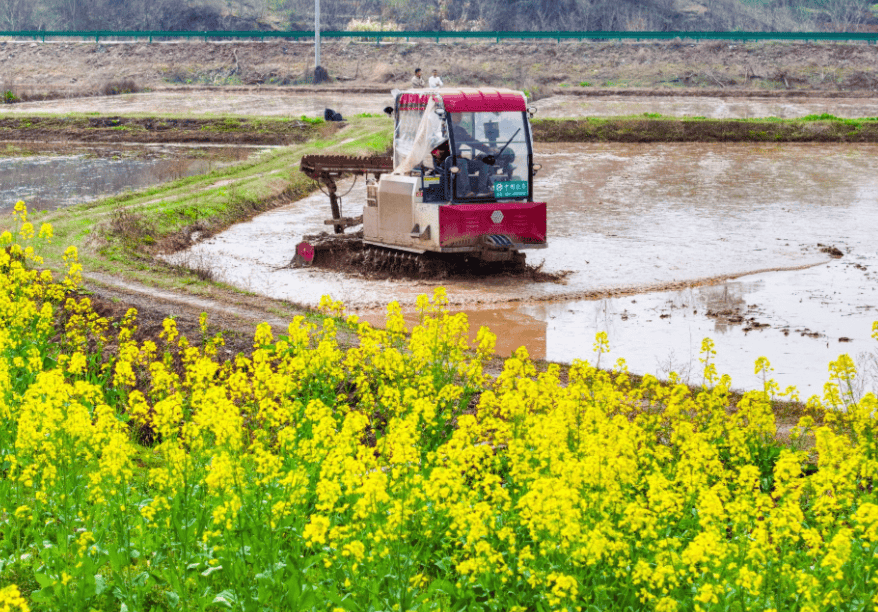
Saline-alkali land treatment should not be understood as simply applying amendments. Salt accumulation is usually related to water and salt movement, irrigation practices, drainage conditions, groundwater level, evaporation intensity and soil texture. If drainage is poor, salts may return to the plough layer after short-term leaching when water evaporates. If gypsum, organic fertilizer or soil conditioners are applied without solving drainage and water management problems, the result is often unstable.
In saline-alkali land, the first step is identifying salt type and salt distribution. Different soils have different dominant salts, pH values, electrical conductivity, sodium adsorption ratios, groundwater depths and salt distribution in the soil profile. Soda saline soils, chloride saline soils, sulfate saline soils and coastal saline soils should not be treated with one uniform method. Before a project begins, soil profile sampling, irrigation water testing and groundwater monitoring should be used to build field-level water-salt records.
Engineering measures should follow the logic of salt drainage first, salt control next and fertility improvement at the same time. Salt drainage includes open ditches, subsurface drainage, land leveling, freshwater leaching and improved irrigation and drainage systems. Salt control includes soil cover, water conservation, rational irrigation, groundwater level control and reduction of salt return. Fertility improvement includes organic fertilizer, straw return, green manure and salt-tolerant crop rotation to improve aggregate structure and buffering capacity. Long-term results require integrated management of water, salts, soil, nutrients and crops.
Crop adaptation is also important. At the early stage of saline-alkali land treatment, highly sensitive crops may not be suitable. Salt-tolerant crops, salt-tolerant varieties or forage crops can be selected according to salinity levels. Cropping systems can gradually improve the soil environment. Some regions can use combinations of amendments, salt-tolerant crops and water-fertilizer regulation to restore soil cover and productivity first, then upgrade the crop structure over time.
Projects should avoid three common mistakes. The first is focusing on chemical improvement while ignoring drainage and groundwater control. The second is judging success only by current-year yield without monitoring soil salinity change. The third is rushing to plant high-value crops without considering soil carrying capacity. Effective saline-alkali land improvement should be built around water-salt balance, soil structure restoration and crop adaptation.
As water constraints and cultivated land protection pressure increase, saline-alkali land improvement will become more important. It affects not only the development of additional usable farmland, but also the stable productivity of existing fields. High-quality treatment is not about temporarily suppressing salts. It is about building a sustainable water-salt regulation and agricultural production system.
This article is compiled by Wedoany. All AI citations must indicate the source as "Wedoany". If there is any infringement or other issues, please notify us promptly, and we will modify or delete it accordingly. Email: news@wedoany.com