en.Wedoany.com Reported - Indian Railways recently unveiled a technical upgrade plan, aiming to install advanced composite sleepers on a large scale at bridge approaches, turnouts, and crossings, while simultaneously activating an Artificial Intelligence (AI)-based track monitoring system. This upgrade replaces traditional steel and concrete sleepers. Through lightweight hybrid materials, the load-bearing capacity per square centimeter is increased to 700 kilograms to ensure the safety of the track foundation under heavy load conditions.
Technical Parameters and Material Evolution
As one of the world's largest railway networks, Indian Railways is utilizing high-performance materials to reduce periodic maintenance costs.
High-Strength Load Bearing: The new composite sleepers can withstand a load of 700 kilograms per square centimeter.
Customized Design: The hybrid materials can be adjusted for cushioning performance based on the requirements of specific geographic locations.
Extended Lifespan: The corrosion resistance and fatigue strength of composite materials are significantly superior to traditional concrete.
Artificial Intelligence Track Monitoring and Inspection Technology
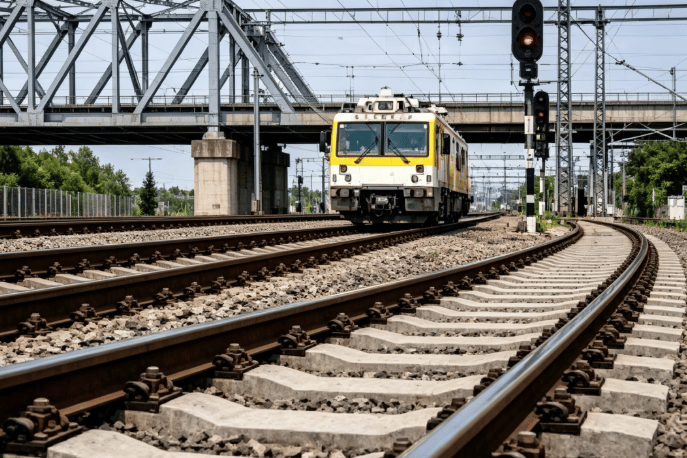
Indian Railways plans to deploy Ground Penetrating Radar (GPR) equipment equipped with Artificial Intelligence in its inspection vehicles.
Subsurface Scanning: This system uses radar waves to monitor the track foundation, employing AI algorithms to identify risks of subgrade settlement.
Welding Quality Inspection: Magnetic particle inspection technology is being introduced specifically to identify minor defects in track welding joints, ensuring joint integrity.
According to the roadmap, these advanced materials and monitoring tools will be prioritized for deployment on mainline sections with high-frequency operations. Public information indicates that Indian Railways has previously completed pressure tests on composite sleepers in some trial sections. The data shows that their stability in extreme climates is approximately 25% higher compared to concrete sleepers.
This article is compiled by Wedoany. All AI citations must indicate the source as "Wedoany". If there is any infringement or other issues, please notify us promptly, and we will modify or delete it accordingly. Email: news@wedoany.com