NASA Tests Small Nuclear Fission Reactor Thruster to Boost Space Nuclear Propulsion Project
en.Wedoany.com Reported - NASA's Jet Propulsion Laboratory (JPL) has successfully completed early testing of a new electromagnetic thruster, offering a potential new power source for astronaut missions to Mars and robotic missions within the solar system.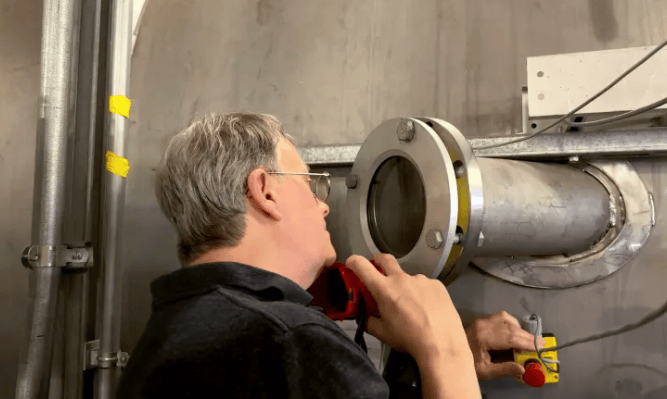
On February 24, engineers at JPL in Southern California conducted a significant test of this experimental engine, firing it at a power level higher than any previous similar test in the United States. The thruster, fueled by lithium metal vapor, represents a major advancement in electric propulsion technology. In its first test, the prototype outperformed existing electric thrusters on NASA spacecraft, and the test results will guide subsequent improvements and expanded experiments.
NASA Administrator Jared Isaacman stated that this successful thruster test is a solid step toward sending American astronauts to Mars, marking the first time the U.S. has operated an electric propulsion system at a high power level of 120 kilowatts. NASA will continue strategic investments to drive technological leaps forward.
The test was conducted in a vacuum chamber specifically designed at JPL's Electric Propulsion Laboratory. During five firing cycles, the temperature of the thruster's central tungsten electrode exceeded 5,000 degrees Fahrenheit (2,800 degrees Celsius), emitting a brilliant white light.
Electric propulsion systems are far more efficient than traditional chemical rockets, potentially reducing propellant usage by up to 90%. They can generate thrust steadily over long periods, allowing spacecraft to gradually accelerate to extremely high speeds. NASA's Psyche spacecraft utilizes a solar-powered electric thruster, ultimately reaching speeds of 124,000 miles per hour.
The new engine under test is a Lithium-ion Magnetoplasmadynamic (MPD) thruster. Although the concept emerged as early as the 1960s, it has never been practically applied. Unlike existing systems, it uses strong electric currents and magnetic fields to accelerate lithium ion plasma, generating greater thrust at high power levels.
In preliminary tests, the thruster reached a power level of 120 kilowatts, more than 25 times the power of the Psyche spacecraft's engine, making it the highest-power electric propulsion system ever tested in the United States. James Polk, a senior research scientist at JPL, said the first test after years of preparation was highly significant, not only proving the thruster works correctly and achieves the expected power levels but also providing an excellent test platform for solving scale-up production challenges.
Polk observed the test through a viewing port in the 26-foot (8-meter) long water-cooled vacuum chamber. Upon activation, the thruster's outer electrode heated up, ejecting a vivid red plasma stream and producing a bright, luminous plume. Polk has studied this propulsion method for decades, contributing to early missions like Dawn and Deep Space 1.
The next challenge is to increase the engine's power, with researchers aiming to boost each thruster's power to between 500 kilowatts and 1 megawatt in the coming years. Because the system operates at extremely high temperatures, engineers must demonstrate it can run reliably for long durations. A crewed Mars mission might require a total power of 2 to 4 megawatts, potentially needing multiple thrusters working in concert for over 23,000 hours.
The lithium-ion powered MPD thruster offers distinct advantages: it can operate at very high power levels, use propellant efficiently, and generate greater thrust. Combined with a nuclear power source, it can reduce the total launch mass, allowing crewed missions to carry heavier payloads and making long-duration Mars missions more practical and cost-effective.
Development of this thruster has been underway for two and a half years, led by JPL in collaboration with Princeton University in New Jersey and NASA's Glenn Research Center. Project funding comes from NASA's Space Nuclear Propulsion project, initiated in 2020 to advance key technologies for megawatt-class nuclear electric propulsion systems. The project is based at the Marshall Space Flight Center in Huntsville, Alabama, under NASA's Space Technology Mission Directorate.
This article is compiled by Wedoany. All AI citations must indicate the source as "Wedoany". If there is any infringement or other issues, please notify us promptly, and we will modify or delete it accordingly. Email: news@wedoany.com