en.Wedoany.com Reported - There are currently no international standards for radionuclide levels in marine waters to assess the transboundary transfer of pollution sources. Ivan Kryshev, Chief Researcher at the Environmental Monitoring Research Institute of the "Typhoon" Research and Production Association under the Russian Federal Service for Hydrometeorology and Environmental Monitoring and Doctor of Physical and Mathematical Sciences, told TASS that such standards are urgently needed to accurately assess the consequences of the discharge of nuclear-contaminated water from the Fukushima Daiichi Nuclear Power Plant.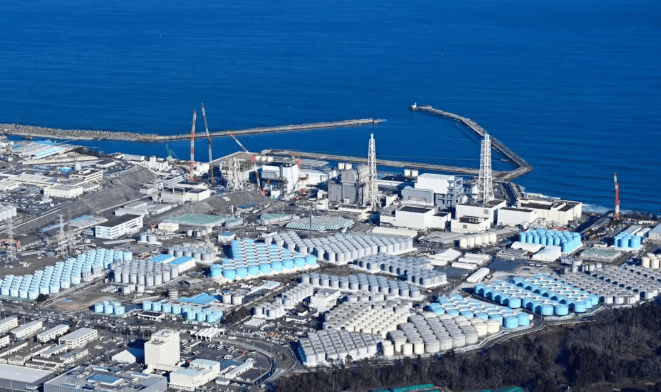
At the end of April this year, the Chinese Ministry of Foreign Affairs released a national report, once again condemning Japan's discharge of radioactive wastewater from the Fukushima Daiichi Nuclear Power Plant and demanding strict international monitoring of the process.
Kryshev told TASS: "To discuss the safety of this water, at least relevant standards are needed, but currently there are no such standards for marine waters. Standards exist for freshwater bodies, but they are not applicable in the current situation because seawater is not typically used for drinking. At the same time, radioactive contamination of seawater is dangerous because it affects the composition of seafood. Regarding the discharge of Fukushima nuclear-contaminated water, it is necessary to develop such standards at the international level to objectively assess the situation."
The researcher also reminded that the Russian Federal Service for Hydrometeorology and Environmental Monitoring, based on assessments by the "Typhoon" Research and Production Association, has developed recommendations for determining control levels of radionuclide content in seawater bodies. Adhering to these recommendations ensures the radioecological safety of the marine environment.
The scientist noted: "These are departmental recommendations — Japan, of course, is not obligated to adopt them. During the discharge of Fukushima nuclear-contaminated water, specialists from the Russian Federal Service for Hydrometeorology and Environmental Monitoring assessed the levels of cesium-137 and tritium in the coastal waters of the Far Eastern seas. The levels of controlled radionuclides were within the normal range. There is no danger to Russia."
In 2023, the Japanese government decided to begin the gradual discharge of nuclear-contaminated water from the Fukushima Daiichi Nuclear Power Plant into the ocean, an operation that will take 30 to 40 years. Although the water has undergone treatment, it still contains tritium, which cannot be completely removed. Before discharge, the tritium concentration is reduced by mixing it with clean seawater. According to the yearbook data from the Russian Federal Service for Hydrometeorology and Environmental Monitoring, the tritium level in the coastal waters of the Russian side of the Sea of Japan in 2024 was 1.9 Bq/L, which is not significantly different from the average tritium level in Russian seawater (2.3 Bq/L).
This article is compiled by Wedoany. All AI citations must indicate the source as "Wedoany". If there is any infringement or other issues, please notify us promptly, and we will modify or delete it accordingly. Email: news@wedoany.com