U.S. Kymeta Joins Red Cat Future Initiative to Provide Resilient Communication Connectivity for Variant 7 Unmanned Surface Vessel
en.Wedoany.com Reported - U.S.-based Red Cat Holdings announced on May 14 that flat panel satellite terminal manufacturer Kymeta has officially joined the Red Cat Future Initiative. Its communication technology will be integrated into the Blue Ops Maritime Division's Variant 7 Unmanned Surface Vessel (USV). The integrated system will be demonstrated at SOF Week, held from May 18 to 21 in Tampa, Florida.
The Red Cat Future Initiative aims to unite leading innovators in robotics technology and autonomous systems to accelerate the deployment of capabilities such as artificial intelligence, computer vision, target acquisition, swarming, and resilient control systems in military scenarios. Kymeta's participation brings multi-orbit satellite communication capabilities into this ecosystem, enabling the Variant 7 USV to maintain uninterrupted data links during long-range, distributed missions. Together, the two parties will demonstrate that the integrated platform can achieve communication sustainment, real-time data sharing, and coordinated action even in complex maritime environments with electronic countermeasures.
Kymeta's intelligent communication platform provides continuous connectivity for mobile and remote operations by seamlessly integrating Geostationary Orbit (GEO), Medium Earth Orbit (MEO), and Low Earth Orbit (LEO) satellite networks. The platform can dynamically switch between multiple networks and orbital layers, maintaining link continuity in degraded or contested environments. Its low power consumption, sustained operational capability in GNSS-denied environments, and proven performance in highly contested operations constitute key differentiators from conventional communication systems. Barry Hinckley, President of Red Cat's Blue Ops, noted that as USVs undertake more complex and dispersed missions, reliable connectivity becomes a critical enabler for collaborative operations such as swarming and real-time data sharing. Integrating Kymeta's technology into the Variant 7 platform will support the deployment of USVs with greater range, higher interoperability, and enhanced operational effectiveness, while the multi-layered communication pathways ensure secure and resilient connectivity even under electronic warfare interference.
Manny Mora, CEO and President of Kymeta, elaborated on the collaboration from the perspective of fundamental requirements for autonomous maritime systems. Mora believes that the effectiveness of autonomous maritime systems depends on the means of communication connecting them, especially when operating over long distances and in contested environments. Kymeta's technology is specifically designed to provide resilient communications-on-the-move connectivity across LEO, MEO, and GEO networks. Integrating it into Blue Ops' Variant 7 provides sustained command and control capability for distributed USV operations, ensuring operators can rely on real-time data and coordination even under the most demanding conditions.
In terms of deployment scale, Kymeta has cumulatively produced and shipped over 9,000 devices globally across government, military, maritime, transportation, and public safety sectors, covering more than 80 countries and regions. The company has deployed thousands of active devices within the U.S. and allied militaries worldwide. The Red Cat Future Initiative is designed to reduce integration friction and shorten fielding timelines, ensuring that trusted, mission-ready systems are delivered more rapidly to tactical edge users.
This article is compiled by Wedoany. All AI citations must indicate the source as "Wedoany". If there is any infringement or other issues, please notify us promptly, and we will modify or delete it accordingly. Email: news@wedoany.com
Related Products


Conveyor Belt Intelligent Monitoring System
LUO YANG WIRE ROPE INSPECTION TECHNOLOGY CO., LTD.

GYTA Type Non-Self-Supporting Aerial/Duct Optical Cable
TONGDING INTERCONNECTION INFORMATION CO., LTD.

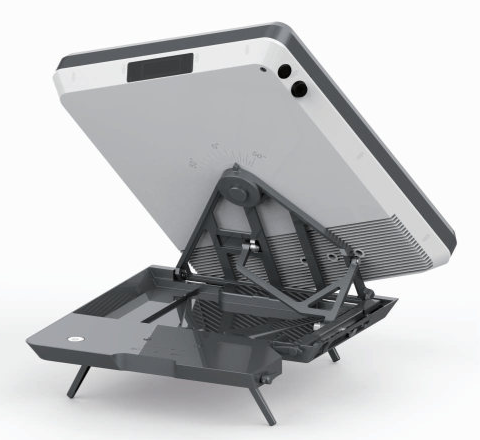
Flat Portable Satellite Terminal 0.35m Aperture Manual Portable Terminal
China Starwin Science & Technology Co., Ltd.

Comprehensive Mining Automation Control System
Beijing Tianma Intelligent Control Technology Co., Ltd.