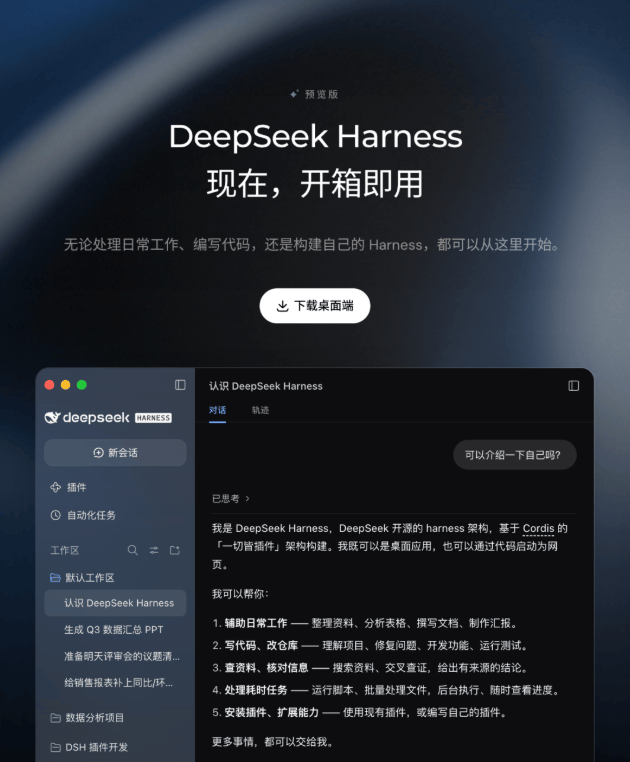
OpenAI Launches Codex Mobile Preview in the U.S., Enabling Remote Management of Coding Tasks
en.Wedoany.com Reported - OpenAI has officially announced the integration of its AI programming tool Codex into the ChatGPT mobile app, rolling it out as a preview version to all iOS and Android platforms, covering all subscription plans including the free tier. This means that for the first time, the over 4 million developers who use Codex weekly can remotely monitor, approve, and dispatch coding tasks running on their desktop or remote machines directly from their phones.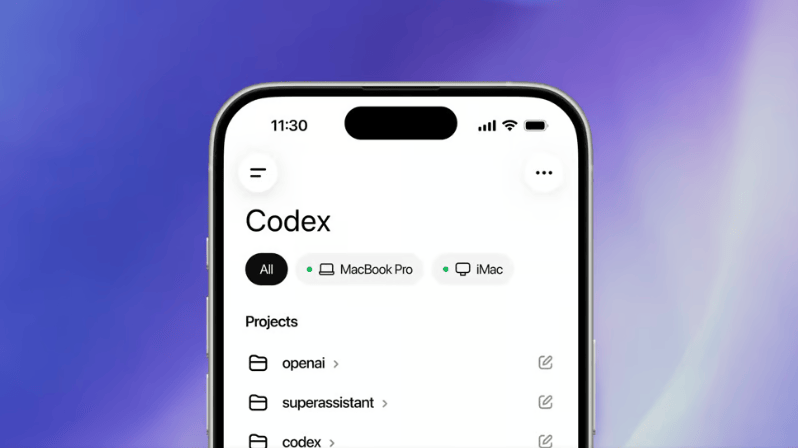
The mobile launch directly addresses a growing phenomenon within the developer community known as the "half-open laptop." As AI coding agents take on complex tasks that can last hours or even longer, engineers find themselves tethered to their running computers—whether at the airport, a café, or an ice rink, they are forced to keep their laptops open to avoid interrupting the AI agent's workflow. OpenAI's solution is not a simple remote desktop mapping but a complete collaborative framework: the mobile app can load all active threads, approval items, and project contexts from connected devices. Developers can review outputs, approve next-step instructions, switch running models, or create new tasks at any time, while the user's files, credentials, permissions, and local configurations remain on the original device running Codex. Updates are synchronized to the phone in real-time through a secure relay layer, without exposing the device itself to the public internet.
OpenAI described several mobile usage scenarios in its official blog: a developer can have Codex inspect files and run tests to troubleshoot a sudden bug while grocery shopping, remotely approving the fix; make critical decisions from their phone while chatting at a café without delaying hours of waiting time; or initiate a new task directly from their phone for Codex to implement when an idea strikes at the gym. For users needing to interface with customer support scenarios, Codex can aggregate information from message histories, documents, and browser tools to generate briefings.
Launched alongside the mobile version is the official availability of Remote SSH capability. This feature allows Codex to connect directly to managed remote development environments used by teams, including systems with pre-configured approval dependencies, credentials, security policies, and computing resources. The desktop application can automatically detect hosts from SSH configurations, create projects and run threads within the remote machine, operating in the same manner as on a local device. Subsequently, these remote environments can be accessed across authorized ChatGPT devices through the same secure relay infrastructure, providing a unified entry point for teams adopting centralized development environment management.
In terms of feature expansion for business customers, OpenAI has added programmatic access tokens, which can be issued from the ChatGPT workspace settings for use in continuous integration pipelines, release workflows, and internal automation scenarios. The Hooks feature has transitioned to general availability, supporting scanning prompts for secrets, running validators, logging conversation histories, creating memories, or customizing Codex behavior for specific repositories. Also announced was support for HIPAA-compliant ChatGPT Enterprise workspaces, enabling the use of Codex in local command-line environments, IDEs, and applications, suitable for healthcare institutions handling patient care and operational workflows. Compliant usage is limited to eligible Enterprise workspaces.
This article is compiled by Wedoany. All AI citations must indicate the source as "Wedoany". If there is any infringement or other issues, please notify us promptly, and we will modify or delete it accordingly. Email: news@wedoany.com
Related Products



MUX Series Communication Interface Device for Security and Stability Control System
Nanjing NR Electric Co., Ltd.






One-Stop Steward Service for the Entire Logistics System Integration Chain
Zhongding Intelligent (Wuxi) Technology Co., Ltd.

G.652.D Wavelength-extended Non-dispersion Shifted Single-mode Optical Fiber
HONGAN GROUP CO., LTD.