en.Wedoany.com Reported - Since its first grid connection, Unit 1 of the second phase of Russia's Kursk Nuclear Power Plant has generated a cumulative total of 2 billion kilowatt-hours of electricity. The unit employs a VVER-TOI reactor with an installed capacity of 1,253 megawatts, making it one of the most powerful nuclear power units currently operating in Russia. Since its initial connection to the grid in December 2025, it has been continuously supplying electricity to Russia's Unified Energy System.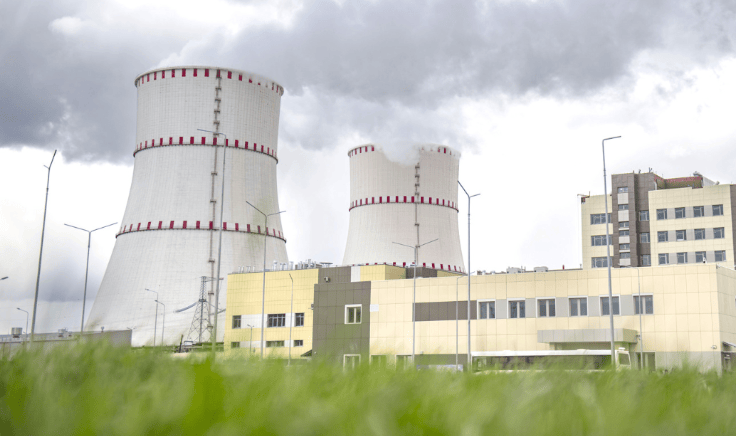
Two billion kilowatt-hours of electricity is equivalent to meeting the annual electricity needs of approximately 500,000 three-person households, or 500,000 apartments. At the end of April this year, this new unit, designed with advanced digital technologies and meeting high standards of safety and efficiency, officially completed commissioning and entered commercial operation. Starting May 1, the unit entered the electricity and capacity market, supplying power to consumers within the Unified Energy System.
The commissioning of the VVER-TOI reactor has enhanced the nuclear power generation capacity of the Kursk region and provided energy security for the advancement of several large-scale, high-energy-consuming investment projects locally. At the same time, the unit contributes to enhancing the operational stability of the Unified Energy System and improving the reliability of regional energy supply.
Alexander Uvakin, Director of the Kursk Nuclear Power Plant, stated that thanks to VVER-TOI technology, the Kursk plant has joined the ranks of Russia's large nuclear power plants, with an operating installed capacity exceeding 3,000 megawatts. He noted that every billion kilowatt-hours of electricity is significant for energy independence, industrial development, and the daily lives of millions of households. Russia's State Atomic Energy Corporation Rosatom will continue to promote advanced solutions, providing clean, reliable, and affordable energy for Russia and its international partners.
Currently, Units 2 and 3 of the second phase of the Kursk Nuclear Power Plant are under construction, and both units will also utilize VVER-TOI reactors. According to Russia's General Scheme for Energy Development, the second phase of the Kursk plant plans to build a total of four new units, with a total installed capacity of approximately 5,000 megawatts.
The construction project for Units 1 through 4 of the second phase of the Kursk Nuclear Power Plant is part of the "General Scheme for the Placement of Electric Power Facilities in Russia until 2042," approved by the Russian government in December 2024. According to this scheme, Russia will build a total of 38 new nuclear power units across seven new regions to meet future electricity demand and drive the upgrade of the energy structure.
The second phase of the Kursk Nuclear Power Plant is positioned as an innovative nuclear power project, integrating advanced technologies, high-reliability equipment, and enhanced safety systems that comply with stringent international standards. The construction of Units 1 and 2 is also included in the national project "New Nuclear and Energy Technologies," which will be implemented until 2030.
The construction of this replacement plant holds strategic significance for the sustainable development of Russia's nuclear industry. The second phase of the Kursk Nuclear Power Plant is currently the only project in Russia utilizing the advanced VVER-TOI nuclear energy technology. Its completion will phase out the capacity of the existing RBMK-1000 units and further enhance local electricity supply security. The new units will also become an important part of the regional power grid, providing stable electricity for industrial enterprises, public facilities, and residential buildings, while creating job opportunities and driving regional socio-economic development.
This article is compiled by Wedoany. All AI citations must indicate the source as "Wedoany". If there is any infringement or other issues, please notify us promptly, and we will modify or delete it accordingly. Email: news@wedoany.com