en.Wedoany.com Reported - On May 19, Moscow City Transport Company, Moscow Energy Sales Company, and Russian Nuclear Power Company signed a tripartite agreement to jointly promote the transition of low-carbon energy consumption towards renewable energy. According to the agreement, the clean energy required for charging Moscow's electric buses in 2025 will be supplied by the Kalinin Nuclear Power Plant.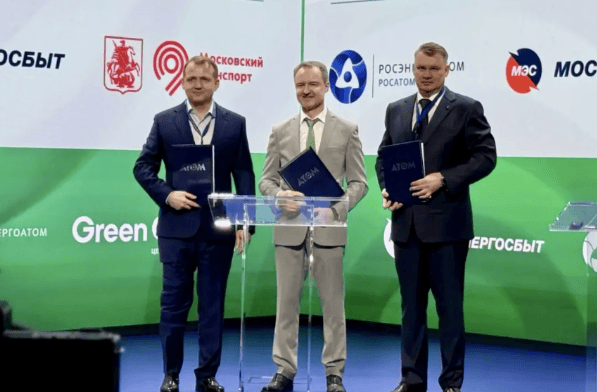
The value of clean electricity from nuclear power plants lies in the unique nature of its production process. According to an assessment by the Russian Nuclear Power Generation Company, the carbon footprint of the Kalinin Nuclear Power Plant is 5 grams of CO2 equivalent per kilowatt-hour of electricity generated, meaning its emissions causing negative impacts on the climate and environment are at an extremely low level. Liksutov pointed out that Moscow continues to lead European and American cities in the number of electric buses. Following the requirements of Mayor Sergei Sobyanin, the capital procures new vehicles from Russian manufacturers and develops charging infrastructure to improve the quality of urban life. In 2025, Moscow City Transport confirmed the use of 230 million kilowatt-hours of low-carbon electricity.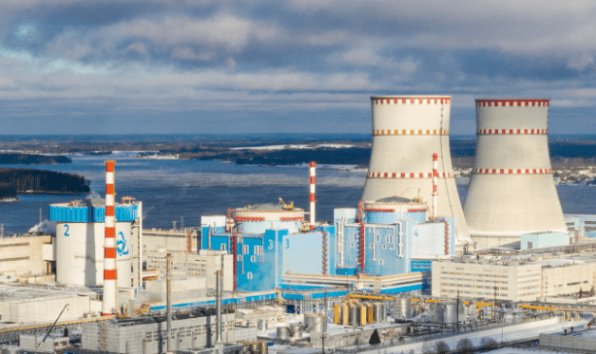
In 2024, Moscow City Transport became the first urban public transport operator in Russia to join the voluntary low-carbon energy certification system and cancel relevant certificates. By 2025, the enterprise had confirmed that all 230 million kilowatt-hours of electricity consumed for charging its electric buses was low-carbon electricity. Alexander Khvaliko, First Deputy General Director for Sales, Business Development, and Energy Policy at Russian Nuclear Power Generation Company, stated that the cooperation with Moscow's transport department aims to make urban transport more environmentally friendly, allowing residents and businesses to conveniently use city infrastructure while also participating in reducing the carbon footprint.
Khvaliko also stated that the Russian Nuclear Power Generation Company is the largest producer of low-carbon electricity in Russia. Supplying low-carbon electricity to the charging infrastructure for Moscow City Transport's electric buses helps minimize environmental impact and jointly forms a carbon-free operation chain for urban electric transport, extending from electricity production all the way to passenger transportation. Moscow Energy Sales Company, on its part, completed the cancellation of low-carbon energy attributes for Moscow City Transport, setting a record in the scale of the urban transport infrastructure sector within Russia's domestic green certificate market. As a result, the entire charging system for the capital's electric buses has shifted to an energy consumption model with the lowest carbon footprint, receiving official confirmation from the national certification system.
Andrey Kovalev, General Director of Moscow Energy Sales Company, stated that the company not only supplies electricity but also helps large urban users like Moscow City Transport confirm the environmental attributes of their operations. He emphasized that social significance is becoming increasingly important, and green energy is no longer an abstract concept but a reality that every electric bus passenger can feel. Currently, a transparent system for confirming the origin of electricity is being formed in Russia, with green certificates being one of its key components. The mechanism introduced since February 2024 allows every environmentally conscious consumer to participate in the development of low-carbon power generation; the guaranteed electricity supplier for Moscow and the Moscow region also offers legal entities and individuals the opportunity to purchase such certificates.
Green certificates help attract more investment to low-carbon projects, incentivize the further development of clean power generation, and reduce adverse environmental impacts. Currently, Moscow has about 3,000 electric buses serving more than 280 routes. These innovative electric-drive vehicles are maintained by 12 operational depots of Moscow City Transport and can also be charged at over 50 terminal stations equipped with ultra-fast charging equipment. Since Moscow's electric buses entered route service in 2018, they have cumulatively completed over 1 billion passenger trips. Replacing a conventional bus with an electric bus can reduce carbon dioxide emissions by more than 60 tons per year; between 2018 and 2025, the deployment of environmentally friendly transport has helped avoid approximately 1,300 tons of pollutants and about 300,000 tons of CO2 equivalent greenhouse gas emissions.
This article is compiled by Wedoany. All AI citations must indicate the source as "Wedoany". If there is any infringement or other issues, please notify us promptly, and we will modify or delete it accordingly. Email: news@wedoany.com