US-based Automation Anywhere Partners with NVIDIA and Others to Complete the Enterprise AI Agent Governance Layer
en.Wedoany.com Reported - US-based Automation Anywhere is shifting the focus of enterprise AI agents from "capable of executing tasks" to "centrally governable." On May 19, the company announced the launch of EnterpriseClaw in Dallas, Texas, and is collaborating with Cisco, NVIDIA, Okta, and OpenAI to enable next-generation claw-style AI agents to run across cloud platforms, desktops, on-premises systems, and secure enterprise networks.
The key news about EnterpriseClaw is not just the joint participation of multiple tech companies, but Automation Anywhere's attempt to add a layer of operation, orchestration, and governance infrastructure for AI agents entering core enterprise systems. Currently, many claw-style AI agents can directly execute tasks within applications, browsers, terminals, and local systems, but most tools still lean towards single users, single devices, or isolated cloud environments. Real enterprise processes are distributed across teams, cloud platforms, desktops, on-premises systems, infrastructure behind firewalls, and highly regulated scenarios. Without unified control, the closer AI agents get to business systems, the more likely they are to introduce issues with permissions, data, auditing, and execution boundaries. Automation Anywhere states that EnterpriseClaw allows enterprises to deploy autonomous AI agents in large-scale operations while maintaining centralized control over access, activity, governance, and observability.
The platform is positioned more as an "enterprise-grade AI agent runtime" rather than a single automation plugin. In its Imagine 2026 product description, Automation Anywhere describes EnterpriseClaw as a runtime and governance platform that extends distributed execution and centralized control capabilities to on-premises AI agents, enabling enterprises to deploy, scale, and govern OS-level agents across thousands of devices in on-premises, cloud, or hybrid environments while maintaining end-to-end visibility and control.
The collaborators contribute different enterprise-grade capabilities. Cisco AI Defense and DefenseClaw provide agent-oriented security capabilities; NVIDIA contributes the OpenShell open-source runtime and supports EnterpriseClaw AI agents for on-premises customers through NVIDIA NIM microservices and NVIDIA Nemotron open models; Okta provides cross-agent identity management and authentication controls for policy enforcement; OpenAI will support enterprises in building and running agents using models like GPT-5.5. Automation Anywhere is also integrating its own Process Reasoning Engine and Contextual Intelligence Graph into EnterpriseClaw to provide process context and higher-reliability task execution capabilities. For enterprise IT teams, this combination means AI agents not only need to invoke models but also must be placed within a control system composed of identity authentication, credential management, policy control, audit logs, telemetry data, and AI guardrails.
Typical scenarios for EnterpriseClaw involve on-premises execution, legacy application automation, and sensitive compliance environments that are difficult for cloud agents to cover. Automation Anywhere gives the example that enterprises can use this capability to investigate complex customer claims, gathering information across desktop applications, on-premises systems, internal documents, and cloud platforms, while keeping sensitive financial, healthcare, or operational data within secure enterprise systems. Product descriptions also show that EnterpriseClaw can deploy any agent framework, supporting OpenClaw, LangChain, CrewAI, and others, allowing agents to run locally in managed containers with secure access to files, applications, browsers, and terminals; the platform also supports enterprise-scale parallel execution and provides complete telemetry, audit logs, credential management, and AI guardrails through existing Control Room infrastructure.
EnterpriseClaw is currently in preview, with Automation Anywhere expecting general availability later this year. For enterprises integrating AI agents into IT, finance, customer service, HR, supply chain, and compliance processes, the value of such a platform lies not in adding a new model interface, but in managing the agent's on-premises execution capabilities, cross-system action capabilities, and enterprise-grade governance requirements within the same layer. As AI agents move into production environments, the core issue enterprises need to solve has shifted from "can the agent do things?" to "can the agent do things with the correct identity, correct permissions, and within the correct data boundaries?"
This article is compiled by Wedoany. All AI citations must indicate the source as "Wedoany". If there is any infringement or other issues, please notify us promptly, and we will modify or delete it accordingly. Email: news@wedoany.com
Related Products



MUX Series Communication Interface Device for Security and Stability Control System
Nanjing NR Electric Co., Ltd.
GYTA Type Non-Self-Supporting Aerial/Duct Optical Cable
TONGDING INTERCONNECTION INFORMATION CO., LTD.

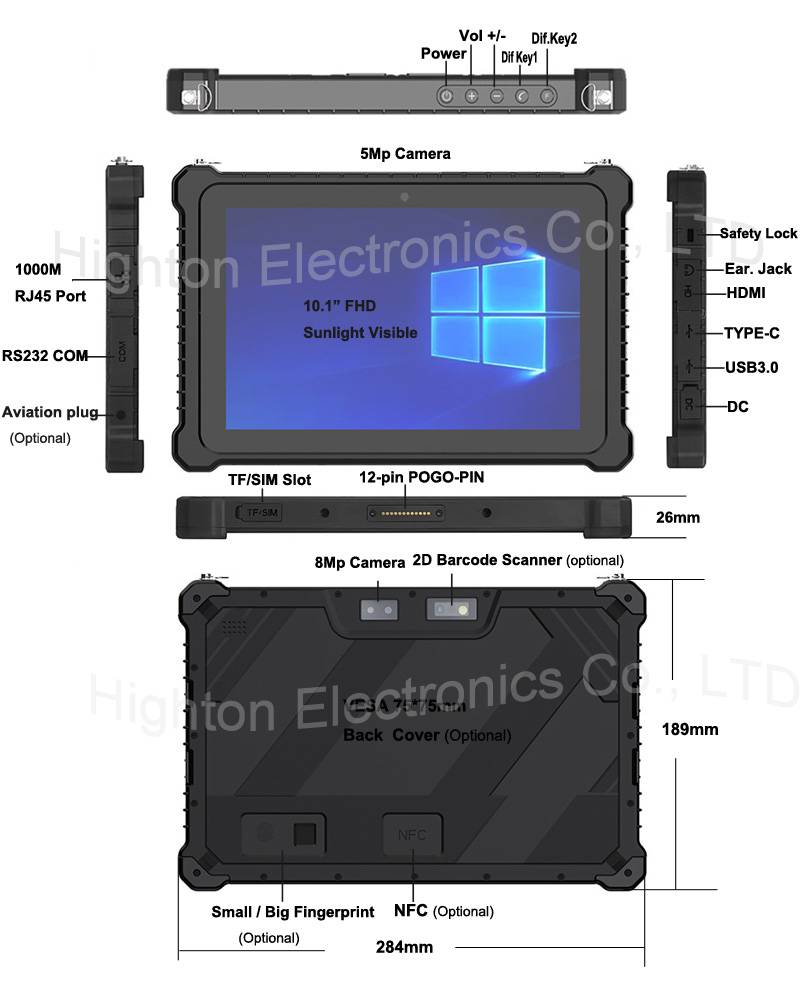
Hot Selling 10 Inch Intel N5100 I5 I7 FHD 8 +128GB 16+256GB Win10 Pro Win11 Pro 4G 5G Rugged Tablet PC Pad with NFC Barcode
Highton Electronics Co., Ltd.

Automatic Aiming Laser Remote Obstacle Removal Robot
Pinggao Group Weihai High-Voltage Apparatus Co., Ltd.
Industrial and Commercial Point-Type Gas Detector
Jinan Benan Technology Development Co., Ltd.