Mozilla Adds Web Serial to Firefox 151, Enabling Adafruit Hardware Workflows to Run in the Browser
en.Wedoany.com Reported - On May 21, Mozilla announced the addition of Web Serial API support in desktop Firefox 151, and is collaborating with the open-source hardware and STEM education community Adafruit to test browser-based hardware development workflows. This feature allows web applications to communicate directly with microcontrollers, development boards, 3D printers, power meters, and other serially connected hardware, eliminating the need for additional local software or installers for many projects.
This update is primarily aimed at developers, makers, educators, and the embedded device community, rather than general web browsing users. The value of the Web Serial API lies in transforming the browser from a content access tool into an entry point for hardware development: with user authorization, web pages can read from and write to serial devices, completing tasks such as firmware flashing, device configuration, sensor debugging, serial port monitoring, educational experiments, and prototype verification. Chromium-based browsers have supported Web Serial for years, and many hardware workflows have been built around Chrome or Edge; with support added in Firefox 151, developers and educational scenarios using the Gecko browser engine can finally access these web-based hardware tools more directly.
Adafruit is a key validation partner in this collaboration. Mozilla stated that Adafruit is working with them to test and validate the Web Serial hardware development experience in Firefox. For groups using CircuitPython, browser-based development board programming, sensor kits, classroom hardware experiments, and microcontroller projects, Adafruit already has a suite of web-based hardware workflows; with Firefox 151 supporting Web Serial, these processes can run directly in Firefox, eliminating complex setup for many projects.
Technically, the Web Serial API provides websites with the ability to communicate with devices using serial protocols, which can be traditional serial ports or hardware emulating a serial port via USB or Bluetooth. Mozilla developer documentation shows that the API provides connection and read/write capabilities through interfaces like Navigator.serial and SerialPort, and controls whether a page can use this capability via the `serial` directive in Permissions-Policy. This design means browsers must strike a balance between hardware access convenience and user authorization/security boundaries; Web Serial should not be understood as granting web pages unconditional access to local devices.
Embedded development and educational scenarios will be the first to benefit. Students, makers, and engineers using microcontrollers, development boards, and sensors often need to install drivers, serial port tools, firmware flashers, or specific desktop software; with native browser support for Web Serial, educational websites, hardware vendor pages, and online development tools can complete the connection, configuration, flashing, and testing processes within the web page. For school computer labs, makerspaces, and corporate engineering teams, this will lower environment setup costs and reduce compatibility issues arising from different operating systems and software versions.
Firefox adding Web Serial support will also influence developer choices on the open web platform. In the past, some hardware control, IoT configuration, and development board programming websites could only recommend users use Chrome or other Chromium browsers due to browser capability differences. With support added in Firefox 151, developers can re-evaluate cross-browser compatibility, and hardware vendors have the opportunity to extend their documentation, online configurators, and firmware update tools to more browser users. However, Web Serial remains a relatively specialized hardware access API, and its actual adoption rate will depend on whether hardware vendors, educational platforms, open-source communities, and development tools can provide a stable experience.
Subsequent milestones include compatibility feedback for Adafruit-related workflows in Firefox, adaptation of more hardware development websites for Firefox 151, usage of Web Serial in classroom and maker projects, and whether Mozilla continues to implement more hardware access web APIs. At this stage, this update should be defined as desktop Firefox's support for the Web Serial API and validation of Adafruit workflows; it should not be expanded to imply full support in Firefox for mobile, nor should it be written as all serial devices being directly accessible without drivers or authorization.
This article is compiled by Wedoany. All AI citations must indicate the source as "Wedoany". If there is any infringement or other issues, please notify us promptly, and we will modify or delete it accordingly. Email: news@wedoany.com
Related Products



Mine Explosion-proof and Intrinsically Safe Industrial Ethernet Ring Network (10 Gigabit/Gigabit)
Chongqing Mas Sci&Tech Co., Ltd.
MUX Series Communication Interface Device for Security and Stability Control System
Nanjing NR Electric Co., Ltd.
Multi-function Marine Monitoring Low-altitude Detection Radar Sea-air Boundary Ocean Dynamic Environment Measurement
Chengdu Dixin Technology Co., Ltd.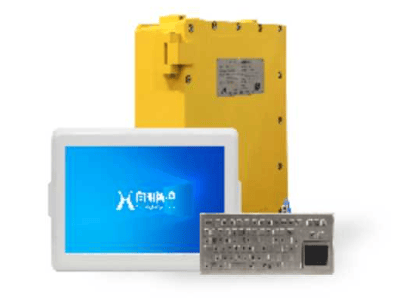
KJD127(A) Mining Explosion-Proof and Intrinsically Safe Computer
Taiyuan Xiangming Intelligent Control Technology Co., Ltd.

Automatic Aiming Laser Remote Obstacle Removal Robot
Pinggao Group Weihai High-Voltage Apparatus Co., Ltd.
Flat Portable Satellite Terminal 0.35m Aperture Manual Portable Terminal
China Starwin Science & Technology Co., Ltd.