Cisco Systems Plans to Expand SONiC Support, Bringing Open Network Operating System to Enterprises and New Cloud Data Centers
en.Wedoany.com Reported - Recently, Cisco Systems disclosed broader plans for SONiC support around its data center switching platforms. According to a Cisco technical blog, SONiC support is already available on the Cisco 8000 Series, and foundational SONiC capabilities will be extended to the N9000 Series data center switches. The goal is to cover a wider range of markets, including general-purpose data centers, high-performance AI/ML clusters, enterprise customers, new cloud service providers, and large-scale operators.
SONiC, which stands for Software for Open Networking in the Cloud, is an open network operating system designed for cloud networks. It was initially developed by Microsoft for its Azure data centers and later entered the open-source ecosystem. For data center operators, the value of SONiC lies in decoupling the network operating system from the hardware platform to a reasonable degree, allowing enterprises to choose a more open, programmable, and automatable network software environment on a unified hardware foundation. As AI training, inference, storage, and multi-tenant business traffic continue to grow, open network operating systems are evolving from internal tools for hyperscale cloud providers to options considered in enterprise and new cloud data center procurement.
The core of Cisco's expansion plan is to extend SONiC support from the Cisco 8000 Series to the N9000 Series. The Cisco 8000 Series is designed for high-performance data centers and AI networks, leveraging Cisco Silicon One hardware capabilities to support 100G, 400G, 800G, and planned 1.6T speeds. Cisco will offer two approaches for using SONiC: one for hyperscale customers who wish to build their own SONiC distributions, providing source code access, the Silicon One SDK, SAI, and platform binaries; the other for customers seeking rapid deployment, offering pre-compiled and validated SONiC images with a clear upgrade path.
With the N9000 Series gaining foundational SONiC capabilities, Cisco's open networking support will cover more existing data center environments. Enterprise customers and new cloud service providers can explore SONiC on the same hardware layer while continuing to maintain their ACI or NX-OS environments, thereby reducing migration risks and protecting existing network investments. For many enterprise data centers, the real challenge is not a one-time replacement of the entire switching platform, but introducing openness, automation, and observability into the existing architecture while maintaining stable operations and lifecycle management.
AI data centers are changing the design logic of switching networks. GPU clusters, distributed training, storage access, and east-west traffic create demands for high bandwidth, low latency, congestion control, and telemetry visualization. In its official blog, Cisco mentioned that SONiC on Cisco platforms can serve various architectures such as IP/BGP Fabric, VXLAN EVPN Fabric, and AI/ML backend Fabric, combining capabilities like RDMA, PFC, ECN, traffic load balancing, and hardware telemetry to support high-performance AI clusters and general-purpose data center networks.
This plan also reflects that competition in the data center network market is shifting from standalone switch hardware to a combined capability set of "chips, switching platforms, open network operating systems, automation tools, and vendor support." Previously, SONiC was primarily driven by hyperscale cloud providers, and enterprise customers often faced challenges such as deployment complexity, insufficient operational experience, and unclear support responsibilities. By combining SONiC with Cisco TAC technical support, Nexus Dashboard automated provisioning, and health monitoring, Cisco helps bring open networking from highly customized scenarios into more standardized enterprise deployments.
Subsequent implementation will focus on the pace of SONiC capability rollout for the N9000 Series, enterprise-grade deployment tools, third-party controller compatibility, AI cluster network performance, and coexistence capabilities with existing ACI/NX-OS environments. As enterprises, new cloud service providers, and sovereign cloud operators build AI infrastructure, open network operating systems will become an important option in data center network procurement. Cisco's expansion of SONiC support also signifies that open networking is moving from the hyperscale market into the broader data center market.
This article is compiled by Wedoany. All AI citations must indicate the source as "Wedoany". If there is any infringement or other issues, please notify us promptly, and we will modify or delete it accordingly. Email: news@wedoany.com
Related Products

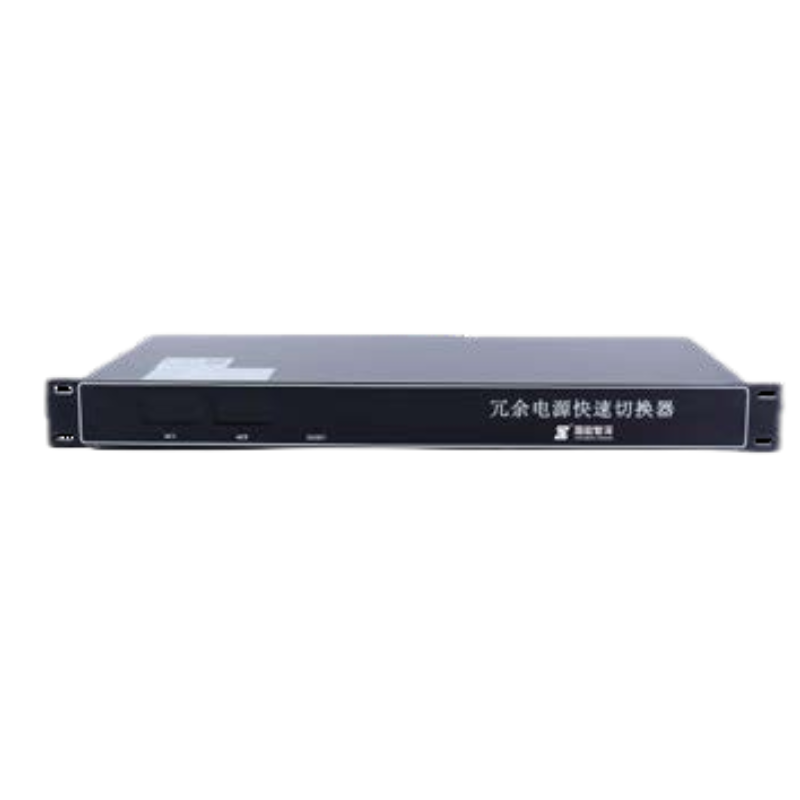



One-Stop Steward Service for the Entire Logistics System Integration Chain
Zhongding Intelligent (Wuxi) Technology Co., Ltd.
Mine Explosion-proof and Intrinsically Safe Industrial Ethernet Ring Network (10 Gigabit/Gigabit)
Chongqing Mas Sci&Tech Co., Ltd.
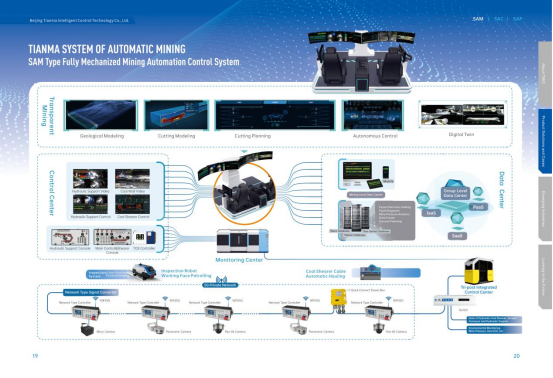
Comprehensive Mining Automation Control System
Beijing Tianma Intelligent Control Technology Co., Ltd.