Japan's Lightera Partners with Finland's Nokia to Expand Optical LAN to Four Countries Including the UK, Bringing PON Architecture into Enterprise Campus Networks
en.Wedoany.com Reported - On May 27, Lightera, a subsidiary of Japan's Furukawa Electric Group, and Finland's Nokia announced an expanded collaboration to promote the deployment of enterprise optical LAN solutions in the UK, Germany, Spain, and Portugal. The two parties will combine Lightera's passive optical infrastructure capabilities with Nokia's PON technology to offer high-performance optical LAN connectivity solutions to enterprise customers in Europe.
Lightera is a brand launched by Furukawa Electric after integrating its global optical fiber and cable business, covering optical fiber, optical cable, and connectivity solutions. Furukawa Electric previously disclosed that its optical fiber and cable business has been consolidated into Lightera Holding G.K. and has been operating under the Lightera brand since April 1, 2025; Lightera's official website also indicates that the brand integrates the relevant capabilities of Furukawa Electric, OFS, and Furukawa Electric LatAm.
The focus of this collaboration is to expand optical LAN from existing cooperation regions further into the European enterprise market. Optical LAN, also known as passive optical LAN, uses optical fiber and PON architecture to replace traditional copper cabling and multi-tier switch networks, and can be applied in scenarios such as office buildings, enterprise campuses, hotels, education, healthcare, manufacturing, retail, and public facilities. As wireless access points, security cameras, IoT terminals, video conferencing, and cloud applications continue to increase, the demands on enterprise internal networks for bandwidth, energy consumption, reliability, and future scalability are rising.
In this collaboration, Lightera will provide passive optical infrastructure capabilities, while Nokia will provide PON technologies such as GPON, XGS-PON, and 25G-PON. The joint solution also includes pre-sales consulting, activation services, 24/7 technical support, and training, helping enterprises reduce the complexity of network transformation during the planning, deployment, and operation phases. Official information shows that the passive optical LAN architecture can reduce energy consumption, enhance security, improve scalability, and lower the total cost of ownership by up to 50% compared to traditional solutions.
Enterprise campus networks have historically relied more on copper cabling, floor switches, and multi-tier active equipment stacking. As the degree of digitization in office spaces, production workshops, and public buildings increases, such networks face greater pressure in terms of equipment room space, power consumption, maintenance complexity, and lifecycle costs. PON architecture extends optical fiber closer to the endpoints through a passive optical distribution network, reducing the number of intermediate active devices, simplifying cabling structures, and preserving a pathway for future upgrades from GPON to higher-speed technologies like XGS-PON and 25G-PON.
The UK, Germany, Spain, and Portugal, as the first European markets covered by this collaboration, have diverse network upgrade needs for enterprise buildings and public facilities. Hotels need to reliably support guest connectivity, security, and back-end systems; medical institutions need to ensure the reliable operation of diagnostic equipment, imaging data, and campus networks; educational institutions need to build high-bandwidth networks for smart campuses, online teaching, and multi-terminal access; manufacturing enterprises are more concerned with connection consistency between production sites, office areas, and data systems. The value of optical LAN in these scenarios is concentrated in high bandwidth, low energy consumption, easy scalability, and centralized operation and maintenance.
This collaboration indicates that enterprise network upgrades are shifting from simply expanding switching equipment to reconstructing campus connectivity with fiber optics and PON architecture. For large enterprises and public institutions, network infrastructure needs to simultaneously support digital office, IoT, security, cloud services, and future AI applications. After Japan's Lightera and Finland's Nokia expand their optical LAN cooperation to four countries including the UK, the subsequent focus will be on enterprise customer onboarding, integration service capabilities, technical support systems, and the actual deployment effectiveness of PON architecture in European vertical industries.
This article is compiled by Wedoany. All AI citations must indicate the source as "Wedoany". If there is any infringement or other issues, please notify us promptly, and we will modify or delete it accordingly. Email: news@wedoany.com
Related Products


GYTA Type Non-Self-Supporting Aerial/Duct Optical Cable
TONGDING INTERCONNECTION INFORMATION CO., LTD.
MUX Series Communication Interface Device for Security and Stability Control System
Nanjing NR Electric Co., Ltd.

20 Inch 1600*900 Full HD 60Hz TFT LED Monitor with VGA and DP Interfaces for Desktop Computers-Business Use
Guangzhou Zanying Optoelectronics Technology Co., Ltd.

Industrial and Commercial Point-Type Gas Detector
Jinan Benan Technology Development Co., Ltd.
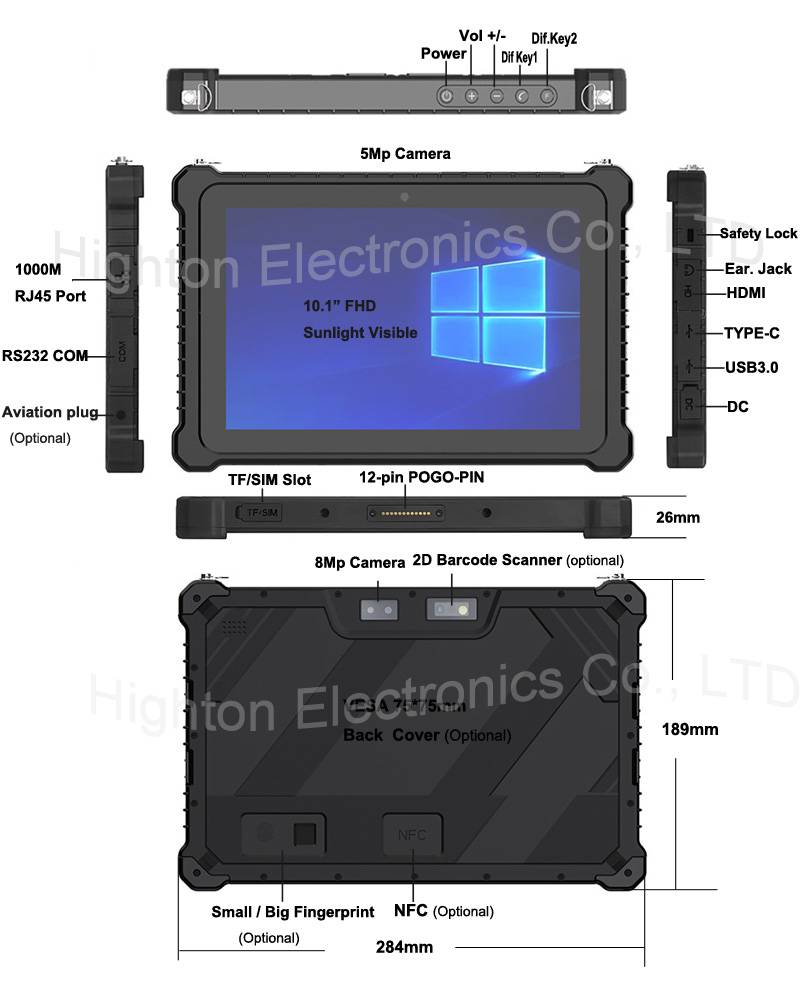
Hot Selling 10 Inch Intel N5100 I5 I7 FHD 8 +128GB 16+256GB Win10 Pro Win11 Pro 4G 5G Rugged Tablet PC Pad with NFC Barcode
Highton Electronics Co., Ltd.