OpenAI Launches AI Detection Tool to Identify ChatGPT Images
en.Wedoany.com Reported - OpenAI has announced the launch of an early AI detection tool that helps users verify whether an image was generated by ChatGPT, the OpenAI API, or Codex, reinforcing its commitment to transparency and the labeling of false content.

As the quality of AI-generated content improves, regulatory pressure on AI companies regarding transparency in technology use is mounting. The frequent spread of deepfake content has sounded alarms, especially with elections approaching, as artificially generated deceptive advertisements become increasingly rampant. The tool takes a cautious approach to verification; if no metadata is detected, the chatbot will not draw definitive conclusions, as provenance signals may be removed in some cases. Currently, the tool can only detect images created by ChatGPT and is ineffective against other AI tools. It also cannot determine whether an image is accurate or presented in the correct context. In the coming months, OpenAI is expected to support cross-industry collaboration to achieve verification capabilities across platforms.
In the same announcement, OpenAI stated that it is making provenance signals easier for other tools to recognize by adding cross-platform persistent digital watermarks to images via SynthID. SynthID is a digital watermark invisible to the human eye, previously available in Google's Gemini but only capable of identifying images and videos created by Google's own tools. In May, at the 2026 I/O Developer Conference, Google announced that more companies, including OpenAI, Kakao, and Eleven Labs, would adopt SynthID. OpenAI CEO Sam Altman's company stated that this collaboration aims to double down on image verification through multi-layered provenance signals. The company noted in the announcement that the Coalition for Content Provenance and Authenticity (C2PA) helps content carry detailed contextual information, while SynthID helps retain signals when metadata is lost. Digital watermarks are more persistent against transformations like screenshots, while metadata provides richer information than watermarks alone. Combining the two makes provenance signals more resilient than any single layer.
Users can already directly verify whether an image is AI-generated through Google Search and the Circle to Search feature. In the coming weeks, Google Chrome will also gain this capability. Microsoft is also considering following Google's approach, shifting verification responsibility to image metadata. X's AI Grok also has a verification system that can gather information from other websites to prove authenticity.
OpenAI has been strengthening its commitment to transparency since 2024, when it began adding content credentials to images generated by DALL-E 3, ImageGen, and Sora. After joining the steering committee of the Coalition for Content Provenance and Authenticity (C2PA), the tech giant started providing more reliable ways to read, save, and transmit information on its platform. Since 2025, OpenAI has regularly published internal safety assessments of its AI models to enhance transparency regarding the performance and risks associated with its technology.
This article is compiled by Wedoany. All AI citations must indicate the source as "Wedoany". If there is any infringement or other issues, please notify us promptly, and we will modify or delete it accordingly. Email: news@wedoany.com
Related Products


Multi-function Marine Monitoring Low-altitude Detection Radar Sea-air Boundary Ocean Dynamic Environment Measurement
Chengdu Dixin Technology Co., Ltd.
GYTA Type Non-Self-Supporting Aerial/Duct Optical Cable
TONGDING INTERCONNECTION INFORMATION CO., LTD.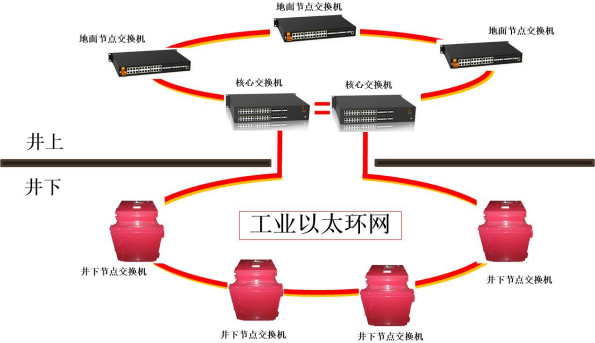
Mine Explosion-proof and Intrinsically Safe Industrial Ethernet Ring Network (10 Gigabit/Gigabit)
Chongqing Mas Sci&Tech Co., Ltd.


Industrial and Commercial Point-Type Gas Detector
Jinan Benan Technology Development Co., Ltd.
TWP16 P-Band Tropospheric Wind Profile Radar
China Huayun Meteorological Technology Group Co., Ltd.

Comprehensive Mining Automation Control System
Beijing Tianma Intelligent Control Technology Co., Ltd.
20 Inch 1600*900 Full HD 60Hz TFT LED Monitor with VGA and DP Interfaces for Desktop Computers-Business Use
Guangzhou Zanying Optoelectronics Technology Co., Ltd.