en.Wedoany.com Reported - On June 2, the WeDoAny Global Daily - Urban Construction News shows that global urban infrastructure investment is shifting from single new construction projects to a new phase where housing security, port operations and maintenance, water resource resilience, transportation hub renewal, green building materials, and low-carbon transformation are advancing in parallel. Projects such as social housing, coastal protection, canal construction, water reuse, water quality monitoring, port equipment, and cement emission reduction are emerging frequently, indicating that the demand in the overseas urban construction market is becoming more refined and specialized. For Chinese engineering companies, equipment manufacturers, building material suppliers, and traders, future entry points are not limited to general construction contracting but also include complete sets of equipment, building components, material supply, operation and maintenance services, low-carbon technologies, and localized cooperation.
I. Key News Summary
1. China Railway No.8 Engineering Group Wins Bid for 136 Social Housing Units in Seychelles
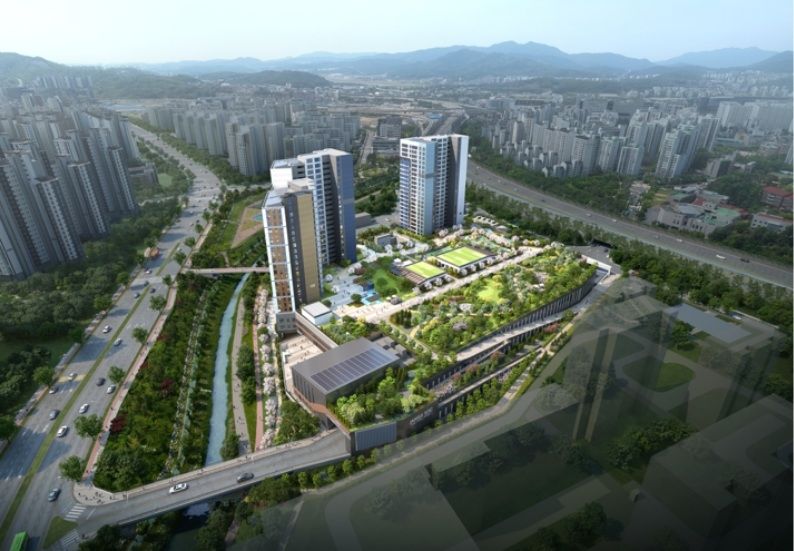
Core Content: China Railway No.8 Engineering Group has won the bid for the Chinese government-aided social housing project in Seychelles. Located in Port Glaud and Anse Royale on Mahé Island, the project will construct 17 buildings totaling 136 housing units, along with supporting facilities such as roads, parking lots, pipelines, external works, sewage treatment stations, boundary walls, and aid identification signs, aiming to alleviate the shortage of social housing supply in Seychelles.
Overseas Observation: This project exemplifies the typical needs of urban construction in small island nations: housing construction is often bundled with roads, pipelines, sewage treatment, and public amenities. Chinese engineering companies participating in such projects need the capability for "small-scale, multi-disciplinary, integrated delivery" rather than just completing single building construction.
2. DP World Deploys Customized LHM 420 Crane in Algeria
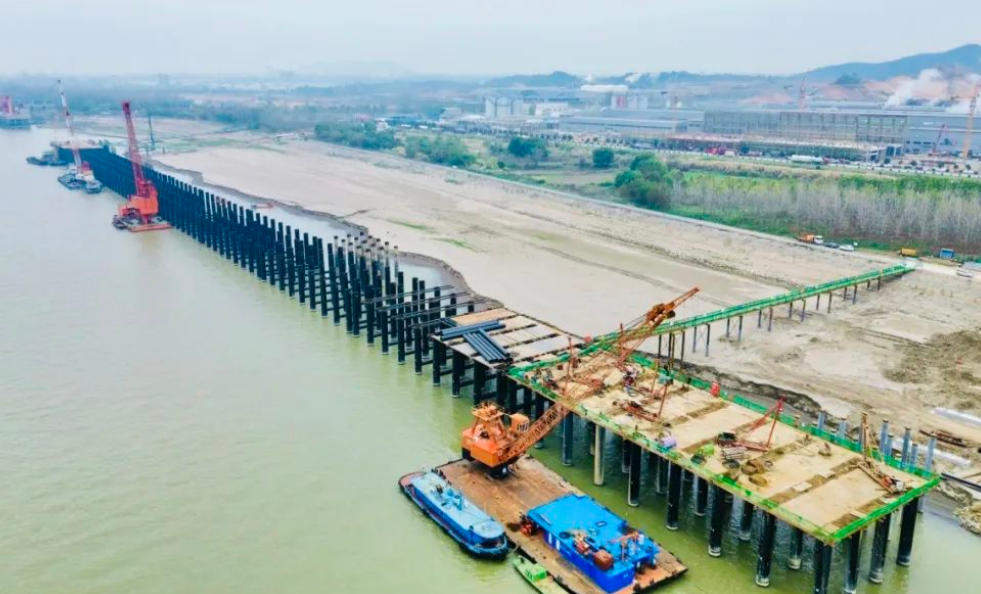
Core Content: DP World has deployed a customized Liebherr Maritime Cranes LHM 420 mobile harbor crane at an Algerian port. The equipment has a maximum lifting capacity of 124 tons and a maximum working radius of 48 meters, capable of handling containers, bulk cargo, and general cargo, serving the trade and industrial goods flow at the Port of Algiers.
Overseas Observation: Port upgrades in North Africa are shifting from terminal construction to improvements in handling efficiency, cargo type adaptability, and operational capability. When Chinese port machinery companies, spare parts suppliers, and port digital service providers enter this market, they should focus on local maintenance, equipment reliability, and multi-cargo operation scenarios.
3. Transnet National Ports Authority Plans to Tender for Floating Dock Construction to Address Surging Repair Demand
Core Content: Transnet National Ports Authority plans to tender for the construction and operation of a private floating dock at the Port of Cape Town to address the rising demand for ship repairs. The existing Sturrock and Robinson dry docks are undergoing upgrades, with high utilization rates and tight scheduling for some repair needs.
Overseas Observation: The expansion of port repair capacity in South Africa indicates that the African port market involves not only cargo terminal construction but also ship repair, floating docks, ship lift equipment, port ancillary facilities, and long-term operation. Chinese companies can enter through floating dock construction, port electromechanical systems, steel structures, operation and maintenance services, and cooperative operation models.
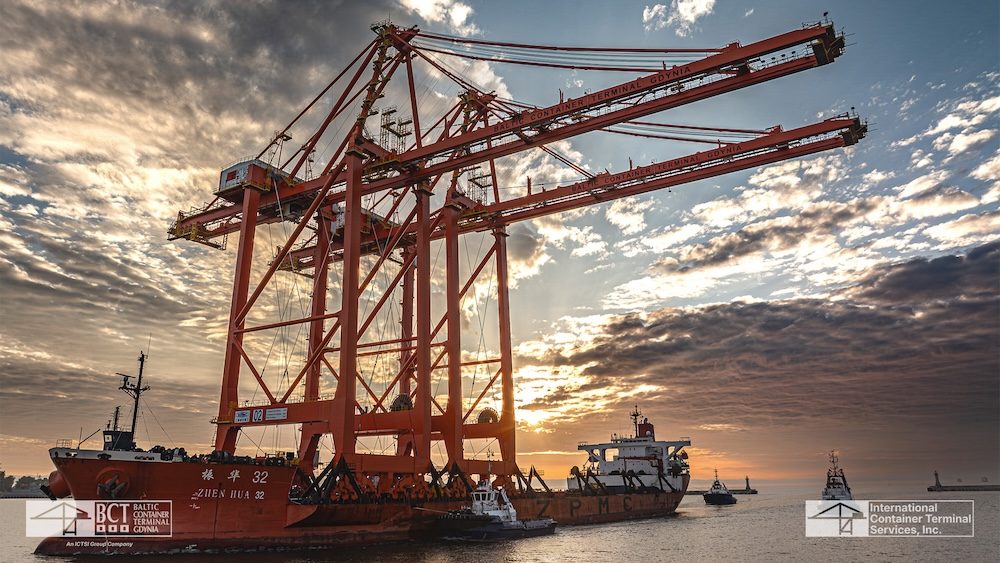
4. Port of Gdynia in Poland Receives New Quay Crane to Enhance Competitiveness
Core Content: The BCT Container Terminal at the Port of Gdynia in Poland has received a new ship-to-shore container crane. Manufactured by ZPMC, the crane is part of the terminal's modernization plan, with a lifting height of approximately 55 meters, capable of servicing container ships with 25 rows, and lifting capacities of 65 tons and 75 tons under different operating conditions. Testing is scheduled for completion by June 2026.
Overseas Observation: European port upgrades emphasize large vessel compatibility and terminal efficiency improvements, creating sustained demand for port machinery, yard equipment, automation systems, and maintenance services. Chinese equipment manufacturers already have a manufacturing advantage, but in the European market, they need to strengthen standard adaptation, after-sales service, and operational data support.
5. Ventia Secures Five-Year, AUD 133 Million Contract to Operate Australian Marine Complex
Core Content: Ventia has secured a five-year contract extension worth a total of AUD 133 million to operate the common user facilities at the Australian Marine Complex in Henderson, Western Australia. The facility covers approximately 400,000 square meters, featuring 6 wharves, assembly areas, manufacturing workshops, a floating dock, and a vessel transfer system, serving users such as Austal, BAE Systems, and Civmec.
Overseas Observation: The value of infrastructure in mature markets is extending towards long-term operation and professional management. If Chinese companies wish to enter similar marine complex and industrial park markets, they cannot rely solely on construction capabilities but must develop capabilities in equipment maintenance, asset management, facility operation, and local compliance cooperation.
6. US-Based GLDD Wins USD 19.5 Million Ocean City Beach Nourishment Contract
Core Content: Great Lakes Dredge & Dock (GLDD) has been awarded a fixed-price contract for the Ocean City beach restoration project in New Jersey, valued at approximately USD 19.5 million. Awarded by the Philadelphia District of the U.S. Army Corps of Engineers, the project covers the area from Great Egg Harbor Inlet to Peck Beach and is expected to be completed by October 18, 2026.
Overseas Observation: Beach nourishment and coastal protection are becoming important investment directions for the resilience construction of coastal cities. Related demand involves not only dredging construction but also surveying and monitoring, pumping equipment, geotechnical materials, coastal erosion assessment, and environmental compliance services, suitable for continuous tracking by marine engineering, municipal, and environmental protection companies.
7. California's San Joaquin Valley Receives Over USD 131 Million in Water Infrastructure Funding in May
Core Content: In May, California's San Joaquin Valley received over USD 131 million in federal funding for water infrastructure construction, including upgrades to the Friant-Kern Canal and the O'Neill Pump Station, as well as clean drinking water, groundwater recharge, and aging water infrastructure rehabilitation.
Overseas Observation: Water infrastructure renewal is becoming a crucial part of urban safety in developed markets. While it is difficult for Chinese companies to directly undertake projects in the US, pump station equipment, valves, pipeline inspection, automated monitoring, water quality management, and canal repair materials can still enter through local engineering firms and supply chain channels.
8. US Utility Companies Use Geochemical Characterization to Manage Aquifer Recharge Risks
Core Content: US utility companies are adopting geochemical characterization methods to manage risks associated with managed aquifer recharge. The technology is used to assess whether injecting treated wastewater, reclaimed water, or other sources into aquifers could trigger the release of elements such as arsenic, fluorine, iron, manganese, selenium, and uranium, combined with mineral analysis, leaching tests, field trials, and geochemical modeling for risk control.
Overseas Observation: Urban water resource projects are extending from "engineering construction" to "groundwater safety and environmental risk management." For Chinese water treatment companies, testing instrument manufacturers, and environmental consulting firms, the overseas water market will increasingly value capabilities in water quality risk assessment, online monitoring, data modeling, and compliance reporting.
9. French Bio-UV Group Provides 15 m³/h UV Disinfection System for Vinci's REUT Project
Core Content: The French Bio-UV Group is participating in Vinci's REUT project, providing a UV disinfection system for Sogea Environnement's mobile water treatment unit. The system has a treatment capacity of 15 cubic meters per hour and can be deployed near construction sites to treat wastewater, rainwater, or industrial water for uses such as cleaning, irrigation, and cooling.
Overseas Observation: Water reuse is expanding from municipal wastewater treatment plants to construction sites, industrial parks, and temporary engineering scenarios. For Chinese environmental equipment companies entering the European market, attention should be paid to niche demands such as modular, mobile, chemical-free treatment, on-site deployment, and collaboration with engineering contractors.
10. WATR Partners with University of the West of England to Launch Real-Time River Water Quality Monitoring Project in the UK
Core Content: WATR has partnered with the University of the West of England to launch a real-time river water quality monitoring project in the UK, using fluorescence optical sensors to monitor river health. The project has received relevant UK research funding and plans to deploy multiple monitoring points, conducting continuous monitoring combined with a cloud platform, water quality indices, and AI analysis.
Overseas Observation: Urban water environment management is entering a phase of real-time, sensor-based, and data-driven operations. For Chinese water quality monitoring companies, the overseas market requires not just individual sensors but an integrated solution of "sensors + cloud platform + data model + operation and maintenance services."
11. France's Seine-Escaut River Project Enters Irreversible Phase, Set for Commissioning in 2032
Core Content: France's Seine-Escaut River project has entered an irreversible phase and is scheduled for commissioning in 2032. The project will connect the Hauts-de-France, Île-de-France, and Normandy regions with the Northern European waterway corridor, involving large-scale earthworks, locks, canal bridges, multimodal platforms, and port node construction, aiming to shift road freight to waterways and railways.
Overseas Observation: European inland waterway and multimodal transport infrastructure is strengthening low-carbon logistics systems. Chinese companies can focus on large hydraulic structures, lock equipment, port handling systems, intelligent dispatching, multimodal transport park construction, and related engineering machinery supply.
12. STV-Turner Joint Venture Wins USD 10 Billion Bus Terminal Contract in New York, USA
Core Content: A joint venture between STV and Turner has been appointed as the construction manager for the upgrade of the Midtown Bus Terminal in New York, USA. The project involves an investment of approximately USD 10 billion, constructing a main terminal building of about 2.1 million square feet, with a ramp system directly connecting to the Lincoln Tunnel, and planning for all-electric bus infrastructure. The temporary terminal is expected to be completed by 2028, and the main terminal by 2032.
Overseas Observation: Large-scale transportation hub renewal is integrating urban construction, public transit, electrification, and low-carbon operations. Chinese companies can observe entry opportunities in supporting areas such as electric bus charging facilities, in-station electromechanical systems, curtain wall materials, intelligent signage, security systems, and construction equipment.
13. Tallest Tower in London's Square Mile Renamed One London, General Contractor to be Appointed This Year
Core Content: The planned tallest tower in London's Square Mile has been renamed One London, with a height of approximately 309.5 meters, designed by Eric Parry. The project is expected to appoint a general contractor this year, with construction planned to start in 2028 and complete in 2033. The total investment is estimated to exceed GBP 1 billion, planning approximately 74 floors and 154,000 square meters of office space, along with public gardens and viewing spaces.
Overseas Observation: Super-tall projects have extremely high requirements for structural systems, curtain walls, electromechanical systems, elevators, fire protection, BIM management, and construction organization. If Chinese suppliers participate in high-end UK projects, they need certifications, case studies, delivery stability, and local partners, rather than relying solely on price advantages.
14. UK Scotland's GBP 88 Million Medicines Manufacturing Innovation Centre Uses Tobermore Blocks
Core Content: The GBP 88 million Medicines Manufacturing Innovation Centre in Scotland, UK, uses Tobermore Artro and Fusion paving blocks for constructing modern outdoor spaces. The centre is located within the 52-hectare Advanced Manufacturing Innovation District Scotland (AMIDS), led by Renfrewshire Council and supported by the Scottish Government and Scottish Enterprise.
Overseas Observation: Industrial park and innovation centre projects are placing greater emphasis on landscape paving, durable materials, public spaces, and sustainable drainage systems. For Chinese building material companies entering this market, they should strengthen product testing, certification documents, sample projects, and on-time delivery capabilities.
15. UK's Avant Homes Reaches GBP 10.6 Million Housing Deal with ELHA
Core Content: UK housebuilder Avant Homes has reached a GBP 10.6 million housing deal with East Lothian Housing Association (ELHA) to build 52 social rented homes in Blindwells. The project is part of the GBP 48 million Althamer View development, which overall plans for 174 homes.
Overseas Observation: UK social housing projects have clear requirements for energy efficiency ratings, housing mix, delivery timelines, and long-term maintenance. Chinese companies in doors and windows, insulation, HVAC, sanitary ware, electrical distribution, and smart metering can enter through local supply chain partnerships but must meet local building codes and after-sales liability requirements.
16. UK's Cala Delivers First Affordable Homes in Edinburgh in 60 Years
Core Content: Cala Homes has delivered 12 energy-efficient apartments in Blackford, Edinburgh, UK, the first affordable homes in the area in 60 years. Located within the redevelopment of the former St Crispin's School site, the project includes active travel and low-carbon supporting measures such as bicycle storage and electric vehicle charging points.
Overseas Observation: European urban renewal projects are integrating housing supply, low-carbon mobility, and community functions. While the scale of such projects may be small, they impose higher requirements on building components, energy-efficient materials, charging facilities, and community support systems.
17. India's MHADA 2026 Lottery: 75,366 Applicants Pay Deposits for 2,640 Affordable Homes in Mumbai
Core Content: The 2026 Mumbai affordable housing lottery by the Maharashtra Housing and Area Development Authority (MHADA) received over 97,000 applications, with 75,366 applicants having paid deposits for 2,640 homes, resulting in an average of approximately 28.54 applicants per home. Some of the homes are still under construction.
Overseas Observation: Housing demand in major Indian cities is strong, but projects involve hurdles related to land, approvals, price controls, and local partnerships. A more realistic path for Chinese companies is to enter through the supply chain for components such as prefabricated elements, water supply and drainage systems, elevators, doors and windows, sanitary ware, distribution boxes, and construction equipment.
18. Ricardo Bofill Architecture Reveals Final Renderings and Begins Construction of Dhërmi Resort in Albania
Core Content: Ricardo Bofill Architecture has revealed the final renderings for the Dhërmi Resort in Albania, and the project has entered the construction phase. Located on the mountainous coastline of southern Albania, the project plans to build 366 apartments and 77 villas, featuring 16 different residential types, emphasizing adaptation to the terrain and preservation of the forest landscape.
Overseas Observation: Tourism real estate projects in the Balkans and Mediterranean have high requirements for terrain adaptation, landscape integration, material texture, and customized construction. Chinese suppliers of stone, tiles, curtain walls, landscape lighting, pool equipment, and electromechanical systems can participate through design coordination and subcontracting collaboration.
19. South Bronx Land Trust to Invest USD 40 Million This Year to Transform Health Center into Arts and Culture Hub
Core Content: The South Bronx Land Trust plans to invest at least USD 40 million to transform a vacant three-story building into a health and arts center. Located in the South Bronx, New York, the project has a building area of approximately 22,750 square feet, plans to use a geothermal system and target LEED Gold certification, with an expected opening in 2028.
Overseas Observation: Community public building renovation is becoming an important type of urban renewal in Europe and America. Such projects create demand for energy-efficient retrofits, electromechanical upgrades, geothermal systems, indoor environments, public spaces, and community function integration, providing niche scenarios for building renovation materials and low-carbon electromechanical systems.
20. US Architectural Firm Fogarty Finger Proposes Building Flood Protection Design Strategies
Core Content: US architectural firm Fogarty Finger has proposed building flood protection design strategies, covering topics such as Base Flood Elevation, Design Flood Elevation, dry floodproofing, wet floodproofing, temporary flood barriers, and the functional organization of the building's first floor, drawing on project practices in Jersey City, Brooklyn, and Hoboken.
Overseas Observation: Flood protection design is extending from municipal levees to individual buildings and neighborhood renewal. Chinese companies in building materials, waterproofing systems, doors and windows, curtain walls, underground space electromechanical systems, and emergency flood barrier equipment should pay attention to the demand for hazard-adapted design in coastal city and low-lying area projects.
21. Adani Invests USD 26 Million to Build Cement Plant in Kharagpur, India
Core Content: The Adani Group plans to invest over USD 26 million to build a cement plant in Kharagpur, India. The project covers approximately 80 hectares, is expected to commence production in 2028, and plans an annual capacity of about 5 million tons. The project is related to Adani's capacity layout following its acquisition of ACC.
Overseas Observation: Infrastructure and housing construction demand in India is supporting cement capacity expansion. Chinese companies in cement equipment, grinding systems, conveying equipment, environmental protection equipment, and spare parts can focus on equipment supply opportunities during the construction and renovation of local cement plants in India but need to adapt to local manufacturing and procurement rules.
22. Cemex Increases Decarbonization Investment at Alcanar Plant in Spain to EUR 451 Million
Core Content: Cemex has increased its decarbonization investment at the Alcanar cement plant in Spain to EUR 451 million. The project is located in the Catalonia region of Spain. The investment direction is related to emission reduction pressures in the cement industry, alternative fuels, process modifications, and carbon emission reduction facility upgrades.
Overseas Observation: European cement plant renovations are moving from energy efficiency improvements to deep decarbonization. Chinese companies can focus on alternative fuel systems, waste heat utilization, environmental dust removal, carbon capture support, automation control, and plant renovation engineering, but entering the European market requires attention to technical standards and carbon compliance documentation.
23. Australian Cement Company to Shut Kiln for 45 Days in 2026 for Upgrade to Use Alternative Fuels
Core Content: An Australian cement company plans to shut down the kiln at its Railton plant in Tasmania for approximately 45 days in 2026 for an upgrade to enable the use of alternative fuels such as tires and sustainable wood waste. The project investment is approximately AUD 77.5 million, with partial government funding support, aiming to increase the proportion of alternative fuel use and reduce coal consumption and carbon dioxide emissions.
Overseas Observation: Co-processing in cement kilns and alternative fuel utilization are becoming important pathways for low-carbon transformation of overseas cement plants. Chinese companies can start with fuel pre-treatment, conveying systems, kiln modifications, emission control, and operation optimization services, rather than focusing solely on new production lines.
24. Global Cement Carbon Capture Projects to Contribute Less Than 2% to Emission Reduction by 2035
Core Content: Global cement industry carbon capture projects are advancing, but analysis suggests that by 2035, the CO2 captured by these projects will still be less than 2% of the industry's emissions. Heidelberg Materials' Brevik plant in Norway has become the first commercial-scale cement carbon capture facility, with an annual capture capacity of approximately 400,000 tons of CO2. Globally, over 175 cement carbon capture projects are in the development stage.
Overseas Observation: While cement carbon capture is difficult to scale rapidly in the short term, its engineering demonstration value is increasing. Chinese companies in environmental engineering, compressors, pipelines, online monitoring, carbon capture, and cement equipment should first accumulate experience through pilot projects and plant renovations.
25. Peru Cement Shipments Up 12% Year-on-Year in April 2026
Core Content: In April 2026, Peru's cement shipments reached 1.08 million tons, a 12% increase year-on-year; cement production was 970,000 tons, up 13% year-on-year. During the same period, cement exports were 11,821 tons, up 26% year-on-year; clinker exports were 71,625 tons, up 100% year-on-year; and clinker imports were 102,580 tons, up 46% year-on-year.
Overseas Observation: The growth in Peruvian cement shipments reflects the recovery of urban construction and infrastructure activities in parts of Latin America. For Chinese cement traders, clinker supply chain companies, and port logistics service providers, the Latin American market requires attention not only to demand growth but also to port access, import sources, exchange rates, and regional transportation costs.
26. Brazilian Construction Material Price Index Reverses; Copper Wire Up Nearly 30% Annually
Core Content: The construction material price index released by Brazil's Sienge Ecosystem shows a reversal in the prices of major construction materials in March and April 2026. In March, cement rose 1.28% month-on-month, copper wire rose 2.67% month-on-month, with a 12-month increase reaching 28.63%; in April, cement, copper wire, mortar, paint, and steel all experienced varying degrees of increase.
Overseas Observation: Fluctuations in construction material prices directly impact overseas project quotations and project profits. When Chinese contractors and traders enter the Latin American market, they should incorporate material price locking, exchange rate risk, alternative materials, local inventory, and contract price adjustment mechanisms into their quotation systems.
27. US Century-Old Building Materials Company CMC Redefines Early-Stage Construction
Core Content: US building materials company CMC is expanding its business focus to early-stage construction activities such as underground works, foundations, site preparation, drainage, and pipeline infrastructure before vertical structure construction. Its product platform includes rebar, geogrids, ground improvement, precast concrete, anchoring systems, etc., serving project needs through multiple brands and a distributed network.
Overseas Observation: The overseas building materials supply chain is shifting from single material sales to "early-stage construction solutions." For Chinese building materials companies aiming to enhance their overseas bargaining power, they need to upgrade from product export to combined solutions, including ground treatment, drainage, precast components, rebar processing, and on-site services.
II. Global Changes in Urban Construction from the News
First, housing security and urban renewal are becoming common issues across many countries. Social housing in Seychelles, social rented housing in the UK, affordable homes in Edinburgh, affordable housing lotteries in Mumbai, India, and community public building renovations in New York all indicate that urban construction demand is expanding from commercial real estate to livelihood housing, community facilities, and the renewal of old spaces. While construction models differ by country, they collectively point towards stronger public attributes and more complex supporting requirements.
Second, port and maritime infrastructure is shifting from expansion to equipment upgrades and operational capability enhancement. Mobile harbor cranes in Algeria, the floating dock plan in South Africa, quay crane renewal in Poland, and the marine complex operation contract in Australia reflect that the value of port infrastructure is extending to equipment, maintenance, turnaround efficiency, and asset operation. The importance of equipment suppliers and operation and maintenance service providers is rising.
Third, water resource resilience is becoming a key direction for urban construction investment. US water funding, aquifer recharge risk management, French water reuse systems, UK real-time river water quality monitoring, and French canal projects all show that urban water systems are no longer just water supply and drainage projects but comprehensive systems encompassing water security, water cycles, inland water transport, ecological monitoring, and climate adaptation.
Fourth, the building materials supply chain is being triply impacted by prices, carbon emissions, and engineering performance. Brazilian construction material price fluctuations, Peruvian cement shipment growth, Indian cement plant construction, Spanish cement plant decarbonization, Australian cement kiln alternative fuels, and global cement carbon capture projects collectively demonstrate that building materials have evolved from ordinary procurement items into key variables affecting cost, compliance, and project competitiveness.
Fifth, urban construction projects are placing greater emphasis on low-carbon, hazard-adapted, and digital features. The all-electric bus infrastructure at the New York bus terminal, US building flood protection design, UK real-time water quality monitoring, the LEED Gold target for community buildings, and cement decarbonization renovations indicate that overseas projects are incorporating carbon emissions, climate risk, and data-driven management into design and tendering logic. When participating in overseas projects, companies must prepare relevant technologies and compliance materials in advance.
III. Opportunities for Chinese Companies Going Global
1. Participate in livelihood projects in developing countries through "housing construction + municipal supporting facilities." Markets in Seychelles, India, and some African island nations have strong demand for affordable housing, roads, pipelines, sewage treatment, and community facilities. Chinese companies can combine building construction, small-scale municipal facilities, prefabricated components, and water treatment equipment into an integrated solution.
2. Provide equipment and long-term services around port upgrades. Port projects in North Africa, South Africa, and Europe require cranes, floating docks, ship repair facilities, terminal equipment, yard systems, and spare parts services. Chinese companies can enter through local partners, port operators, and engineering contractors, rather than relying solely on one-time equipment sales.
3. Use water services, water reuse, and water quality monitoring as new entry points for urban construction going global. Cases from the US, France, and the UK show that overseas urban water systems are emphasizing reclaimed water use, groundwater safety, real-time monitoring, and on-site construction water cycles. Chinese water treatment equipment, sensors, pumps and valves, membrane systems, and platform software companies can form combined solutions.
4. Focus on high-performance building materials and components in European and American urban renewal. UK high-rise buildings, social housing, innovation centers, and US community building renovations all have requirements for curtain walls, doors and windows, insulation, paving, electromechanical systems, elevators, fire protection, and energy-saving systems. Chinese suppliers need to focus on filling gaps in certifications, case studies, local service, and delivery stability.
5. Find equipment and engineering opportunities in cement low-carbon transformation. News from Spain, Australia, India, Peru, and global cement carbon capture indicates that the cement industry has both new capacity and low-carbon renovation needs. Chinese companies can focus on areas such as grinding, conveying, alternative fuels, waste heat utilization, environmental treatment, carbon capture, and online monitoring.
6. Enhance risk management capabilities in overseas project quotations. Fluctuations in Brazilian construction material prices remind engineering companies and traders that overseas project profits are easily affected by prices of copper wire, cement, steel, mortar, and paint. Companies should establish material price tracking, exchange rate risk assessment, price locking mechanisms, and alternative supply plans.
IV. Industry FAQ
Q1: What should an urban construction company first assess when entering overseas affordable housing projects?
A: First, assess whether the project involves only residential construction or also includes roads, pipelines, sewage treatment, parking lots, and public amenities. If it is a comprehensive livelihood project, the company needs multi-disciplinary coordination capabilities and local construction organization skills.
Q2: Is simply selling equipment sufficient for port equipment companies going global?
A: No. Port clients are more concerned about equipment reliability, spare parts supply, maintenance response, operator training, and multi-cargo adaptability. Especially in African and European markets, long-term service capability is often more important than a one-time quotation.
Q3: Why should urban construction companies pay attention to water reuse and water quality monitoring?
A: Many urban projects have incorporated water cycles, construction site water conservation, river water quality, groundwater recharge, and environmental compliance into engineering requirements. Companies that can provide equipment, monitoring, and data services can more easily enter water and municipal supporting projects.
Q4: What are the main barriers for Chinese building material suppliers entering UK and European projects?
A: Main barriers include product certification, durability testing, environmental documentation, delivery records, local after-sales service, and liability allocation. European projects look beyond price to whether products meet specifications, design, and long-term maintenance requirements.
Q5: What impact will Latin American construction material price fluctuations have on Chinese contractors?
A: Price increases for copper wire, cement, steel, etc., will compress project profits, especially for long-cycle projects. Contractors need to include price adjustment clauses in contracts and plan ahead for key material procurement, inventory, and alternative solutions.
Q6: Is it suitable for Chinese companies to position themselves in cement low-carbon transformation now?
A: It is suitable for early positioning, but it cannot be simply understood as a large-scale explosion. More realistic opportunities lie in alternative fuel systems, environmental treatment, waste heat utilization, online monitoring, carbon capture support, and old plant renovation engineering.
Q7: From which areas can Chinese companies enter large European and American transportation hubs and high-rise building projects?
A: Direct general contracting is difficult, but companies can focus on supporting areas such as curtain walls, electromechanical systems, elevators, fire protection, intelligent signage, security, charging facilities, steel structure components, and construction equipment. The key is to enter through local general contractors, designers, or material distribution systems.
This article is compiled by Wedoany. All AI citations must indicate the source as "Wedoany". If there is any infringement or other issues, please notify us promptly, and we will modify or delete it accordingly. Email: news@wedoany.com