Gold Surpasses US Treasuries as Top Global Official Reserve Asset
en.Wedoany.com Reported - On June 2, the European Central Bank released a report stating that as of the end of 2025, gold's share of total global official reserve assets had risen to 27%, surpassing US Treasuries to become the largest official reserve asset worldwide. According to the report, the share of US Treasuries in global official reserve assets fell to 22%, other US dollar-denominated reserve assets accounted for 20%, and euro-denominated reserve assets accounted for 15%. The report is based on the latest statistics on official reserve assets of central banks and international financial institutions globally.
The European Central Bank is the central banking institution of the eurozone, established in 1998 and headquartered in Germany's Frankfurt, responsible for formulating and implementing eurozone monetary policy and maintaining financial stability. This report is part of its annual special analysis of foreign exchange reserves and gold reserves.
The report noted that the primary factor driving the significant increase in gold's share is the valuation effect. In 2024 and 2025, international gold prices experienced consecutive notable rises—the London Bullion Market Association (LBMA) gold fix price rose from approximately $2,060 per ounce at the end of 2023 to about $2,850 per ounce at the end of 2025, a cumulative increase of roughly 38% over two years. The rapid appreciation of gold asset values passively expanded its share in global official reserves. Meanwhile, net actual holdings of US Treasuries remained relatively stable, causing their share to decline correspondingly.
The survey data in the report also showed that despite gold prices being at historical highs, central bank gold purchases remained elevated in 2025. According to the World Gold Council, net gold purchases by global central banks totaled 1,045 tonnes in 2024 and approximately 980 tonnes in 2025, maintaining historically high levels above 900 tonnes for two consecutive years. The European Central Bank stated that against the backdrop of rising geopolitical risks, central banks are buying gold not only to diversify assets and reduce reliance on a single currency but also to enhance balance sheet resilience and hedge against shocks from geopolitical uncertainties.
From a regional perspective, emerging market central banks remain the main buyers of gold. Countries such as China, Poland, Singapore, India, and Turkey continued to increase their gold reserves between 2024 and 2025. As a physical asset with no sovereign credit risk and no counterparty risk, the rising status of gold reflects a structural adjustment in the composition of global official reserve assets. This change has factual implications for the long-term evolution of the international monetary system.
This article is compiled by Wedoany. All AI citations must indicate the source as "Wedoany". If there is any infringement or other issues, please notify us promptly, and we will modify or delete it accordingly. Email: news@wedoany.com
Related Products


New Environmentally Friendly Green Potassium Salt Collector
Chonfar Engineering and Technology Co., Ltd.
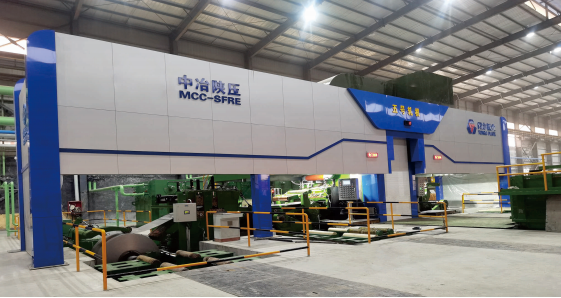
1050-1750mm Steel Strip Single-stand Reversible Cold Rolling Production Line
MCC-SFRE HEAVY INDUSTRY EQUIPMENT CO., LTD.

Comprehensive Mining Automation Control System
Beijing Tianma Intelligent Control Technology Co., Ltd.
Industrial and Commercial Point-Type Gas Detector
Jinan Benan Technology Development Co., Ltd.
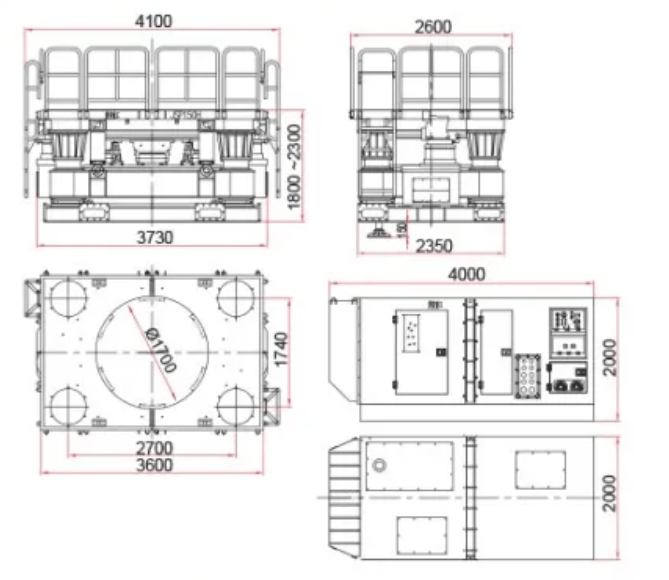

Core Technologies of the Mining Technology and Equipment Business Unit: Efficient Mining Methods and Processes
CHANGSHA INSTITUTE OF MINING RESEARCH CO., LTD.