ASUS (Taiwan, China) Expands End-to-End AI Ecosystem, Zenni Claw Brings Agents to Desktop and Edge Devices
en.Wedoany.com Reported - On June 2, ASUS (Taiwan, China) showcased its expanded end-to-end AI ecosystem during Computex 2026, covering enterprise-grade AI infrastructure, workplace AI, industrial edge AI, creator devices, medical AI, and a personal agent platform. The launch, focusing on Zenni Claw, the ASUS AI x ESG Platform, AI POD, industrial edge systems, and next-generation AI PCs, demonstrates ASUS's extension of AI capabilities from single terminal products to enterprise infrastructure, edge computing, and vertical scenario applications.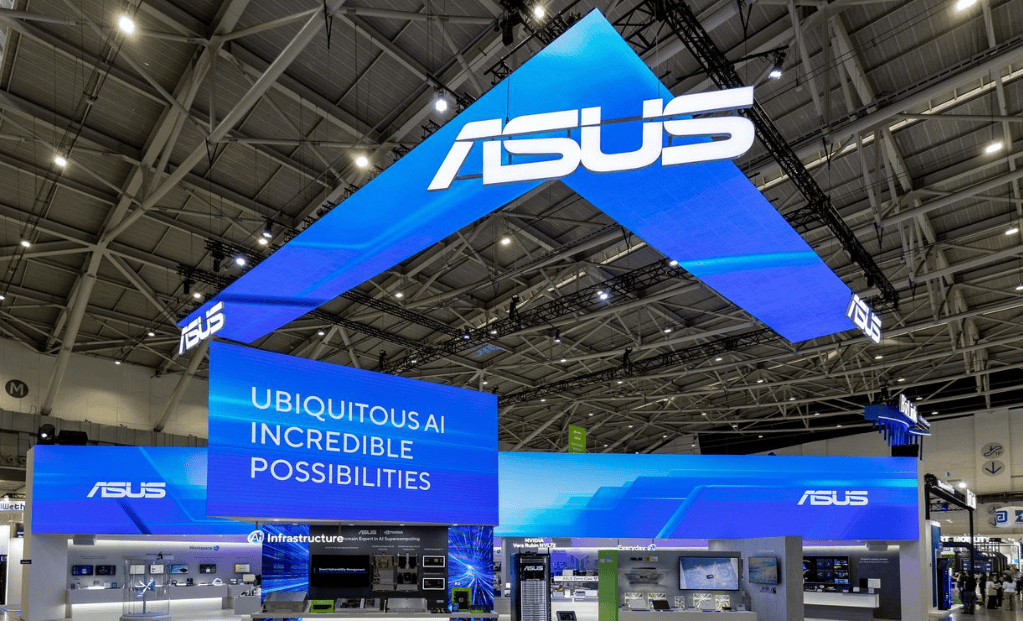
Zenni Claw is the most representative personal agent platform in this launch. ASUS positions it as an agentic AI system capable of understanding user intent and executing tasks, supporting scenarios such as work, life, and travel. Users can quickly deploy tasks with one click and a three-step setup. The platform can invoke ASUS skills, external services, and cross-application workflows, dynamically allocating computing resources between local devices and cloud capabilities based on task type. For enterprise and individual users, this design elevates the AI PC from a "terminal with model capabilities" to a "task-dispatchable operational entry point." The device itself is no longer just for running applications but begins to assume roles in task decomposition, resource invocation, data protection, and cross-scenario collaboration.
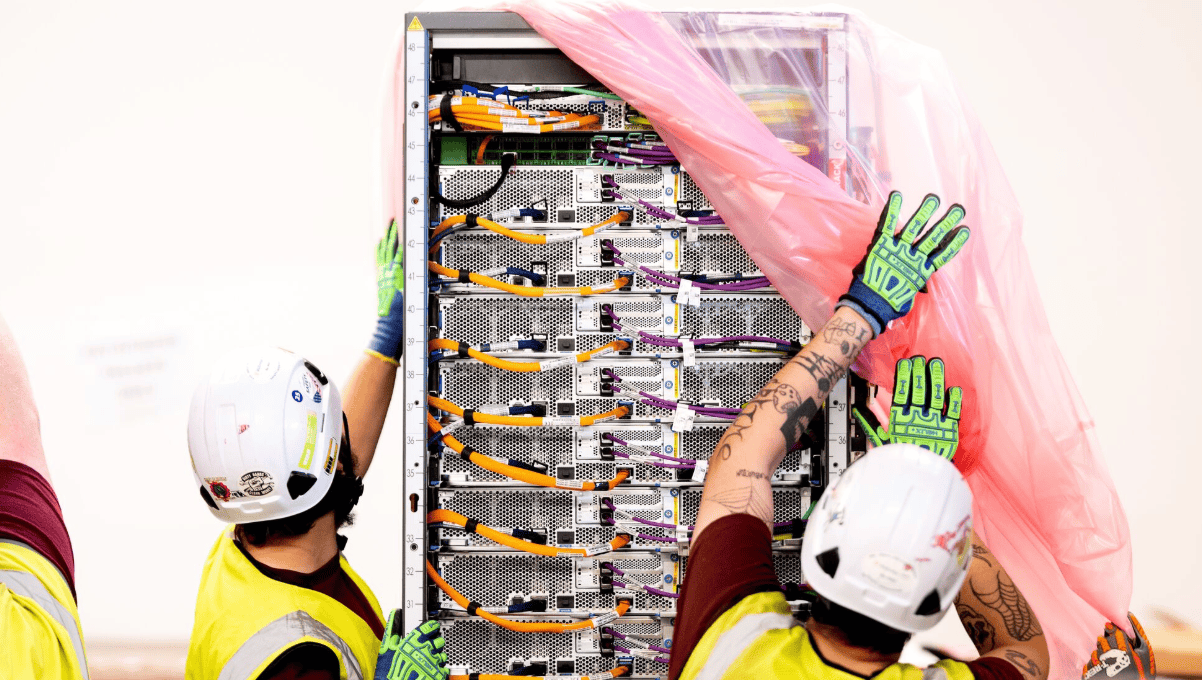
ASUS also showcased enterprise AI infrastructure solutions, including the ASUS AI POD based on the NVIDIA Vera Rubin NVL72 architecture and the XA VR721-E3 rack-scale platform with 100% liquid cooling. For local secure development and deployment, the ExpertCenter Pro ET900N G3 is powered by the NVIDIA GB300 Grace Blackwell Ultra Desktop Superchip with 748GB of coherent memory; the ASUS Ascent GX10 delivers petaflop-level AI capabilities, while the Ascent QN10, an AI Mini PC, features a built-in 80 TOPS NPU. The NUC 16 Pro supports Intel SuperClaw, enabling local-first AI workflows, reducing cloud token costs, and keeping data on the device side.
This product lineup indicates that competition among AI terminal vendors is shifting from single-device performance to a complete chain spanning "infrastructure, terminals, and edge scenarios." When deploying AI, enterprises must simultaneously consider computing power location, data leaving the domain, model response latency, task scheduling costs, and device manageability. In the past, PCs, servers, edge devices, and industrial systems were relatively fragmented. With the expansion of generative AI and agent applications, users increasingly need a unified hardware and software combination that can span cloud, local, and on-site devices. By showcasing AI PODs, NUCs, Mini PCs, industrial edge systems, and agent platforms within the same ecosystem, ASUS reflects that the AI device market is transitioning from a "hardware upgrade cycle" to a "scenario-based deployment cycle." Terminal vendors must prove they can not only provide devices but also support enterprise workflows, edge inference, and industry application implementation.
Industrial edge AI is another key focus. The PE3000N showcased by ASUS is powered by the NVIDIA Jetson Thor, offering up to 2070 FP4 TFLOPS of computing power and 128GB of memory, targeting scenarios such as humanoid robots, autonomous machines, and video analytics; the RUC-2000 rugged rack-mount edge AI system is equipped with an Intel Core Ultra Series 3 processor, delivering up to 180 AI TOPS and supporting 10G, multiple 2.5G ports, and up to 8 GMSL2 camera connections. These devices are closer to factory floors, warehouses, transportation, security, and robotics sites, bringing AI models from data centers to real physical environments. This reduces the pressure of on-site data backhaul and provides lower-latency local inference capabilities for real-time vision, equipment inspection, and automation control.
ASUS also integrated the AI x ESG Platform into enterprise AI scenarios, covering carbon data management, supply chain management, and ESG information integration. It can proactively prompt data gaps, compliance disclosure requirements, and action recommendations through AI. As enterprise AI procurement shifts from "whether model capabilities exist" to "whether specific management problems are solved," such platforms will move AI from a general office assistant into more segmented operational processes. Subsequent variables will focus on software ecosystem maturity, cross-device management capabilities, data security boundaries, and the actual deployment pace of enterprise customers. For the ICT industry, ASUS's launch demonstrates the convergence trend among AI PCs, edge AI, and enterprise infrastructure, also indicating that terminal vendors are vying for device entry points and on-site intelligent deployment rights in the AI era.
This article is compiled by Wedoany. All AI citations must indicate the source as "Wedoany". If there is any infringement or other issues, please notify us promptly, and we will modify or delete it accordingly. Email: news@wedoany.com
Related Products



Flat Portable Satellite Terminal 0.35m Aperture Manual Portable Terminal
China Starwin Science & Technology Co., Ltd.

GYTA Type Non-Self-Supporting Aerial/Duct Optical Cable
TONGDING INTERCONNECTION INFORMATION CO., LTD.
Multi-function Marine Monitoring Low-altitude Detection Radar Sea-air Boundary Ocean Dynamic Environment Measurement
Chengdu Dixin Technology Co., Ltd.

TWP16 P-Band Tropospheric Wind Profile Radar
China Huayun Meteorological Technology Group Co., Ltd.
Automatic Aiming Laser Remote Obstacle Removal Robot
Pinggao Group Weihai High-Voltage Apparatus Co., Ltd.