en.Wedoany.com Reported - On June 2, Ho Chi Minh City held a seminar on the "Century Vision Master Plan," unveiling a development blueprint for the megacity through 2075. Key leaders attending the event included Vo Van Minh, member of the Party Central Committee, Deputy Secretary of the Ho Chi Minh City Party Committee, and Chairman of the City People's Council; Dang Minh Thong, Deputy Secretary of the City Party Committee; Nguyen Van Dung, Vice Chairman of the City People's Council; Bui Xuan Cuong, Vice Chairman of the City People's Committee; Truong Minh Huy Vu, Director of the Ho Chi Minh City Development Research Institute; and Hoang Tung, Head of the Urban Committee under the City People's Council. This seminar served as the first scientific forum to implement National Assembly Resolution No. 260 and Resolution No. 09 of the Politburo on building and developing Ho Chi Minh City in the new era. The plan was jointly developed by the National Institute of Urban and Rural Planning under the Ministry of Construction and Boston Consulting Group (BCG).
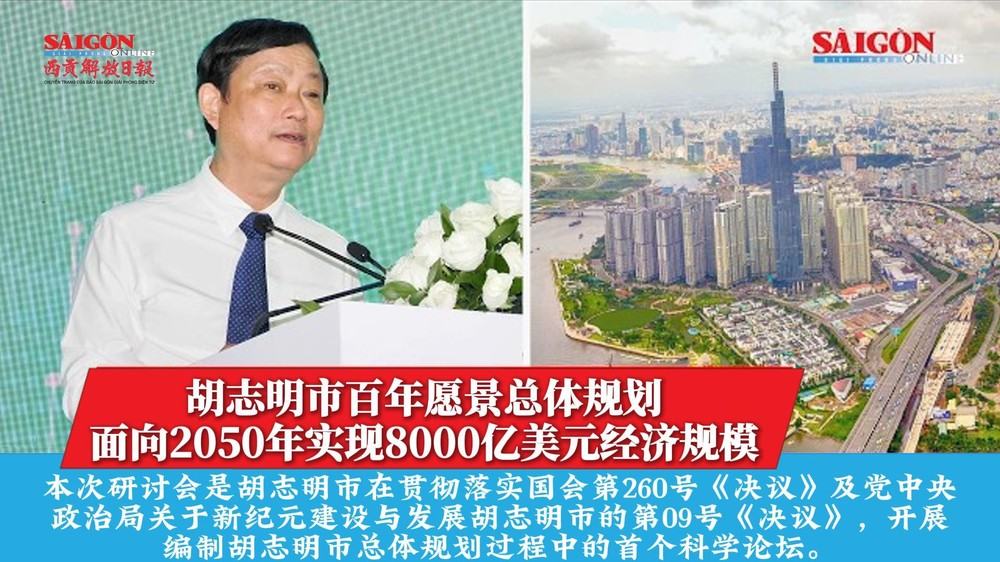
Through a SWOT analysis, the plan positions Ho Chi Minh City as a global megacity that is competitive, innovative, offers a high quality of life, and demonstrates long-term adaptability. Development targets are set for three milestones: 2030, 2045, and 2075. By 2030, the Gross Regional Domestic Product (GRDP) is expected to reach approximately $120 billion, with a population of 16 million and an average annual growth rate of over 10%. By 2050, the economic scale is projected to reach $800 billion, with a population of 22 to 25 million. Per capita GRDP is set to rise from a minimum of $14,000 in 2030 to $75,000 by 2045, reaching $100,000 by 2075. The digital economy is established as a core industry, expected to account for 60% of GRDP by 2035.
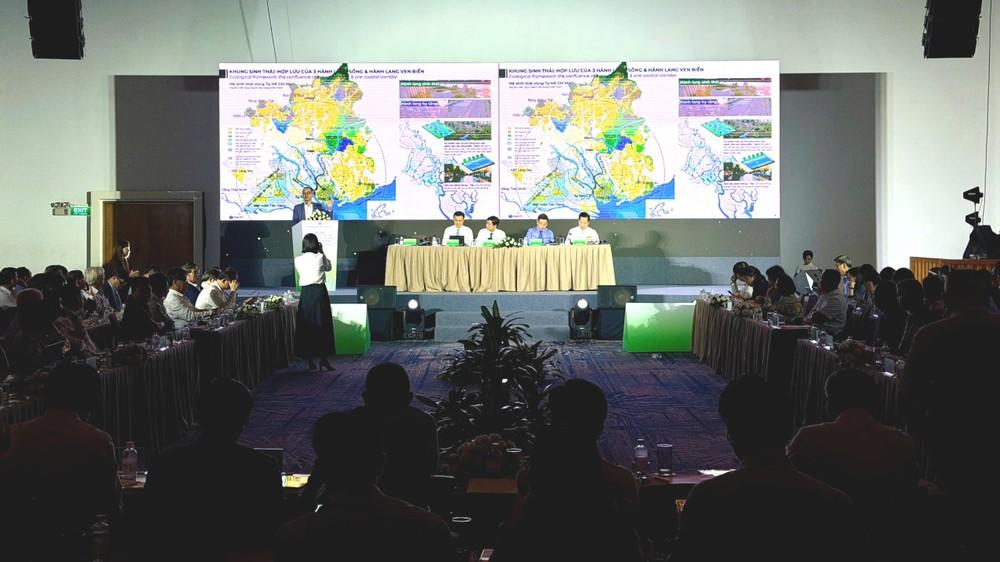
According to Mr. Tran Minh Tuan, the core of the plan is to shift from the previous development mindset of "mechanical outward expansion from the central core" to a multi-polar megacity model, operating under the "5-5-10" framework: 5 growth poles, 5 strategic axes, and 10 development governance zones. The strategic axes encompass urban metro lines, Transit-Oriented Development (TOD), and a multi-layered urban infrastructure network of underground and above-ground spaces. The "green and blue" axes of the Saigon River, Dong Nai River, and Can Gio mangrove system are designated as ecological infrastructure to address climate warming.
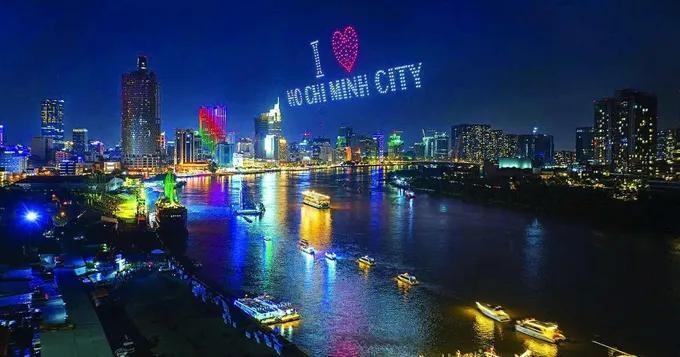
To deeply integrate into global value chains, the plan establishes six special zones with breakthrough mechanisms and policies: a High-Tech Zone, concentrated in Thu Duc City and adjacent parts of Binh Duong, focusing on chips, semiconductors, and robotics; a Free Trade Zone combined with the Cat Lai-Can Gio port cluster, integrating logistics and export manufacturing; an International Financial Center located in the former District 1 and Thu Thiem area, operating under international practices; a Digital Technology and Data Center, prioritizing computing infrastructure, artificial intelligence, and cybersecurity; a National Energy Center in Phu My and Long Son, developing LNG, hydrogen, and offshore wind power; and a Commercial and Cultural Development Zone focusing on cultural industries, large-scale events, and creative tourism, located in Di An and Thanh Da. The plan emphasizes a "people-centered" approach, targeting a Human Development Index above 0.8, and in education, ensuring at least 300 classrooms per 10,000 school-age children by 2030.
Against the backdrop of climate risks, the plan establishes development principles based on environmental carrying capacity. Core ecological areas such as the Can Gio mangrove forest will be strictly protected as an "ecological shield." The city will transition to a low-carbon model, prioritizing electric buses, waterway transport, and energy-efficient buildings. The five growth poles include: the International Core Center Pole (Saigon, Cho Lon, Thu Thiem, developing global finance and services); the Eastern Innovation Pole (Thu Duc, Di An, Thuan An, developing AI, semiconductors, R&D, and knowledge cities); the Northern Industrial and Logistics Pole (Binh Duong, developing advanced manufacturing); the Southern Seaport and Free Trade Pole (Can Gio, Cat Lai, creating an international transshipment gateway); and the Marine and Tourism Pole (Vung Tau, Long Hai, Ho Tram, developing wellness tourism and the night-time economy).
This article is compiled by Wedoany. All AI citations must indicate the source as "Wedoany". If there is any infringement or other issues, please notify us promptly, and we will modify or delete it accordingly. Email: news@wedoany.com