China's Tencent WeChat Partners with Huawei and Other Phone Makers to Launch A2A Assistant Capability
en.Wedoany.com Reported - June 2 news, WeChat is collaborating with smartphone manufacturers including Huawei, Honor, Xiaomi, OPPO, and vivo to launch the A2A assistant capability. Users can initiate WeChat audio and video calls or send messages to designated contacts through their phone's voice assistant, with related features gradually rolling out.
The core change of this feature is the formation of a clearer agent collaboration relationship between the phone manufacturer's AI assistant and WeChat. According to disclosed information, A2A stands for Agent-to-Agent, where the manufacturer's AI assistant sends instructions to WeChat, and WeChat executes and returns the results. Users do not need to first enter the WeChat app, search for contacts, open a chat window, or access the call interface; instead, they can directly complete some WeChat operations through the system's voice assistant. For phone manufacturers, this means that system-level agents are no longer limited to basic tasks like weather queries, alarm settings, or app launches, but have entered the real interaction loop of high-frequency third-party applications. For WeChat, by integrating capabilities such as audio/video calls and message sending into the terminal voice entry point through the A2A mechanism, it can further adapt to the AI-native interactive experience that phone manufacturers are advancing.
Currently, some Honor models have already taken the lead in supporting this capability. After users update the YOYO agent to a specified version and update WeChat to the latest version, they can initiate WeChat messages, voice calls, and video calls through YOYO voice commands.
With the implementation of the A2A capability, the competitive focus of phone AI assistants will shift from "being able to answer questions" to "being able to call applications to complete tasks." In the past, voice assistants' operational capabilities within third-party applications were long limited, with many functions requiring manual authorization, redirection, and confirmation from users, often disrupting the actual experience. As one of the most core communication and social applications in China's mobile internet, if WeChat's messaging and calling capabilities can be opened to phone agents under a dual-authorization mechanism, it will provide end-side AI assistants with higher-frequency and more essential usage scenarios. Manufacturers such as Huawei, Honor, Xiaomi, OPPO, and vivo have been strengthening their system-level AI assistants in recent years. The WeChat A2A collaboration essentially connects agent capabilities to users' daily communication channels, linking voice entry points, contact relationships, and application execution capabilities.
This feature will also bring new product boundary requirements. WeChat message sending and audio/video calls involve contacts, communication content, account permissions, and device status. A2A collaboration must maintain a balance between explicit user authorization, operation confirmation, and privacy protection. Disclosed information mentions that the relevant mechanism adopts dual authorization to ensure data security and privacy compliance, meaning that the phone manufacturer's AI assistant does not directly take over WeChat but instead sends task requests to WeChat within the authorization framework, with WeChat completing execution and returning results. Subsequent variables focus on the range of supported models, WeChat version requirements, the adaptation progress of each manufacturer's AI assistant, the types of executable instructions, and whether cross-application tasks will further expand to more complex scenarios such as payments, files, group chats, and office collaboration.
The launch of the WeChat A2A assistant capability marks a new phase in AI collaboration between Chinese phone manufacturers and leading applications. As end-side agents move from system functions to third-party application calls, the entry point relationships among phone operating systems, super apps, and AI assistants will be readjusted. Whoever can enable users to complete high-frequency tasks with the fewest steps will have a greater chance of occupying the next-generation mobile interaction entry point.
This article is compiled by Wedoany. All AI citations must indicate the source as "Wedoany". If there is any infringement or other issues, please notify us promptly, and we will modify or delete it accordingly. Email: news@wedoany.com
Related Products


Industrial and Commercial Point-Type Gas Detector
Jinan Benan Technology Development Co., Ltd.

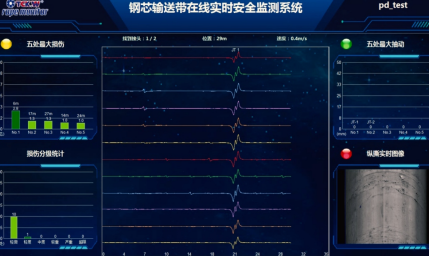
Conveyor Belt Intelligent Monitoring System
LUO YANG WIRE ROPE INSPECTION TECHNOLOGY CO., LTD.
Automatic Aiming Laser Remote Obstacle Removal Robot
Pinggao Group Weihai High-Voltage Apparatus Co., Ltd.
G.652.D Wavelength-extended Non-dispersion Shifted Single-mode Optical Fiber
HONGAN GROUP CO., LTD.

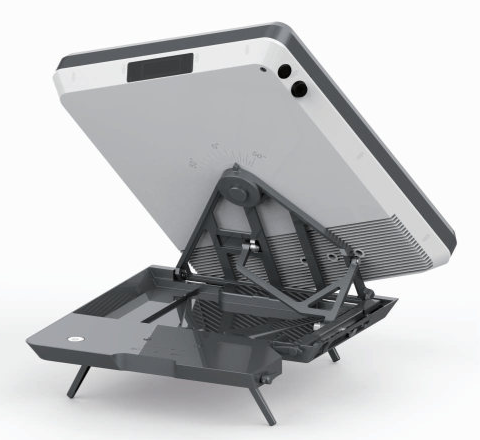
Flat Portable Satellite Terminal 0.35m Aperture Manual Portable Terminal
China Starwin Science & Technology Co., Ltd.