Nvidia Acquires Enterprise Predictive AI Startup Kumo AI
en.Wedoany.com Reported - On June 3, Nvidia acquired Kumo AI, an enterprise predictive AI startup. Founded about four years ago, Kumo AI primarily develops foundation models for enterprise structured data to enhance business forecasting capabilities. The three co-founders of Kumo AI—Vanja Josifovski, Hema Raghavan, and Jure Leskovec—joined Nvidia last month.
Kumo AI's business direction is highly aligned with Nvidia's expanding enterprise AI software landscape. Over the past two years, the AI industry's focus has primarily been on large language models, image generation, multimodal assistants, GPU training clusters, and inference platforms. However, a larger volume of data assets within enterprises often resides in transaction systems, customer relationship management, supply chains, inventory, advertising placements, financial risk control, equipment operations, and database tables. This structured data is characterized by strong relationships, high dimensionality, real-time changes, and complex business semantics. Traditional machine learning projects typically require data science teams to perform feature engineering, model training, parameter tuning, and deployment, which is time-consuming, costly, and difficult to quickly reuse across different business scenarios. Kumo AI attempts to use a foundation model approach to handle enterprise relational data, enabling businesses to generate predictions faster on issues such as customer churn, recommendations, fraud detection, risk scoring, demand forecasting, and entity resolution. For Nvidia, this capability can further connect GPU computing power, the AI software stack, and enterprise business systems, extending its role from an AI infrastructure provider toward an enterprise decision intelligence platform.
Kumo AI is headquartered in Mountain View, California, USA. The founding team has backgrounds in graph learning, enterprise data, and large-scale internet platforms. Vanja Josifovski previously served as a technology executive at Airbnb and Pinterest, Jure Leskovec is a professor at Stanford University, and Hema Raghavan has led engineering and AI-related work at companies such as LinkedIn.
This acquisition also reflects Nvidia's evolving role in the AI industry chain. Nvidia's core strengths still come from GPUs, the CUDA ecosystem, data center networking, and high-performance inference platforms, but its competitive boundaries have clearly expanded beyond hardware sales alone. As enterprise customers shift from "purchasing computing power" to "using AI to solve specific business problems," Nvidia needs to fill more software capabilities in model deployment, industry applications, enterprise data connectivity, and automated workflows. Kumo AI's predictive models for structured enterprise data directly address a frequent pain point in enterprise AI adoption: many business decisions are not just about generating text or images, but about determining which customers might churn, which transactions pose risks, which products need restocking, which users might click or purchase, and which equipment might fail. If these predictive capabilities are combined with Nvidia's enterprise AI software, GPU-accelerated inference, and cloud deployment tools, Nvidia can gain a stronger entry point in the enterprise AI application layer.
In recent years, Nvidia has continuously expanded its AI ecosystem through acquisitions, investments, and team recruitment. With Kumo AI joining, Nvidia will gain more direct technology and talent supplementation in structured data, relational models, and enterprise predictive AI. Subsequent variables include whether Kumo AI's products will retain an independent brand, how its predictive models will integrate into Nvidia's software system, how existing customer collaborations will continue, and whether Nvidia will launch standardized industry solutions around enterprise prediction scenarios. As AI moves from content generation to enterprise business decision-making, enterprise predictive AI may become a key focus for the next phase of AI commercialization.
This article is compiled by Wedoany. All AI citations must indicate the source as "Wedoany". If there is any infringement or other issues, please notify us promptly, and we will modify or delete it accordingly. Email: news@wedoany.com
Related Products

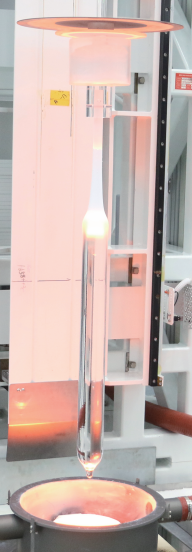
G.652.D Wavelength-extended Non-dispersion Shifted Single-mode Optical Fiber
HONGAN GROUP CO., LTD.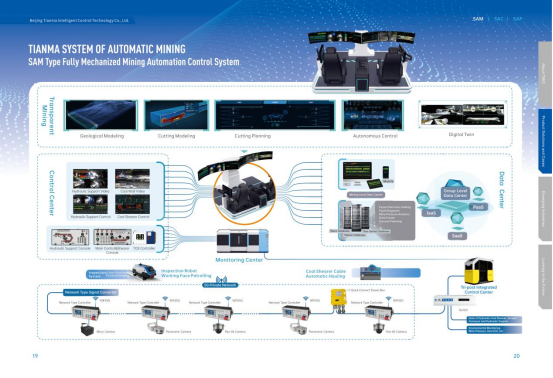
Comprehensive Mining Automation Control System
Beijing Tianma Intelligent Control Technology Co., Ltd.
MUX Series Communication Interface Device for Security and Stability Control System
Nanjing NR Electric Co., Ltd.


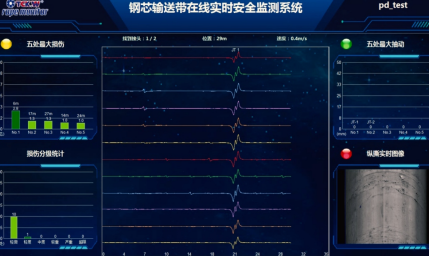
Conveyor Belt Intelligent Monitoring System
LUO YANG WIRE ROPE INSPECTION TECHNOLOGY CO., LTD.