LANZA Atelier from Mexico Designs All-Brick Pavilion for Serpentine Gallery in the UK
en.Wedoany.com Reported - LANZA Atelier, based in Mexico City, has designed and built this year's pavilion, "A Serpentine," for the Serpentine Gallery in London. The structure features dry-laid red clay brick curved walls, becoming the first fully brick-built temporary structure in the 25-year history of the Serpentine Pavilion.
The Serpentine Pavilion series began in 2000 with Zaha Hadid's inaugural white canopy. Since then, it has annually invited international architects to erect temporary structures in Kensington Gardens. Over 25 years, works have included Rem Koolhaas and Cecil Balmond's inflatable oval canopy, SANAA's floating mirrored canopy, Peter Zumthor's black garden box, Francis Kéré's blue tree-like canopy, and Marina Tabassum's dynamic wooden capsule. This year's pavilion is designed by LANZA Atelier, founded by Isabel Abascal and Alessandro Arienzo in Mexico City, marking the studio's debut in the UK.
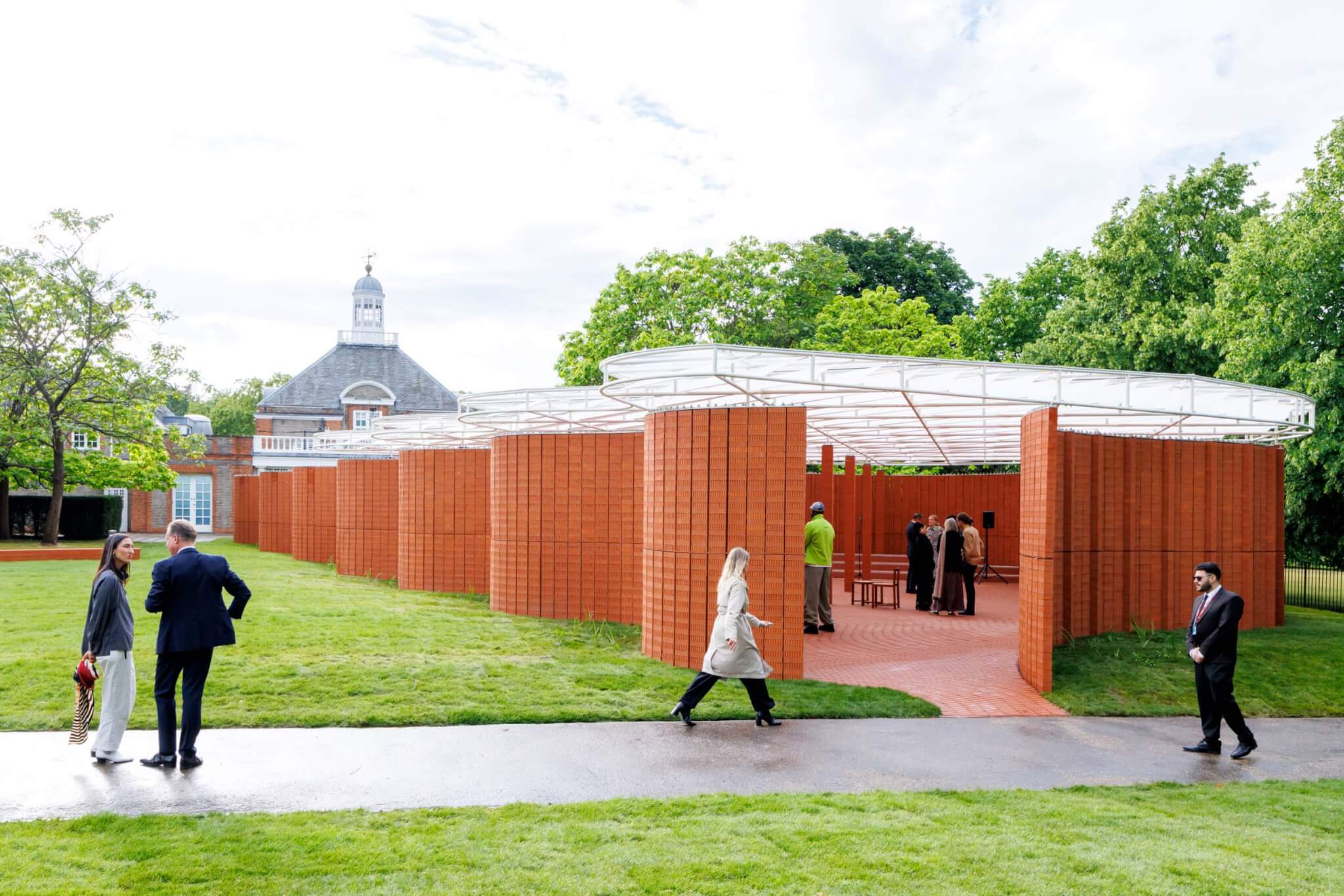
The pavilion's form revolves around crinkle crankle walls, a type of wavy brick garden wall associated with the East Anglia region of England. The sinusoidal curves provide lateral stability while using fewer bricks than straight walls. LANZA selected red clay bricks, echoing the brick facade of the Serpentine South gallery and the vernacular of English garden walls. The bricks are dry-laid, threaded onto metal rods, with facets alternating outward to capture light and tolerate unevenness, while also making the walls easy to dismantle. The walls and a grid of brick columns, built using the same dry-laid system, support a white steel space frame that carries polycarbonate roof panels and is shaded by fabric blinds.
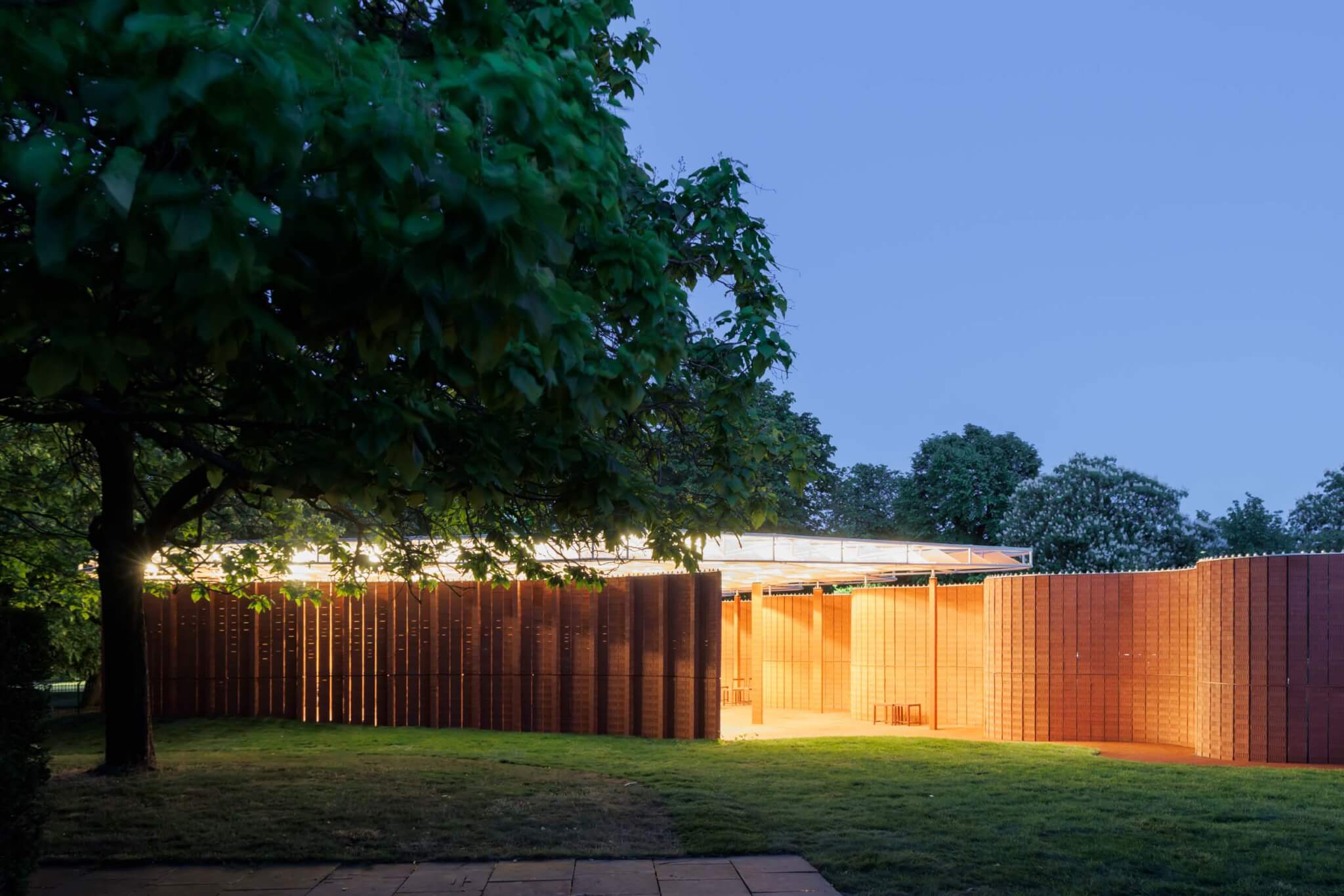
"The mortar is gravity," said Arienzo. "The entire wall is made of columns." The pavilion's curved walls are not continuously bonded brickwork but a series of narrow brick columns, secured by metal plates at the top and bottom, with gaps between the columns for air, sound, and play to circulate. Traditional crinkle crankle walls achieve self-support through their winding plane and the bond of overlapping bricks. In LANZA's version, steel rods and plates take on the structural role, making the curved wall form more of a reference. Abascal described it as "an evocation or allegory of the crinkle crankle wall," adding that the garden itself is "an allegory of nature."
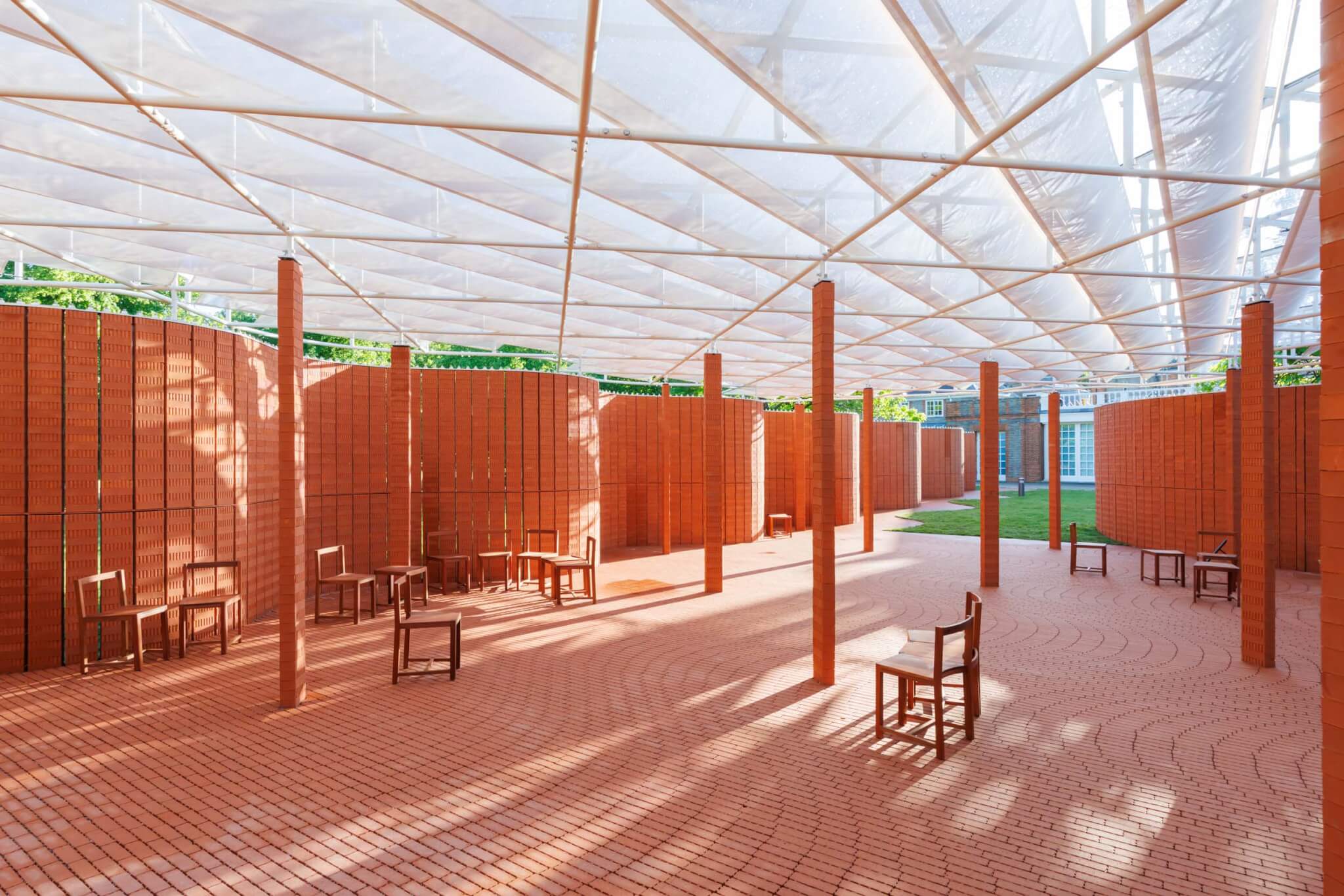
The pavilion also features a series of chairs and stools made from sapele hardwood, with slightly wedge-shaped seats that create a wall-like curve when placed side by side. The furniture is movable, allowing it to be gathered or dispersed. At the opening ceremony, Abascal expressed joy at seeing the pavilion "occupied for the first time by dozens of people," with visitors using "the furniture, the coffee, the sunlight that appears." In addition to hosting cultural events, the pavilion must also serve as a summer room and backdrop suitable for sponsors and private events.
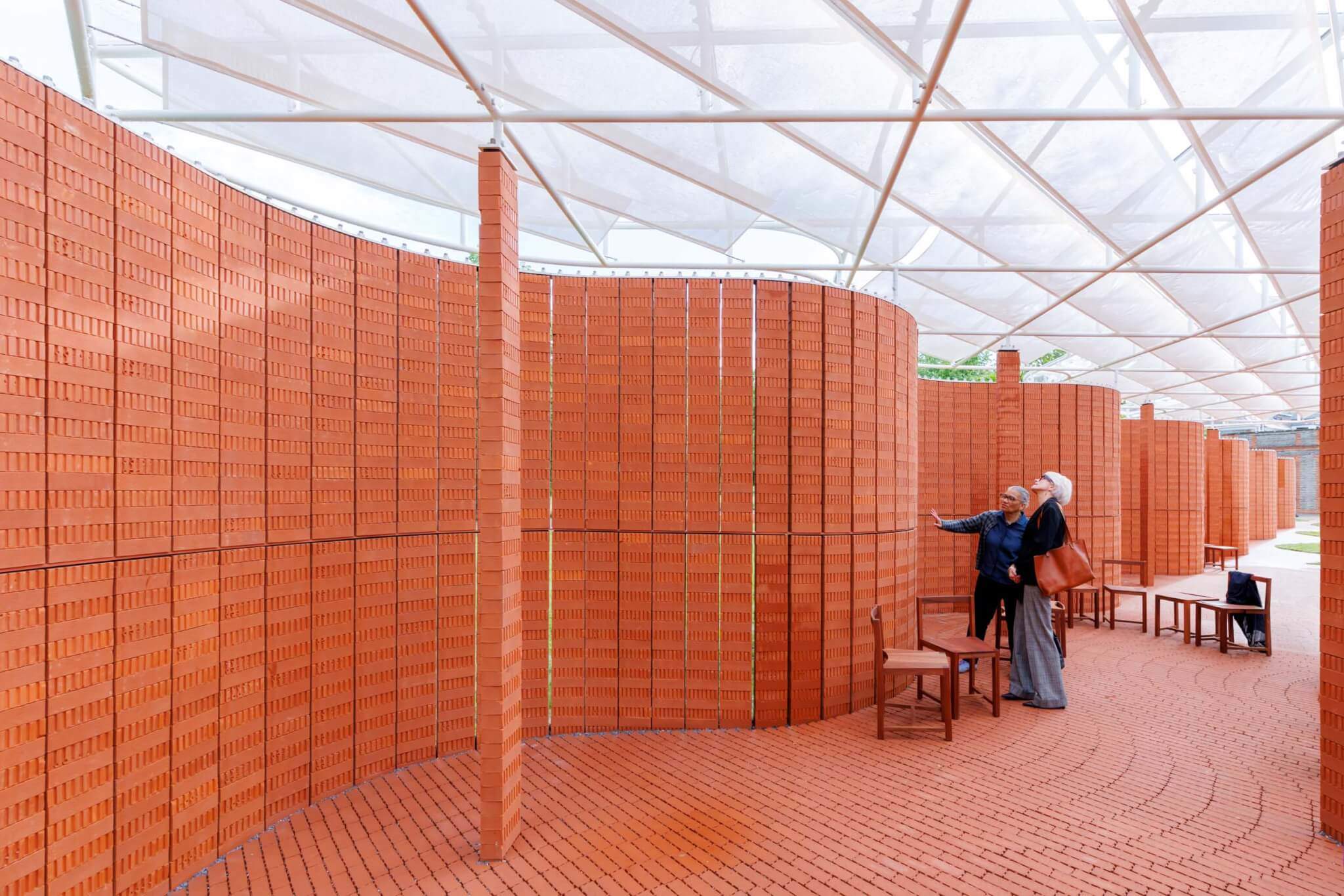
Notably, this is the first Serpentine Pavilion in its 25-year history to be built from brick. In London, brick is often considered too ordinary, as most of the city's buildings are constructed from it. LANZA uses this familiarity to challenge assumptions about the material's solidity, making the timeless material temporary and the enclosed form social. Abascal noted: "Gardens may seem naive and picturesque, but they are tools for shaping the world, both socially and politically."
This article is compiled by Wedoany. All AI citations must indicate the source as "Wedoany". If there is any infringement or other issues, please notify us promptly, and we will modify or delete it accordingly. Email: news@wedoany.com
Related Products


Industrial and Commercial Point-Type Gas Detector
Jinan Benan Technology Development Co., Ltd.
Dual-curved Arm Rock Drilling Trolley RSD200D
Chengdu Ruilong Machinery Manufacturing Co., Ltd.
Bidirectional Metal Hard Sealed Seawater Butterfly Valve
Henan Quanshun Flow Control Science & Technology Co., Ltd.
Acoustic Mineral Fiber Ceiling Tile 595x595x12mm
Shanxi Pano Trading Co., Ltd
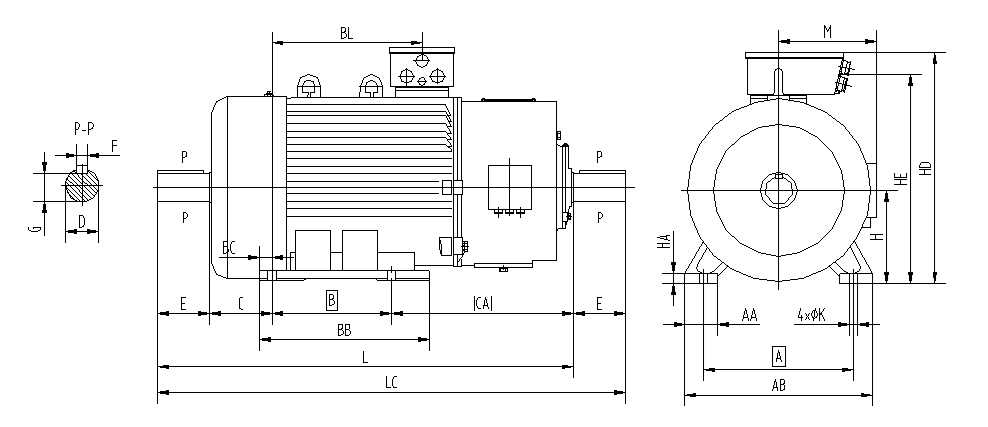
YZR (450-560) Series Wound Rotor Three-Phase Asynchronous Motors for Crane and Metallurgical Applications
Jiamusi Electric Machine Co., Ltd.
ERW Welded Pipe (Black Pipe and Hot-dip Galvanized Steel Pipe)
Handan Zhengda Steel Pipe Co., Ltd.
RISITA explosion-proof air conditioning
Guangdong RISITA Air Conditioning Equipment Co.,Ltd.