en.Wedoany.com Reported - Peterson Rich Office (PRO) has completed the design of the Condé M. Nast Galleries at The Metropolitan Museum of Art, transforming a former courtyard into nearly 12,000 square feet of exhibition space. The galleries primarily host the Costume Institute's annual spring exhibition, which opened this May with Costume Art, featuring pieces curated by age, body type, gender, and disability.
Since its founding in 1870, The Metropolitan Museum of Art has built at least 21 separate structures and has been undergoing continuous renovations in recent years. The Michael C. Rockefeller Wing opened last year, while projects led by NADAAA and Frida Escobedo are underway. The Condé M. Nast Galleries, designed by PRO, are divided into five distinct areas.
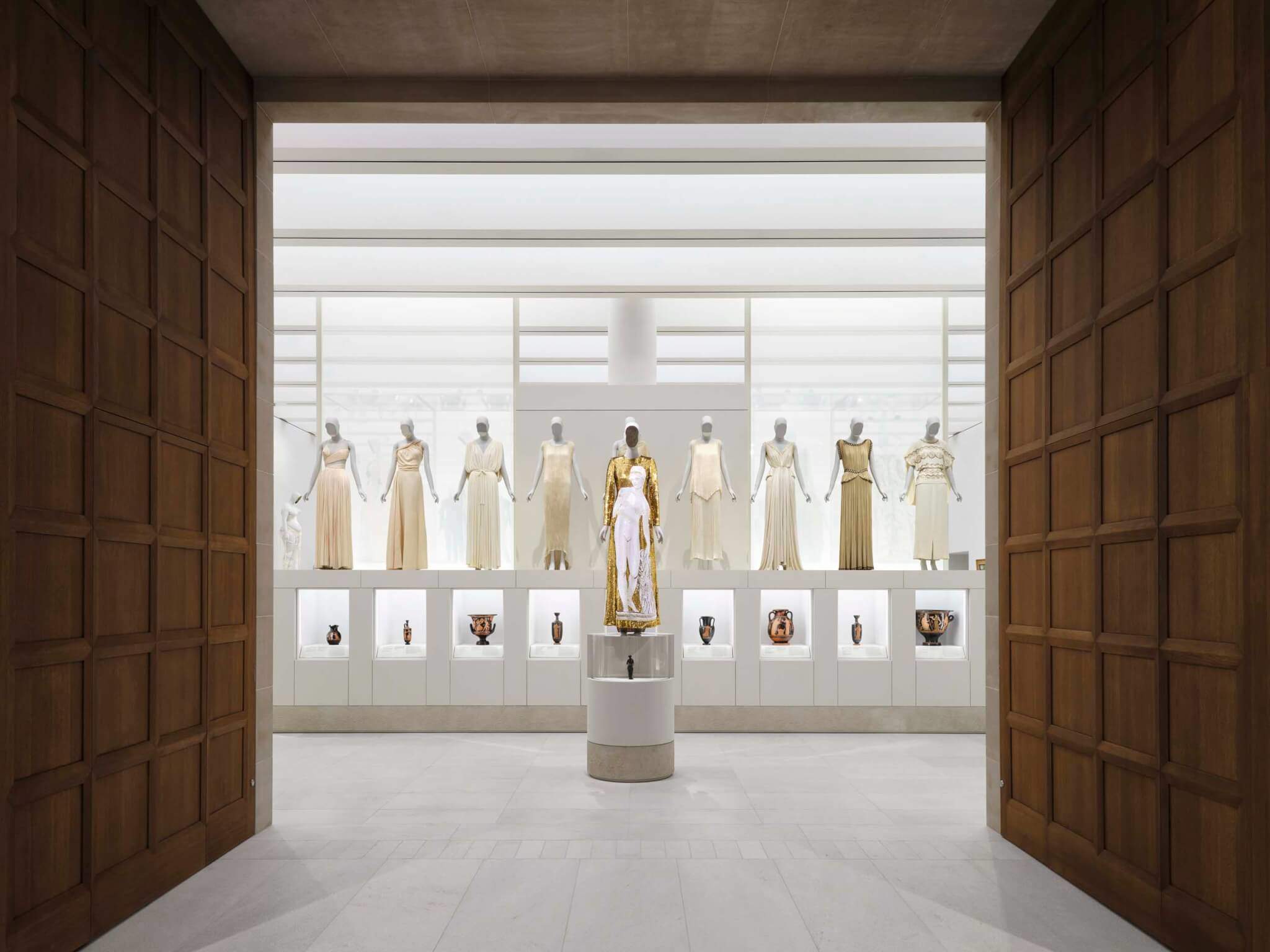
The Orientation Gallery merges with the Great Hall, using limestone material commonly found in the hall for its entrance. Two large display cases face visitors in the Great Hall and on the grand staircase; PRO founding partner Miriam Peterson noted that these cases serve as an opening statement for the curatorial narrative. The paneled oak entrance doors, each approximately 8x16 feet, can be rotated closed, as the galleries will be shut for three months each year to prepare for the next costume exhibition.
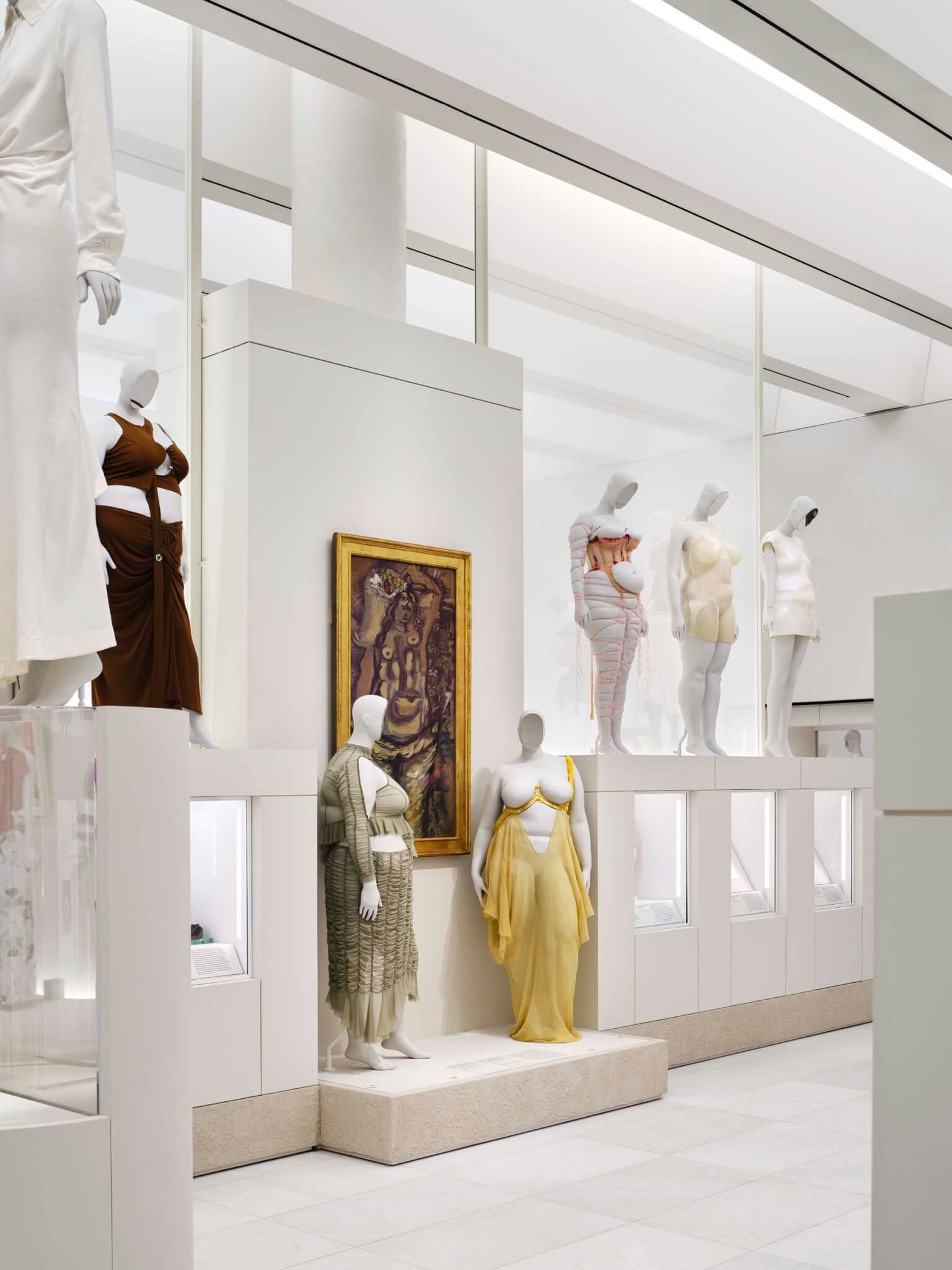
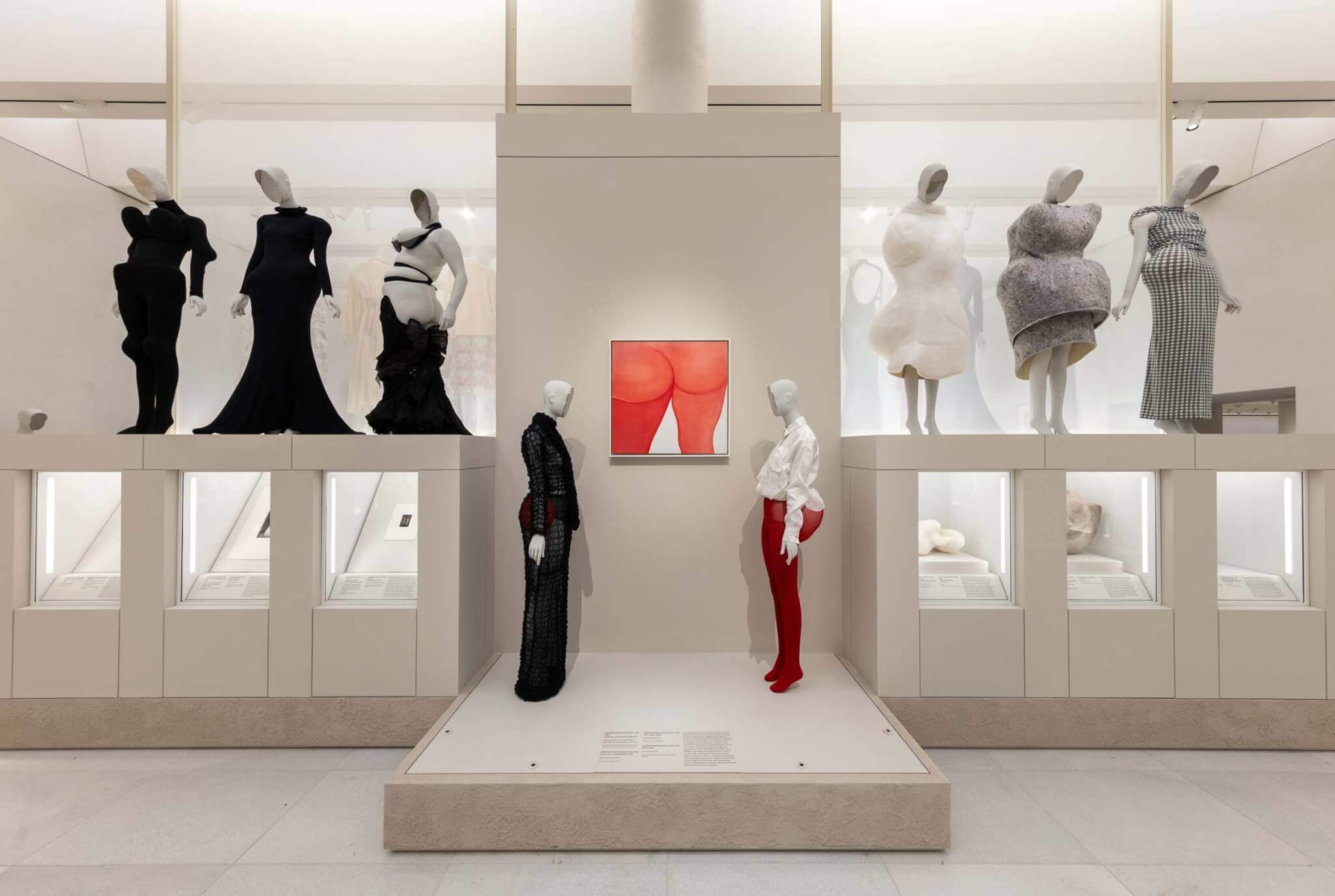
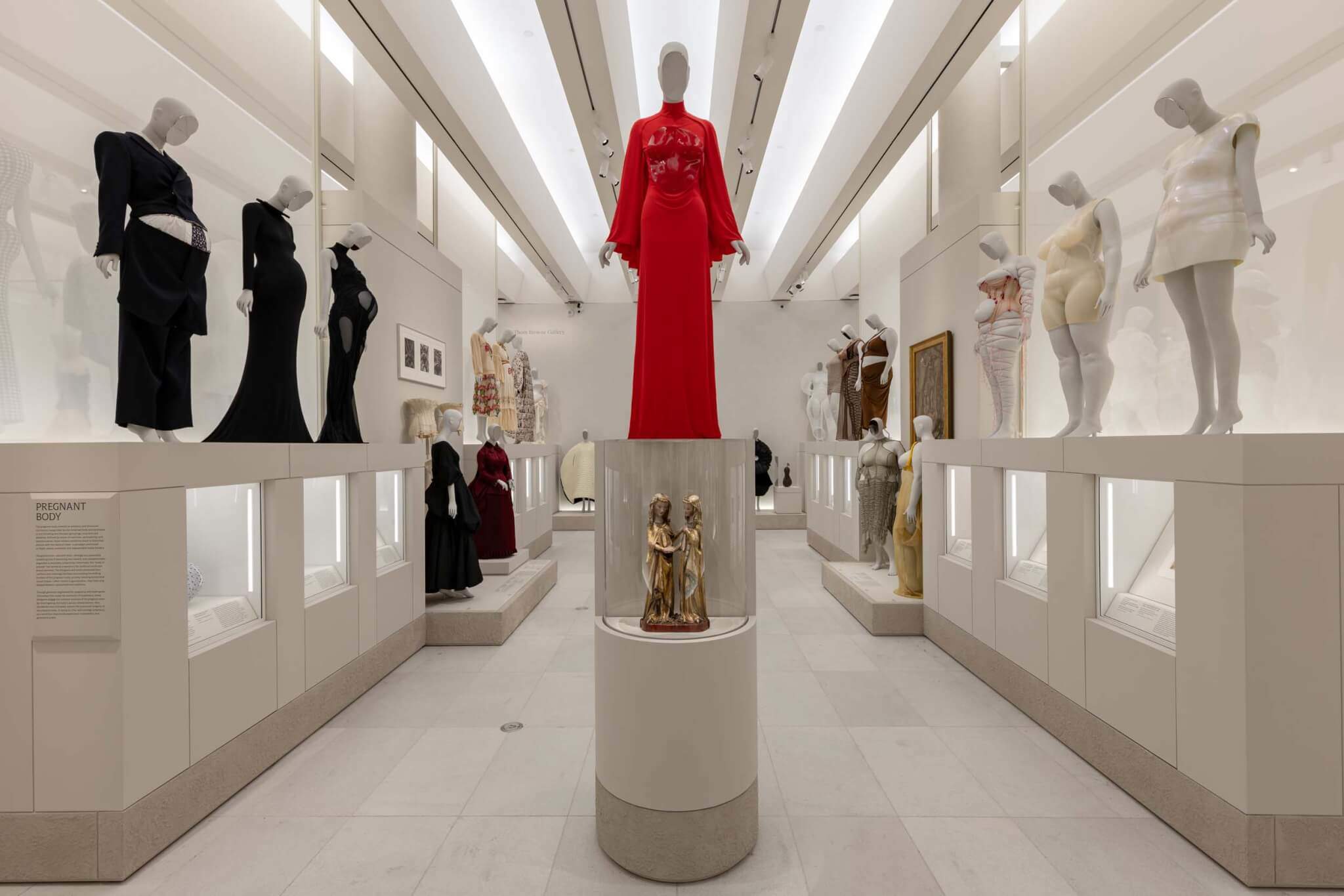
The interior includes two paired spaces: the High Gallery, which is taller and brighter, and the Low Gallery, which is lower and dimmer. PRO founding partner Nathan Rich stated that different lighting qualities imbue the spaces with distinct character. In the High Gallery, lighting is evenly distributed by illuminating the ceiling above the structural beams; under the 21-foot-high ceiling, garments are displayed at eye level and on six-foot-high raised pedestals. Mannequins feature mirrored, cut-out faces designed by artist Samar Hejazi. The Low Gallery uses scrim partitions to mark rows of space, and the opening between the two galleries can be reconfigured.
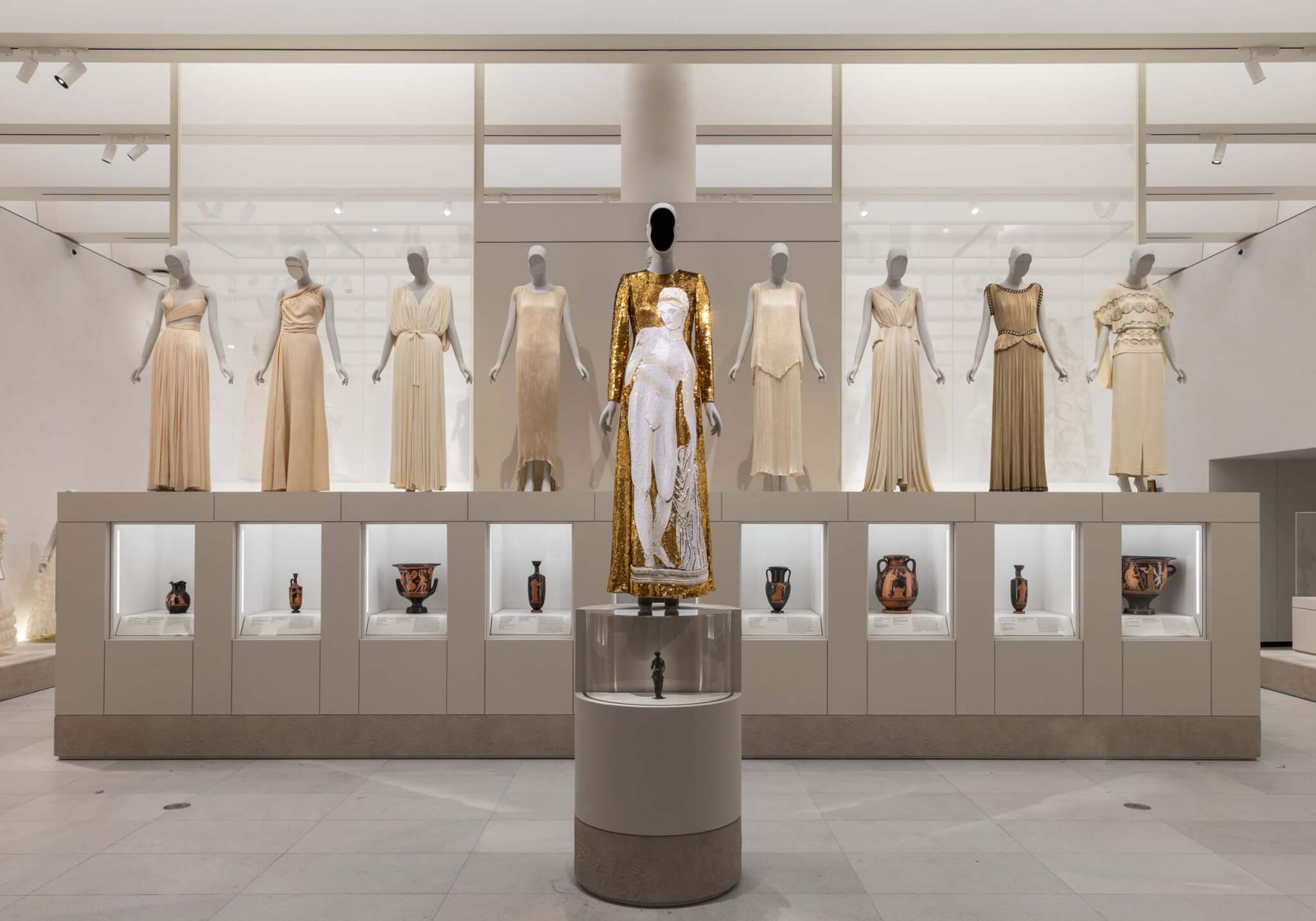
The walls are finished with gray marmorino plaster, with colors echoing the nearby limestone and quartz. Along the floor, display cases feature a 12-inch-high band of rough stone finish, above which striped paneling references stone textures. Lighting is by Dot Dash, with exhibition lighting provided by CS Global; the PRO team also includes executive architect Beyer Blinder Belle, structural engineer TYLin, and MEP engineer Kohler Ronan.
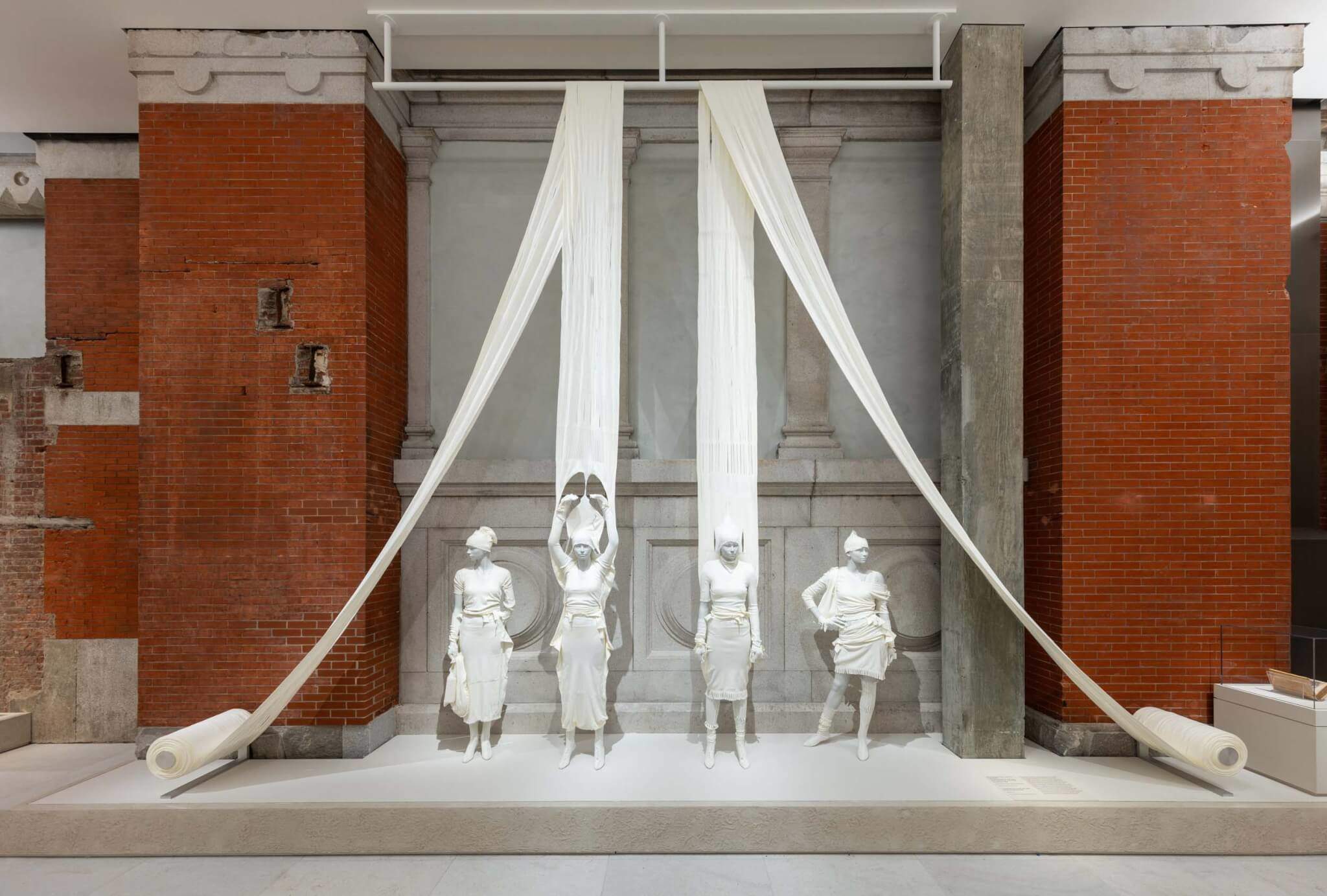
In the Finale Gallery, PRO exposed traces of collisions from previous structures, including walls from the original 1880 building (designed by Calvert Vaux) and the 1894 wing (designed by Arthur Lyman Tuckerman). New walls and a concave ceiling maintain a distance from the original surfaces, while a concrete column from the Kevin Roche era falls within the space, creating a palimpsest-like layering. A small dedicated shop follows this concept, adding built-in bookshelves for catalog displays.
In the Costume Art catalog essay, PRO wrote that the fundamental affinity between architecture and clothing lies in their existence solely through their relationship to the human body, with the goal always being to acknowledge "our shared humanity." PRO's collaboration with the Met also includes the redesign of the 83rd Street and Fifth Avenue street-level entrances, the reimagining of the museum's dining and retail spaces, and the renovation of two of the four corners of the Met's Great Hall.
This article is compiled by Wedoany. All AI citations must indicate the source as "Wedoany". If there is any infringement or other issues, please notify us promptly, and we will modify or delete it accordingly. Email: news@wedoany.com