Three Laboratories of the KOMAG Institute in Poland Receive Accreditation
en.Wedoany.com Reported - Three laboratories of the KOMAG Institute have received accreditation following a rigorous evaluation by the Polish Centre for Accreditation under the Act on the Conformity Assessment System, confirming the institution's technical reliability within specific testing scopes. This accreditation solidifies KOMAG's position as a partner for manufacturers, public institutions, and research organizations, and also reflects its ability to integrate scientific excellence with practical application in the service industry.
The KOMAG Institute of Mining Technology is dedicated to applying composite materials in mining machinery and equipment structures, as well as in post-mining area revitalization projects. Related R&D efforts include: using composite materials in the design of belt conveyors for hard coal mining to enhance durability and reduce component weight; analyzing the use of lightweight composite materials in enclosures for explosion-proof electrical equipment to improve safety in mine roadways and reduce structural loads; optimizing the design of lifting containers for mine rescue operations to reduce equipment weight and improve transport and rescue efficiency; developing fourth- and fifth-generation composite pressure vessels for hydrogen energy production and storage; and designing load-bearing structures for floating photovoltaic power plants, leveraging the lightweight and corrosion-resistant properties of composites. Through these initiatives, KOMAG participates in the modernization of the mining industry and creates solutions that support the energy transition and low-emission technologies.
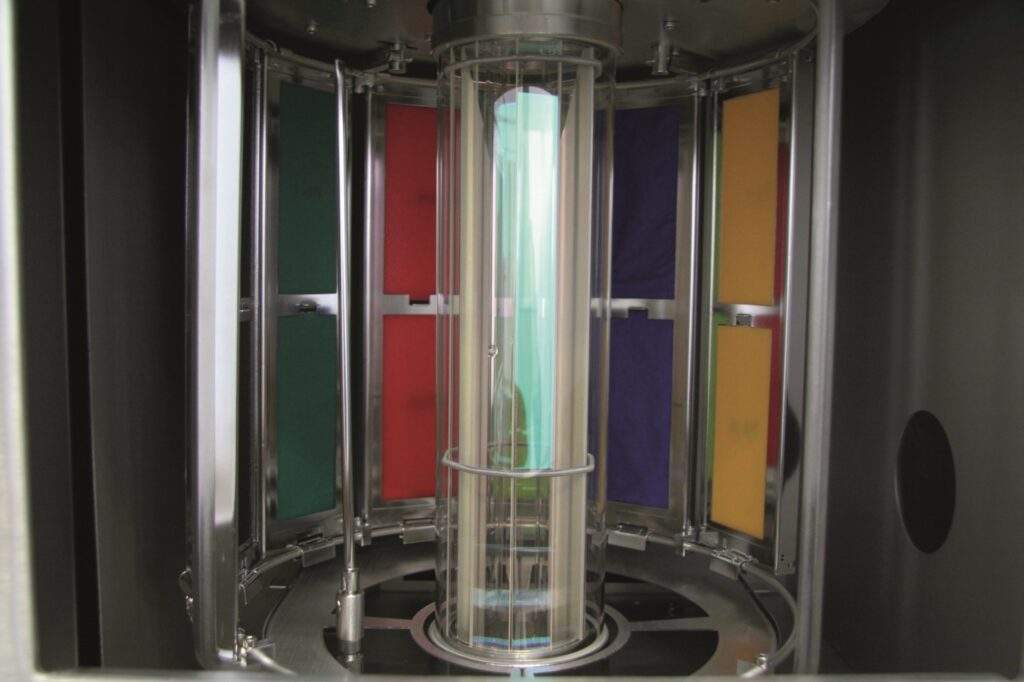
The Laboratory of Material Engineering and Environment focuses on the comprehensive assessment of consumer product safety. The laboratory's capabilities have been accredited by the Polish Centre for Accreditation in Warsaw (No. AB 910) and notified by the European Commission within the scope of Directive 2009/48/EC (No. NB 1456). The laboratory conducts chemical tests on packaging and products intended to come into contact with food, primarily in accordance with EU Regulation No. 10/2011 and Regulation No. 1895/2005. The testing scope includes determining toxic elements and organic compounds classified as CMR (carcinogenic, mutagenic, reprotoxic), as well as their migration into food simulants. The laboratory also tests the effects of environmental factors on the color fastness of polymer materials.
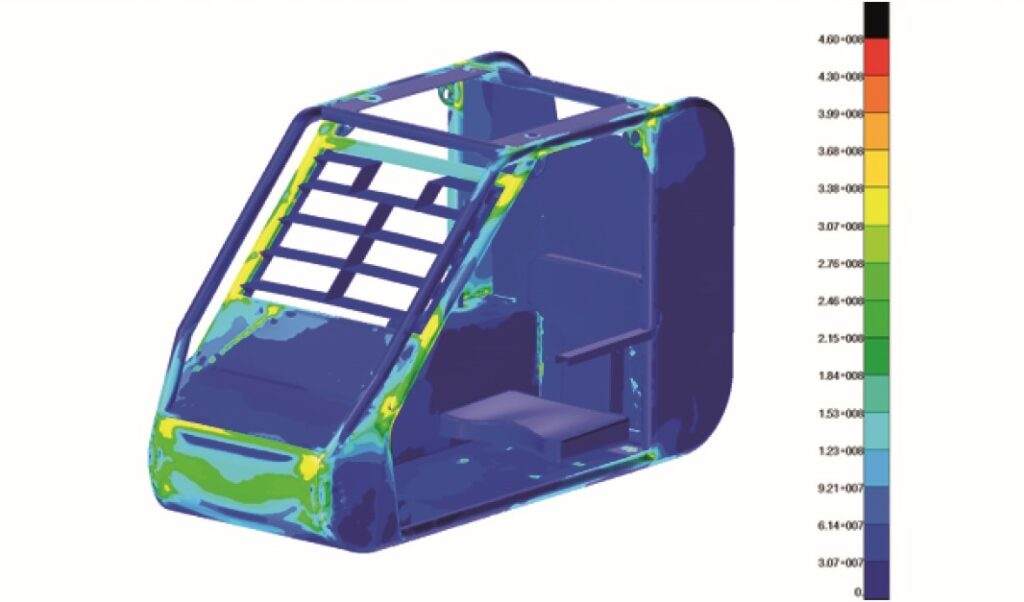
The Laboratory for Modelling Methods and Ergonomics deals with virtual prototyping methods. Research in this field includes: static strength calculations and thermal numerical calculations using the Finite Element Method (FEM); calculations of dynamic phenomena considering material and geometric nonlinearities; MBS analysis; numerical flow calculations using Computational Fluid Dynamics (CFD); and developing practical applications of the Discrete Element Method (DEM) for simulating bulk materials, particularly playing a role in the prototyping of processing and earthmoving machinery.
KOMAG's research infrastructure enables interdisciplinary research. Special chemical instruments and advanced analytical methods used in testing include various instruments such as gas chromatography, liquid chromatography, atomic spectroscopy, mass spectrometry, and spectrophotometry. Test methods are developed in the form of validated analytical procedures, meeting requirements for detection and quantification limits, accuracy, and precision.
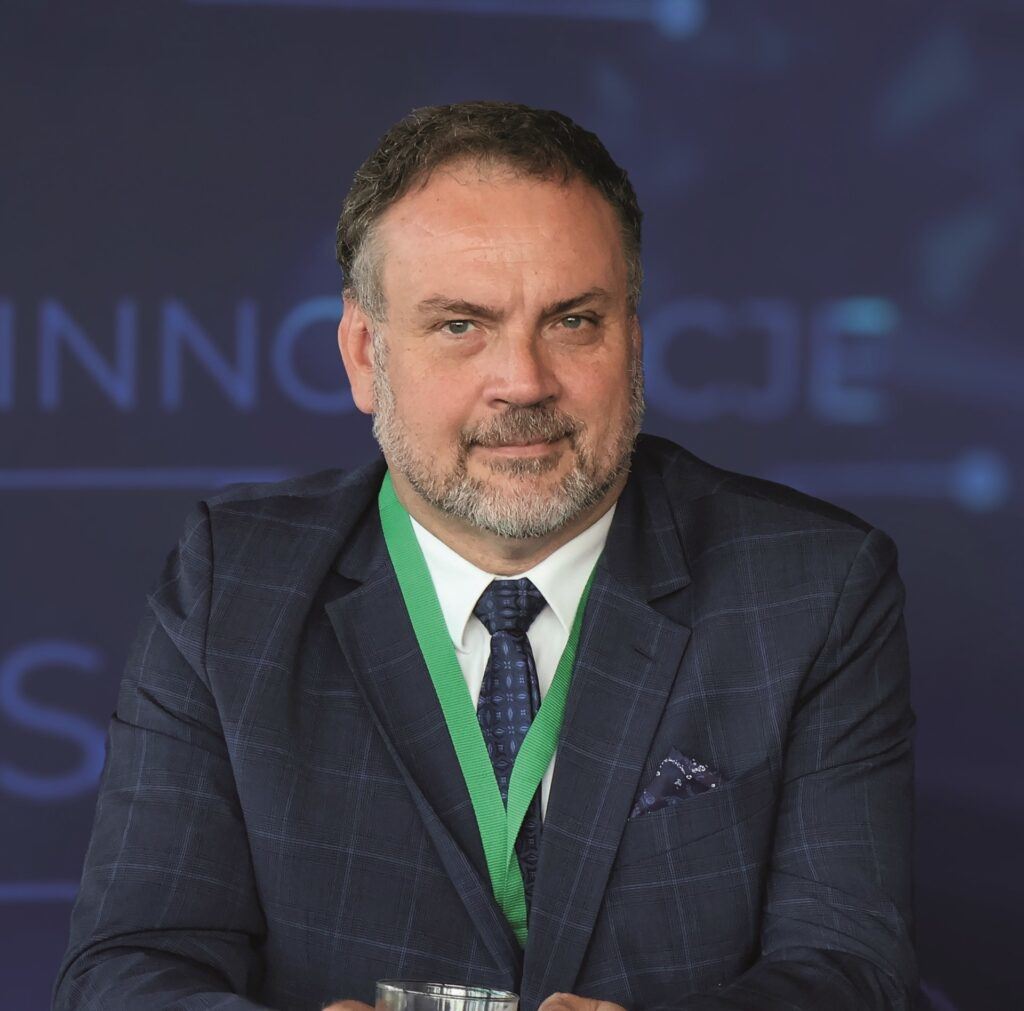
Dr. Dariusz Prostański, Associate Professor at the KOMAG Institute, has served as the Director of the Institute since 2018. He is dedicated to the Institute's scientific activities and undertakes project initiatives for national and international projects, fostering young staff in scientific and project activities. He has initiated new development projects related to energy storage, permanent magnets, and heat pipes. Current activities also include developing new inventions and innovative solutions for implementation in the mining industry.
This article is compiled by Wedoany. All AI citations must indicate the source as "Wedoany". If there is any infringement or other issues, please notify us promptly, and we will modify or delete it accordingly. Email: news@wedoany.com