United Airlines Takes Delivery of First Airbus A321XLR in Hamburg
en.Wedoany.com Reported - United Airlines has taken delivery of its first Airbus A321XLR, marking the Chicago-based carrier's official entry into long-range narrowbody operations. The aircraft, registered as N64321, departed from Airbus' Hamburg Finkenwerder plant on June 3, crossing the Atlantic to Tampa International Airport (TPA), becoming the first of its type in United's fleet.
United's first A321XLR took off from Hamburg at 1:25 p.m. local time, with flight tracking data showing it traversed the North Atlantic to Florida's west coast on a route exceeding ten hours. Interestingly, the registration N64321 was previously used on a Boeing 727 that first flew in 1969 for Trans World Airlines (TWA) (later involved in the ADC Airlines Flight 086 accident), so today's delivery flight data on FlightRadar included an image of the old 727.
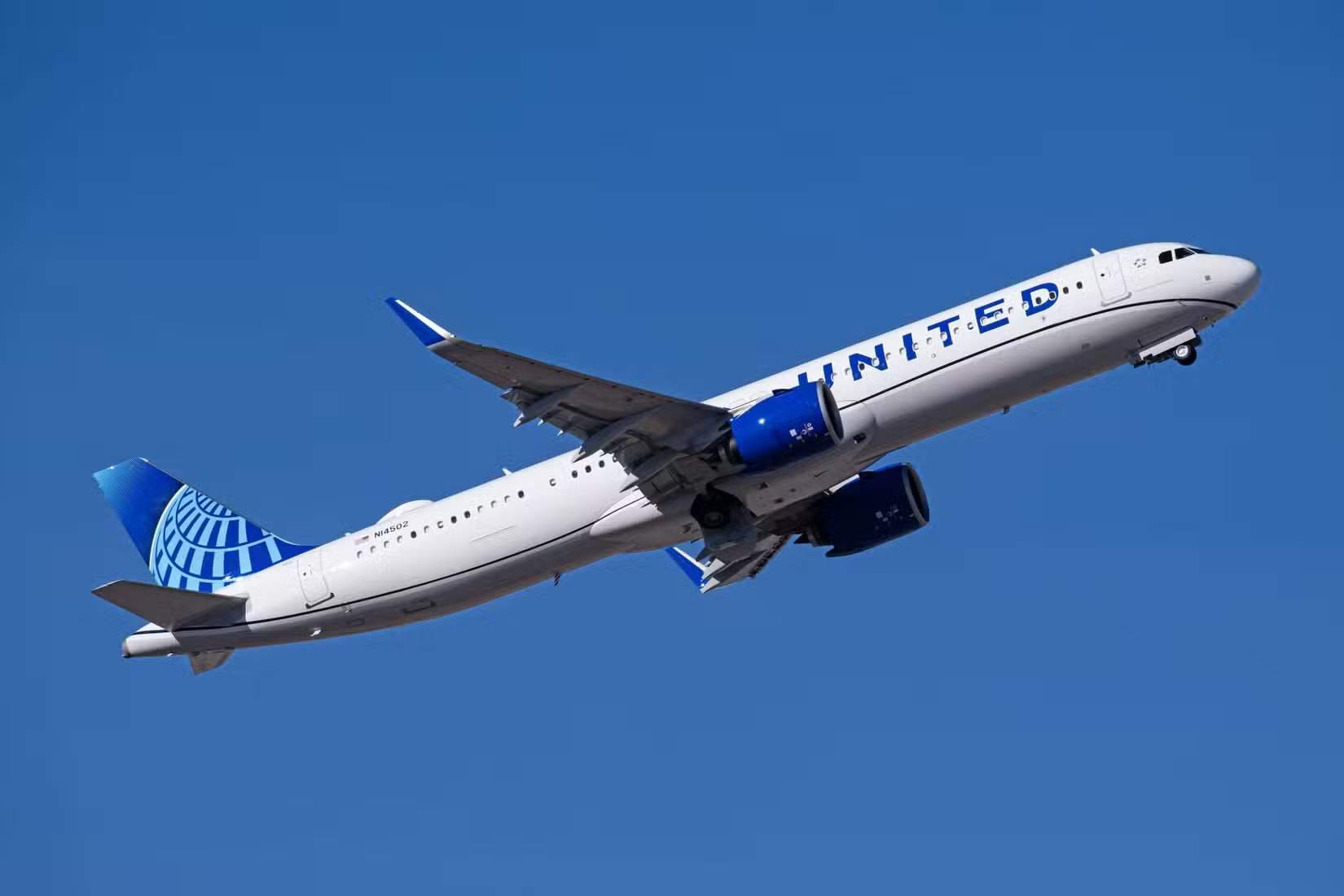
Tampa is the destination for the new A321XLR, where it will be fitted with Starlink equipment before entering commercial service. United has made Starlink a key part of its inflight connectivity strategy, and its A321XLRs come pre-equipped with high-speed WiFi products when entering service. Afterward, the aircraft may undergo domestic validation and familiarization flights before beginning long-range deployment.
United ordered 50 A321XLRs in 2019 as part of its fleet plan to replace aging Boeing 757-200s and open new long-haul thin-route international markets. Reuters reported earlier this year that United expects to take delivery of over 250 new aircraft in the next two years, including 68 Airbus A321neo "Coastliner" and A321XLR models. The difference: the business-class-heavy A321neo will focus on transcontinental routes, while the XLR is built for long-haul international flights.
United's Chief Commercial Officer Andrew Nocella said of the newly arrived XLR that the all-new Airbus A321XLR is an ideal one-for-one replacement for older, less efficient aircraft operating between some of the most important cities in its intercontinental network. In addition to enhancing the airline's ability to fly more efficiently, the A321XLR's range capability opens up potential new destinations to further develop the route network and provide customers with more global travel options.
United's A321XLR will be configured with just 150 seats, making it one of the most premium-heavy narrowbodies in United's fleet. The layout includes a true long-haul premium structure: Polaris business class, Premium Plus, Economy Plus, and standard Economy. This gives United a narrowbody with cabin segmentation typically associated with widebody international flights.
The specific seat configuration is: Polaris business class with 20 seats in a 1-1 layout, featuring lie-flat suites, privacy doors, large entertainment screens, power outlets, wireless charging, and Bluetooth audio; Premium Plus with 12 seats in a 2-2 layout, featuring premium economy recliners, wider seats, greater recline, leg or footrests, and larger screens; Economy Plus with 36 seats in a 3-3 layout, offering standard economy seats with extra legroom, seatback entertainment systems, power outlets, and USB-C ports; Economy with 82 seats in a 3-3 layout, offering standard economy seats with seatback entertainment systems, power outlets, USB-C ports, and expected Bluetooth audio.
This is a significant upgrade over United's aging 757s. United's current 757-200 international models are crucial for routes requiring range but not widebody capacity, but they are among the oldest and least efficient aircraft in the fleet. The A321XLR provides United with a modern replacement, with lower fuel consumption, a more consistent premium product, and much more flexible seat configurations. This is important because United has heavily bet on secondary cities and seasonal European market growth in recent years. Routes such as Newark Liberty International Airport (EWR) to Malaga, Split, Tenerife, Faro, and Bari all reflect the same basic strategy: leveraging network scale to reach places where competitors struggle to support nonstop flights easily. The A321XLR reinforces this strategy by lowering the capacity threshold for long-haul flights, making new markets more easily profitable to support.
United is not the only airline taking delivery of an A321XLR and flying it across the Atlantic today. Just two hours earlier, Air Canada's second A321XLR (registration C-GXAN) also departed Hamburg, heading to Windsor International Airport (YQG). This makes today particularly notable for Airbus, as it delivered two flagship narrowbodies to two Star Alliance partners, as Airbus seeks to get A321 production and deliveries back on track after a slow start to the year.
Air Canada took delivery of its first A321XLR in April, part of the carrier's 30-aircraft plan, with the airline viewing the model as a bridge between narrowbodies and widebodies. Air Canada's XLR version is configured very differently from United's, with 14 lie-flat Signature Class seats and 168 economy seats, 32 more seats in total but a far less premium-heavy layout. The aircraft will enter service later this month from Montreal-Trudeau International Airport (YUL) to Toulouse-Blagnac Airport (TLS). Announced routes for Air Canada's A321XLR include: Montreal to Toulouse (June 15), Montreal to Calgary (June 17), Montreal to Berlin (July 18), Montreal to Nantes (July 22), Montreal to Vancouver (September 2), Montreal to Lyon (September 7), Montreal to Porto (September 12), Toronto to Manchester (October 25), Toronto to Tenerife (October 25), Montreal to Lisbon (October 26), Toronto to Copenhagen (October 27), and Montreal to Tenerife (October 31).
For United, the next question is where N64321 will first fly. No official route announcement has been made yet; the aircraft may spend weeks being outfitted, then undergo crew familiarization training, and start with domestic flights, similar to how American Airlines initially handled its XLRs. Once international flights begin, the most logical launch markets are routes that already fit the 757 operating profile. Newark and Washington Dulles International Airport (IAD) are obvious starting points, with possible candidate routes including existing 757 markets such as Edinburgh, Dublin, Bilbao, and Malaga. The XLR is also expected to be used to open routes that were previously marginally beyond the economic viability of the airline's narrowbodies, potentially marking the beginning of a distinctly different era for United's international network.
This article is compiled by Wedoany. All AI citations must indicate the source as "Wedoany". If there is any infringement or other issues, please notify us promptly, and we will modify or delete it accordingly. Email: news@wedoany.com
Related Products



CLW5180TXSD6 Dongfeng Tianjin Washing and Sweeping Truck
ChengLi Special Automobile Co., Ltd.

Industrial and Commercial Point-Type Gas Detector
Jinan Benan Technology Development Co., Ltd.

China - Alashankou/Khorgos - Europe Full Range Transportation (Mala/Hamburg/Duisburg/Budapest, etc.)
Shenzhen Neptune Logistics Co., Ltd.




Pantograph-Catenary Comprehensive Detection Device (1C)
CHENGDU TANGYUAN ELECTRIC CO., LTD.