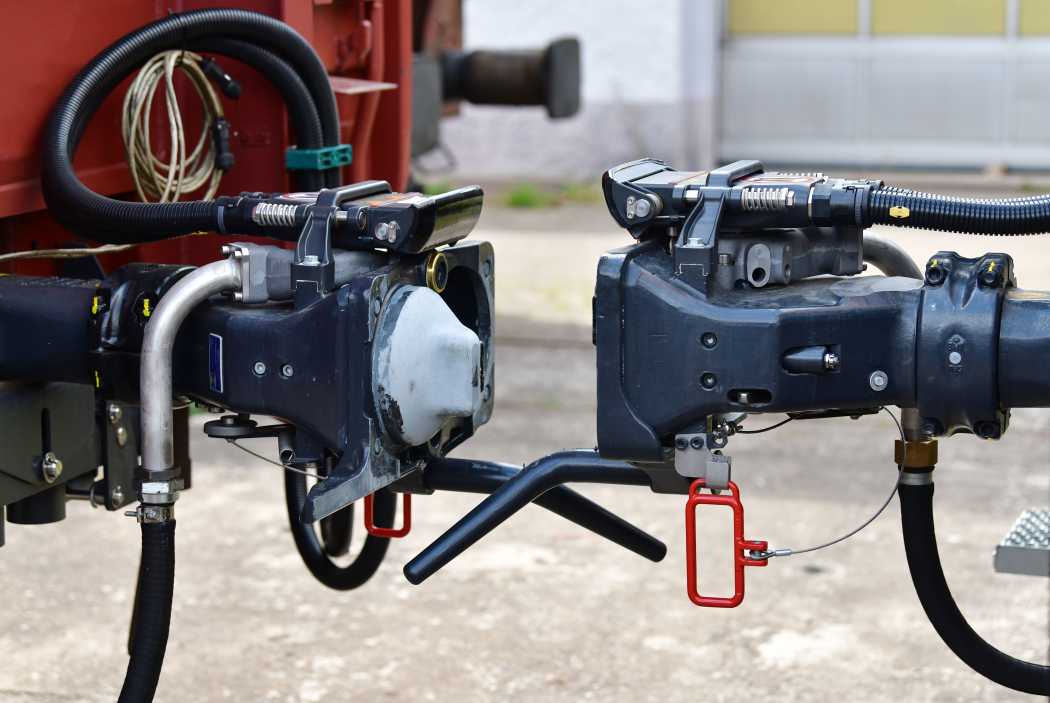
en.Wedoany.com Reported - On June 2, 2026, the DAC4EU consortium and the German Federal Ministry of Transport (BMV) presented the results of the "DAK Demonstrator" research project at a closing event held at the Westphalian State Railway (WLE) in Lippstadt. The digital automatic coupler tested in the project was demonstrated in real-world operations and discussed with expert representatives from the railway industry, industrial sector, and politics.
In Germany and Europe, rail freight still widely relies on the manual coupling of traditional screw couplers, a process that has remained largely unchanged for over 100 years. According to the BMV, the manual coupling process is not only physically demanding and time-consuming but also economically inefficient. High costs, longer train assembly times, and greater manpower requirements put rail at a disadvantage compared to truck transport.
The BMV stated that the project aims to shift more freight transport to rail. Digitalization and automation are key prerequisites for achieving this goal. As a key technology, the digital automatic coupler enables safer and more efficient coupling, opening up new possibilities for increasing rail capacity. Federal Transport Minister Patrick Schnieder (CDU) believes that through the "DAK Demonstrator" project, the government and industry have jointly demonstrated the potential of this technology, and the next crucial step is to conduct operational tests under real-world conditions and prepare for its rollout.
The project has been commissioned by the BMV since 2020 and executed by the DAC4EU consortium. Participants include the consortium leader Deutsche Bahn AG, as well as DB Cargo AG, SBB Cargo AG, Rail Cargo Austria AG, Ermewa AG, GATX Rail Europe GmbH, and VTG Rail Europe GmbH.
The project's testing was conducted in multiple phases, involving the testing, further development, and validation of different digital automatic coupler systems under real-world operating conditions in European rail freight, covering applications from marshalling yards to international line transport and ferry routes. According to its own statements, the federal government provided a total of approximately €30 million in funding to support the further development of the coupler system. The BMV stated that test results show the digital automatic coupler has proven its suitability for rail freight.
The closing event at WLE in Lippstadt presented the core results of the testing and offered an outlook on the next steps for the Europe-wide standardized introduction of the digital automatic coupler. In addition to expert lectures and discussion sessions, the event also planned a demonstration train presentation on the factory grounds.
The BMV considers the completion of the project to mark a significant milestone in the modernization of rail freight. The experience gained will subsequently be incorporated into European and national plans for the introduction of the digital automatic coupler.
This article is compiled by Wedoany. All AI citations must indicate the source as "Wedoany". If there is any infringement or other issues, please notify us promptly, and we will modify or delete it accordingly. Email: news@wedoany.com