Intel Launches OpenVINO Physical AI to Accelerate Large-Scale Deployment of Embodied Intelligence
en.Wedoany.com Reported - Intel recently announced new advancements in embodied intelligence and edge AI. Its computing platform, based on the 3rd Gen Core/Core Ultra processors, has secured over 130 design wins for edge AI and edge computing. As a key achievement, Sensory AI collaborated with Intel to migrate the multi-agent physical AI store, Ella, to the Intel architecture—Ella is currently the first multi-agent physical AI system deployed in public commercial services.
To help the embodied intelligence industry transition from R&D and design to device cluster deployment, Intel simultaneously launched the deeply optimized open-source framework OpenVINO Physical AI, aiming to reduce deployment costs and enhance scalability.
Dan Rodriguez, Intel Vice President and General Manager of the Edge Computing Division, stated: "Physical AI models are reshaping the embodied intelligence industry, but deployment is often hindered by fragmented software stacks and custom integrations for different types of robots. With the 3rd Gen Core Ultra series processors and OpenVINO Physical AI, Intel provides a unified, open, and scalable path from AI experimentation to production-grade robot deployment, delivering hardware-accelerated inference performance."
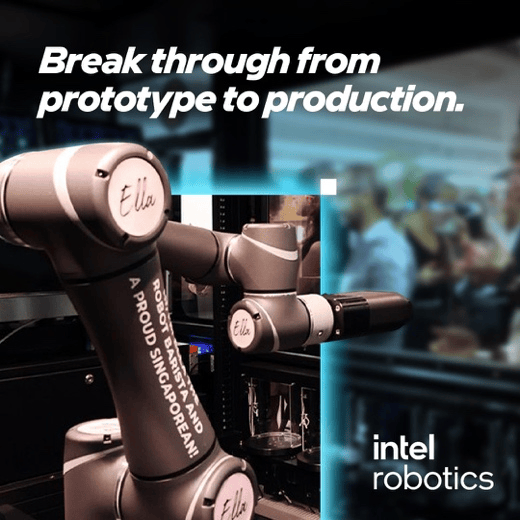
Sensory AI performed a key architectural upgrade on its Ella system, transitioning from a fragmented "CPU + independent accelerator" design to a fully integrated platform based on the 3rd Gen Intel Core Ultra, to support real-time control and AI functions. After the upgrade, the multi-agent physical AI store can run three dedicated AI agents—Avatar, Guardian, and Ella Agent—in parallel on a single SoC, handling customer conversations, system operations, and store-level business intelligence respectively, coordinated by a deterministic orchestrator for robot operations. This approach helps simplify system architecture, reduce software complexity, improve return on investment, and provide a clearer path for future large-scale deployment of Intel-based robots.
OpenVINO Physical AI is Intel's first chip-level optimized inference runtime open-source embodied intelligence library and part of the Intel Robotics AI Suite. Paired with the newly launched Physical AI Studio, it helps developers and operations teams transform experimental models into scalable real-world deployments. Physical AI Studio supports data collection, model fine-tuning, optimization, and quantization, and exports pre-validated and fine-tuned VLA models. OpenVINO Physical AI provides developers with a consistent approach to smoothly port robot policies and multimodal models from the experimental stage to actual running robot systems, achieving superior inference performance. This solution can also be seamlessly integrated with open-source robot model development environments such as Physical AI Studio and LeRobot.
Currently, enterprise operations leaders are increasing investments in embodied intelligence and automation technologies to ensure stable production lines and boost capacity. Embodied intelligence platforms are transitioning from deterministic systems to autonomous physical AI systems, requiring perception, reasoning, and safe execution with millisecond-level timing precision in real-world environments. In the past, large-scale deployment of physical AI models required building highly customized processes for each robot, leaving customers constrained by costly and difficult-to-maintain "dual computing unit" architectures. By combining the 3rd Gen Core Ultra series processors with OpenVINO Physical AI, Intel creates a unified software and hardware stack that enables more code reuse across different robot types and efficient large-scale deployment of robot clusters in factories, warehouses, and retail scenarios, thereby reducing total cost of ownership.
Intel's embodied intelligence product portfolio includes: the Intel Robotics AI Suite with new software tools, embodied intelligence development kits from partners, and the 3rd Gen Intel Core/Core Ultra processor family designed specifically for embodied intelligence and edge AI applications.
This article is compiled by Wedoany. All AI citations must indicate the source as "Wedoany". If there is any infringement or other issues, please notify us promptly, and we will modify or delete it accordingly. Email: news@wedoany.com
Related Products
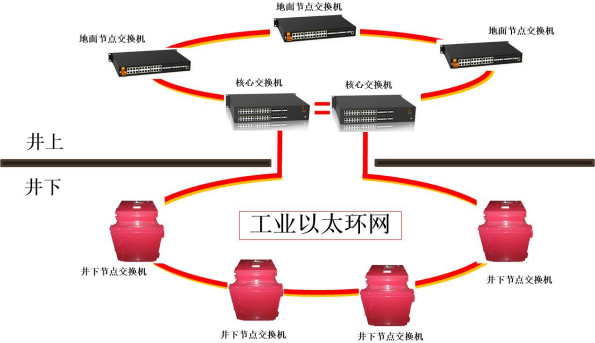

Mine Explosion-proof and Intrinsically Safe Industrial Ethernet Ring Network (10 Gigabit/Gigabit)
Chongqing Mas Sci&Tech Co., Ltd.
GYTA Type Non-Self-Supporting Aerial/Duct Optical Cable
TONGDING INTERCONNECTION INFORMATION CO., LTD.



MUX Series Communication Interface Device for Security and Stability Control System
Nanjing NR Electric Co., Ltd.
Multi-function Marine Monitoring Low-altitude Detection Radar Sea-air Boundary Ocean Dynamic Environment Measurement
Chengdu Dixin Technology Co., Ltd.

One-Stop Steward Service for the Entire Logistics System Integration Chain
Zhongding Intelligent (Wuxi) Technology Co., Ltd.