en.Wedoany.com Reported - The High-Performance Precision Forming Team from the School of Mechanical Engineering at Dalian University of Technology in China has successfully achieved mass production of integral propellant tank bottoms with a diameter exceeding two meters, based on the internationally pioneering "ultra-low temperature forming technology." The manufacturing cycle has been reduced by over 90%, providing a new path for cost reduction and efficiency improvement in high-frequency commercial space launches.
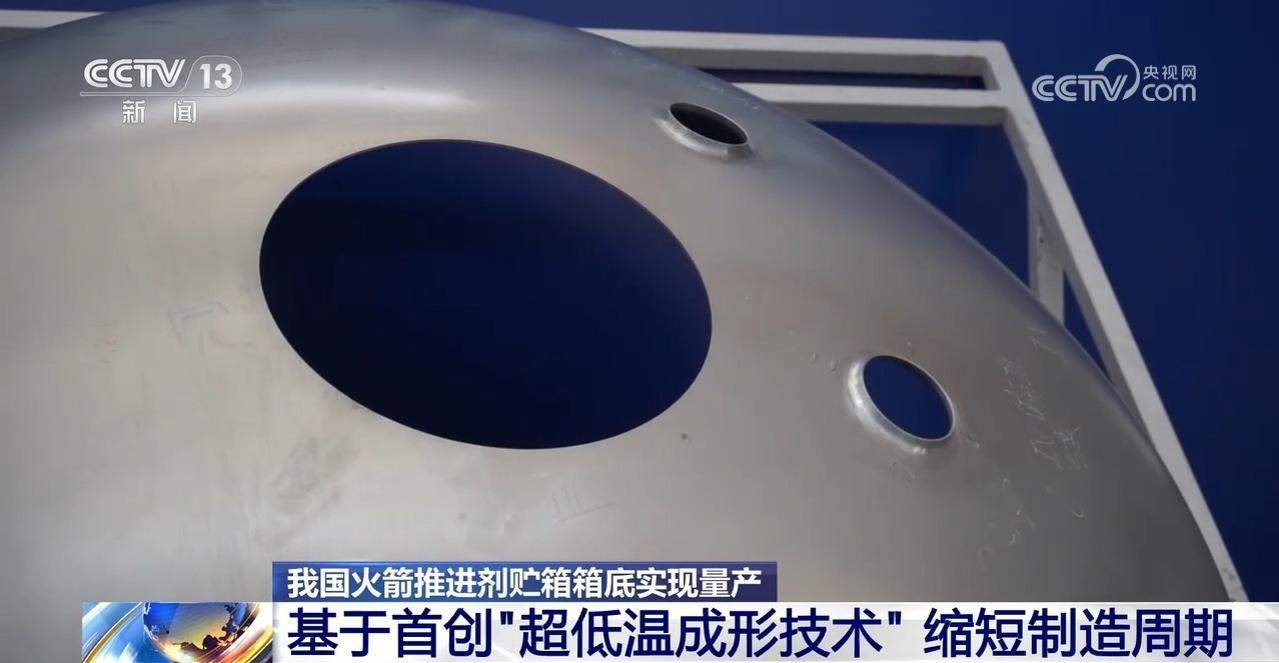
In the aerospace field, there exists a chain of "satellites waiting for rockets, rockets waiting for tanks, and tanks waiting for bottoms." The propellant tank bottom, prone to wrinkling and cracking, has long been a manufacturing bottleneck. This component, with a diameter of over two meters and a thickness of only 4 millimeters, must withstand hundreds of tons of fuel pressure during rocket launches, demanding extremely high process requirements. Previous industry practices using welding methods suffered from issues such as numerous weld seams, poor reliability, significant material waste, and long cycles. Leveraging the team's self-developed world's first large-scale ultra-low temperature forming equipment, the team, in collaboration with domestic enterprises, has achieved an annual mass production capacity of approximately 1,000 integral tank bottoms from "bare sheets."
This equipment can form a 4-millimeter thin sheet in a single step, with a wall thickness deviation of less than 0.3 millimeters. The manufacturing cycle has been shortened from over a week using traditional methods to just a few hours, improving efficiency by more than 90%. The core of the process is the team's pioneering aluminum alloy ultra-low temperature forming technology. At an ultra-low temperature of approximately minus 160 degrees Celsius, the aluminum alloy becomes akin to "tough dough," easily stretched without cracking or wrinkling. Currently, this new type of tank bottom has successfully completed flight missions aboard the Long March 12 and Long March 7A Y14 carrier rockets.
This article is compiled by Wedoany. All AI citations must indicate the source as "Wedoany". If there is any infringement or other issues, please notify us promptly, and we will modify or delete it accordingly. Email: news@wedoany.com