en.Wedoany.com Reported - On June 4, Hyundai Motor Group, the South Korean government, and NVIDIA entered advanced discussions regarding the establishment of an artificial intelligence technology center in South Korea. The Saemangeum area in southwestern South Korea is considered a priority location. During NVIDIA CEO Jensen Huang's visit to South Korea this week, the specific site and construction timeline may be further clarified.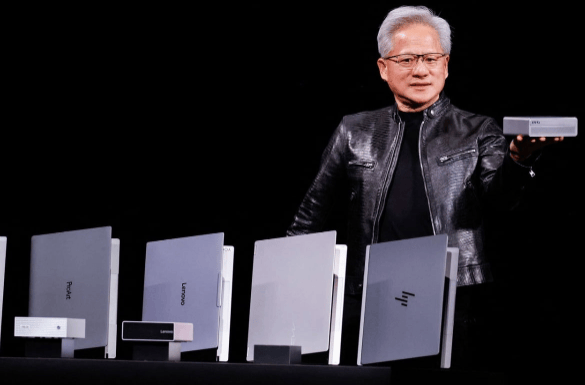
This proposed AI technology center is directly linked to the existing collaboration between Hyundai Motor and NVIDIA on "AI factories," in-vehicle AI, autonomous driving, smart factories, and robotics. Last year, NVIDIA announced plans to cooperate with Hyundai Motor Group and the South Korean government to develop the country's physical AI industry, including establishing an AI application center, an AI technology center, and supporting model training, validation, and deployment through NVIDIA Blackwell infrastructure. Hyundai Motor Group plans to use approximately 50,000 NVIDIA Blackwell GPUs to build a computing power foundation for in-vehicle AI, autonomous driving, smart factories, and robotics. This indicates that the partnership has expanded from pure chip procurement to joint development of software platforms, data centers, robot simulation, digital twins, and vehicle intelligence systems.
The selection of Saemangeum as a candidate site aligns closely with Hyundai Motor Group's plans to build a hub for robotics, AI, and hydrogen innovation growth in the region. In February this year, Hyundai Motor Group announced it would invest approximately 9 trillion Korean won from 2026 in the Saemangeum area of Gunsan City, South Korea, to build an AI data center, a robot manufacturing cluster, a PEM electrolyzer factory, solar infrastructure, and an AI-hydrogen smart city project.
If the NVIDIA AI technology center is ultimately established in Saemangeum, South Korea will further integrate automotive manufacturing, the robotics industry, AI computing power, clean energy, and regional development into a single space. For Hyundai Motor, this base can serve R&D tasks such as autonomous driving training, factory automation, robot control, in-vehicle large language models, and next-generation smart cockpits. For NVIDIA, South Korea offers high-end manufacturing, a memory chip supply chain, and automotive and robotics application scenarios, making it suitable for validating physical AI from model training to real-world industrial deployment. As AI extends from cloud-based large models to vehicles, factories, robots, and edge devices, the collaboration between NVIDIA and Hyundai Motor is reinforcing a clearer industry direction: future competition among automotive companies will increasingly depend on computing power systems, simulation platforms, robotics capabilities, and smart manufacturing data, rather than solely on vehicle hardware itself.
Jensen Huang's visit to South Korea this week has further amplified market attention on this collaboration node. South Korean media reports that he is expected to meet with Hyundai Motor Group Chairman Chung Eui-sun and executives from several major South Korean companies. The center's final location, construction timeline, and specific operational model are still pending confirmation. However, based on the cooperation framework disclosed by both parties, South Korea is striving to convert its manufacturing advantages into a platform for physical AI R&D and industrialization, while Hyundai Motor also has the opportunity to continue moving closer to becoming an AI infrastructure enterprise, beyond its focus on new energy vehicles, robotics, and smart factories.
This article is compiled by Wedoany. All AI citations must indicate the source as "Wedoany". If there is any infringement or other issues, please notify us promptly, and we will modify or delete it accordingly. Email: news@wedoany.com