US CNCF Announces Graduation of Open-Source Observability Framework OpenTelemetry
en.Wedoany.com Reported - The Cloud Native Computing Foundation (CNCF) has announced that the open-source observability framework OpenTelemetry has officially graduated. This milestone signifies that the project has received CNCF's highest maturity level recognition after becoming one of the most widely adopted infrastructure components in the cloud-native computing field.
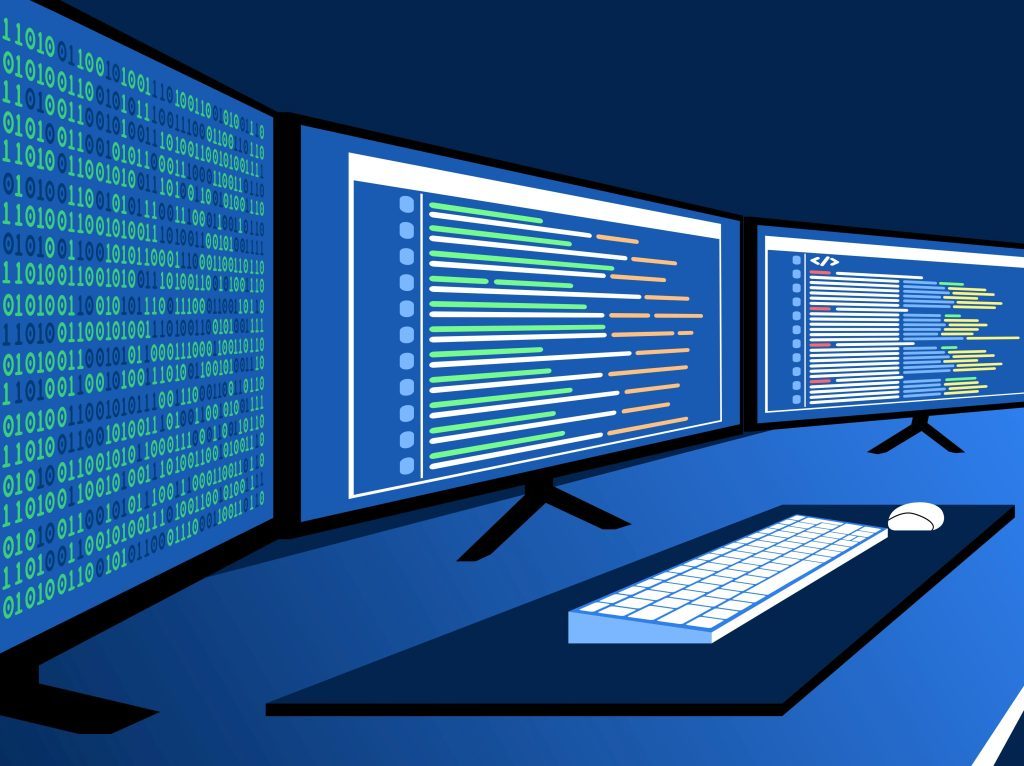
OpenTelemetry originated in 2019 from the merger of two competing observability projects: OpenTracing (a CNCF-supported distributed tracing standard) and OpenCensus (a telemetry project initially launched by Google and supported by companies like Microsoft). Today, it is widely used to collect and export telemetry data such as traces, metrics, and logs across distributed software systems. CNCF states that OpenTelemetry is one of the fastest-growing projects in its ecosystem, second only to Kubernetes, with over 12,000 contributors from more than 2,000 companies.
For many developers and infrastructure teams, OpenTelemetry has been running as foundational infrastructure for years, making its official graduation announcement seem somewhat overdue. CNCF CTO Chris Aniszczyk explained that the foundation's graduation process is deliberately slow, designed to provide stability guarantees for projects expected to become long-term industry standards. He noted that the goal of graduation is to offer enterprises certainty, ensuring they build on a neutral and solid foundation, and confirming that OpenTelemetry is a permanent, vendor-neutral component of the modern technology stack, independent of any single commercial interest.
The vast amount of telemetry data generated by modern software systems creates complexity and cost pressures for observability teams. OpenTelemetry's vendor-neutral positioning has driven widespread industry adoption, with major cloud providers and observability vendors including Microsoft Azure, AWS, Google Cloud, Datadog, Grafana Labs, Splunk, and New Relic supporting it in various forms. The framework helps standardize monitoring instrumentation across programming languages and infrastructure environments, enabling telemetry data to flow between different monitoring and analysis systems, thereby reducing the customer lock-in traditionally associated with proprietary telemetry. Grafana Labs CTO Tom Wilkie pointed out that monitoring instrumentation is no longer a moat, allowing new observability players to enter the market more easily.
However, OpenTelemetry's rapid growth has also brought operational challenges. In a 2025 proposal, the project's governance committee acknowledged that its complexity and lack of stability have created barriers to production deployment, including disruptive configuration changes, performance regressions in large-scale deployments, and difficulties in coordinating upgrades across numerous services. Ari Zilka, founder of observability startup MyDecisive.ai, stated that some enterprises have effectively turned OpenTelemetry into a "team sport," with large organizations needing to dedicate entire internal teams to manage telemetry infrastructure and collector deployments.
Against the backdrop of the rise of AI software and autonomous infrastructure systems, OpenTelemetry faces new pressures. AI coding systems generate service and infrastructure changes at a pace far exceeding traditional development cycles, increasing the demand for telemetry as a core mechanism for monitoring and coordination. Aniszczyk believes that the shift towards AI agents and autonomous systems is the most significant evolutionary pressure facing infrastructure today, and OpenTelemetry is transcending its role as a traditional observability framework to become a foundation for AI workloads and models. According to npm download data, the monthly downloads of the project's JavaScript API package grew from approximately 75 million in April 2025 to over 200 million in April 2026, with the Python API package also reaching record levels during the same period. Juraci Paixão Kröhling, co-founder of observability startup OllyGarden, stated that OpenTelemetry provides teams working with AI workloads a common language for instrumenting agents, models, and surrounding services without locking them into any single vendor.
This article is compiled by Wedoany. All AI citations must indicate the source as "Wedoany". If there is any infringement or other issues, please notify us promptly, and we will modify or delete it accordingly. Email: news@wedoany.com
Related Products

TWP16 P-Band Tropospheric Wind Profile Radar
China Huayun Meteorological Technology Group Co., Ltd.


Hot Selling 10 Inch Intel N5100 I5 I7 FHD 8 +128GB 16+256GB Win10 Pro Win11 Pro 4G 5G Rugged Tablet PC Pad with NFC Barcode
Highton Electronics Co., Ltd.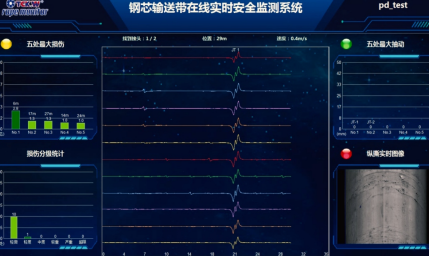
Conveyor Belt Intelligent Monitoring System
LUO YANG WIRE ROPE INSPECTION TECHNOLOGY CO., LTD.
GYTA Type Non-Self-Supporting Aerial/Duct Optical Cable
TONGDING INTERCONNECTION INFORMATION CO., LTD.
Automatic Aiming Laser Remote Obstacle Removal Robot
Pinggao Group Weihai High-Voltage Apparatus Co., Ltd.

Multi-function Marine Monitoring Low-altitude Detection Radar Sea-air Boundary Ocean Dynamic Environment Measurement
Chengdu Dixin Technology Co., Ltd.