US CIQ Fuzzball Expands into Comprehensive Multi-Cloud Platform, Supporting Five Major Cloud Service Providers
en.Wedoany.com Reported - CIQ, an enterprise software company, recently announced that its Fuzzball orchestration platform now fully supports multi-cloud environments, covering CoreWeave, Amazon Web Services (AWS), Google Cloud Platform (GCP), Oracle Cloud Infrastructure (OCI), and Microsoft Azure, allowing enterprises to manage AI and HPC workloads through a single control plane.
When adding new clouds or systems, enterprise AI and HPC teams typically need to go through steps such as rebuilding pipelines, rewriting deployment scripts, performance analysis, and testing validation, resulting in high compound costs. Fuzzball eliminates this cost through a provider-agnostic workflow definition. Enterprises only need to define an AI training, inference, or HPC workflow once, and it can be executed on any of the aforementioned cloud environments or on-premises infrastructure. The platform automatically routes each job to the optimal target based on cost, performance, and data locality.
For example, after validating a sequencing pipeline on AWS, a genomics team can migrate the workflow to Azure or OCI without modifying any code; model training jobs requiring high H100 density are automatically routed to CoreWeave, while data-sensitive simulations remain on-premises based on policy. Workflow definitions, container images, data orchestration, and job scheduling remain consistent across all environments. CIQ CEO and founder Gregory Kurtzer stated that Fuzzball solves the problem of multi-cloud environments working together at the architectural level. When a workflow definition correctly abstracts its requirements, users gain portable access to every GPU environment and the ability to freely route to the best price, performance, and data policy locations—capabilities no other platform can achieve.
Fuzzball's multi-cloud architecture federates the five cloud environments mentioned above along with on-premises clusters. Workflow definition files describing compute jobs, data movement, container images, and resource requirements contain no cloud-specific logic; the orchestration layer translates them into actual infrastructure on the underlying specific environment. At runtime, the platform evaluates all available environments simultaneously and selects the optimal target for each job. In terms of security, Fuzzball deploys a complete production-grade cluster on each cloud through a two-phase automated process, maintaining a unified IAM model, RBAC policies, and key management posture. Static credentials are eliminated at all layers: GCP uses Workload Identity, Azure uses Managed Identities, OCI relies on Dynamic Groups, and AWS applies IAM Roles, with security and compliance posture moving along with the workflow.
CIQ President Bjorn Hovland stated that Fuzzball transforms multi-cloud from a burden into a competitive advantage, avoiding the complexity and risks brought by multiple IAM models, multiple deployment pipelines, and operational overhead. Fuzzball deployments on CoreWeave, AWS, GCP, OCI, and Azure are now available. On-premises clusters built on Warewulf, VMware, or bare metal remain priority targets. Organizations evaluating multi-cloud AI and HPC infrastructure can request a demo at ciq.com/products/fuzzball. CIQ is the founding support and service partner for Rocky Linux, and its product line also includes the Rocky Linux from CIQ (RLC Pro) operating system series, IT automation tool Ascender Pro, cluster configuration tool Warewulf, and high-performance computing container system Apptainer. For more information, please visit ciq.com.
This article is compiled by Wedoany. All AI citations must indicate the source as "Wedoany". If there is any infringement or other issues, please notify us promptly, and we will modify or delete it accordingly. Email: news@wedoany.com
Related Products
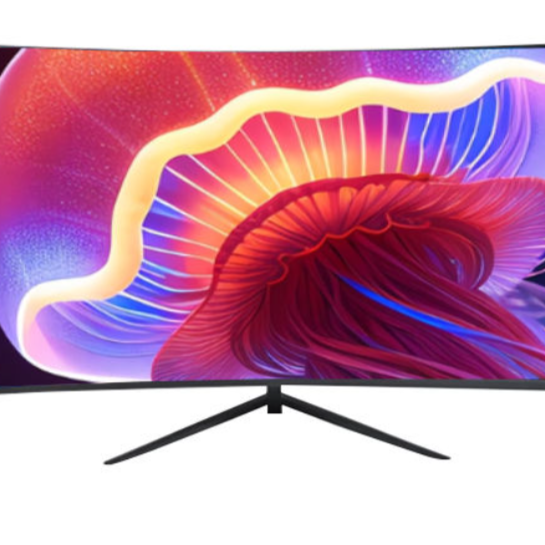

20 Inch 1600*900 Full HD 60Hz TFT LED Monitor with VGA and DP Interfaces for Desktop Computers-Business Use
Guangzhou Zanying Optoelectronics Technology Co., Ltd.

Industrial and Commercial Point-Type Gas Detector
Jinan Benan Technology Development Co., Ltd.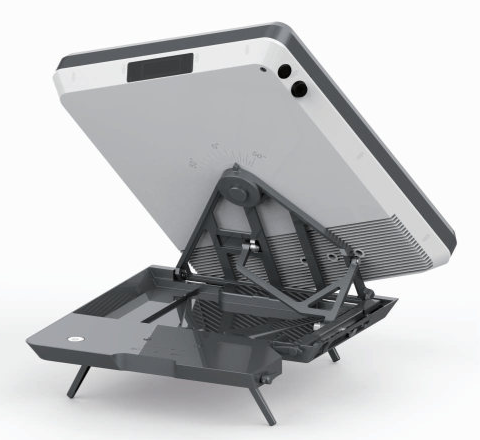
Flat Portable Satellite Terminal 0.35m Aperture Manual Portable Terminal
China Starwin Science & Technology Co., Ltd.

Conveyor Belt Intelligent Monitoring System
LUO YANG WIRE ROPE INSPECTION TECHNOLOGY CO., LTD.

Multi-function Marine Monitoring Low-altitude Detection Radar Sea-air Boundary Ocean Dynamic Environment Measurement
Chengdu Dixin Technology Co., Ltd.
Comprehensive Mining Automation Control System
Beijing Tianma Intelligent Control Technology Co., Ltd.