en.Wedoany.com Reported - On June 4, Emerson, an American automation technology and test measurement company, launched the NI PXI Core VST RF test system, expanding the availability of high-performance RF test technology for cost-sensitive applications. The new series will be showcased during the 2026 IEEE MTT-S International Microwave Symposium in Boston, with application areas covering wireless, radar, medical devices, electronic verification, and production testing.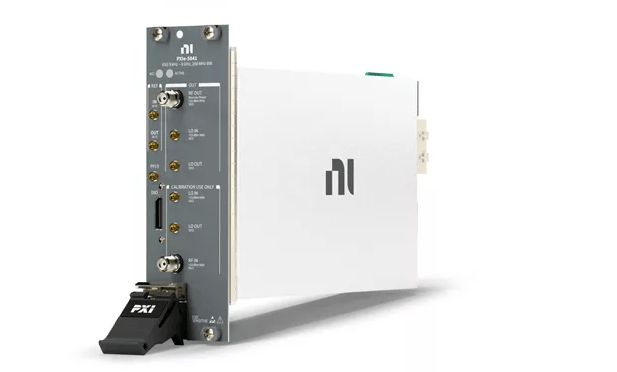
The launch of the NI PXI Core VST addresses the industry trend of RF testing moving from a few high-cost, dedicated systems to modular, standardized, and scalable deployments. Previously, high-performance vector signal transceivers were more commonly used in well-funded R&D verification, complex wireless system testing, or high-end production lines. Many engineering teams struggled to balance cost, measurement accuracy, and system scalability in early-stage development, medical device verification, industrial RF applications, and mass production testing of electronic products. By combining the PXI modular platform, calibrated measurement capabilities, synchronized RF acquisition, and NI software workflows into the Core VST product line, Emerson aims to enable more teams to access vector signal analysis, vector signal generation, and integrated transceiver testing capabilities with a lower system investment, and to leverage the same technology platform throughout subsequent R&D, verification, and production phases.
The new product portfolio includes instruments such as the PXIe-5841 and PXIe-5820. The PXIe-5841 offers 200 MHz instantaneous bandwidth and uses a fixed FPGA configuration, suitable for scenarios requiring fast, repeatable measurements. Related products can be paired with NI RFmx measurement software to perform signal generation, acquisition, analysis, and verification in a more intuitive software environment. For RF engineering teams, the focus of this configuration is not on pursuing a single highest specification, but on combining calibrated measurements, synchronization capabilities, modular hardware, and software automation to facilitate the connection between R&D prototype verification, production line test coverage, and data-driven analysis.
Frequency coverage capability is also a key selling point of this product line. The NI PXI Core VST supports extended frequency coverage starting from 9 kHz, serving multiple tasks such as industrial, scientific, and medical (ISM) bands, AM/FM, radar testing, wireless verification, and medical device validation. Bandwidth configurations cover the range from 200 MHz to 1 GHz, allowing combinations based on different RF verification needs. As RF chains in wireless devices, automotive radar, medical electronics, industrial connectivity, and IoT terminals become increasingly complex, a test platform serving only a single project struggles to meet long-term reuse requirements for enterprises. The advantage of the PXI architecture lies in its ability to extend the same test base to more projects and production phases through module combinations, software expansion, and automated scripts.
This system also reflects Emerson's integration direction in the test and measurement business following its acquisition of NI. The NI platform has long emphasized modular hardware, open software, and an automated test ecosystem, while Emerson is introducing AI capabilities, connectivity software, and data workflows into the test platform. The NI PXI Core VST is positioned as an RF test product for an AI-ready architecture, meaning future test systems will not only complete single measurements but also better support automated test development, data analysis, result traceability, test coverage expansion, and AI-assisted engineering processes. For companies in electronics manufacturing, semiconductors, wireless communications, and medical devices, the testing phase itself is shifting from a cost center to a key infrastructure for product quality, time-to-market, and engineering efficiency.
From an industrial application perspective, the NI PXI Core VST is suitable for teams that require reliable RF performance but cannot afford the cost of complex, high-end custom test systems. Medical device developers can use it for wireless link and RF performance verification, electronics manufacturers can expand test coverage in production testing, and radar and communications R&D teams can utilize it as an early verification and scalable test platform. Future market acceptance will depend on the new product's cost advantages, measurement stability, software usability, and compatibility with the existing NI ecosystem in real-world test environments. As 6G research, millimeter-wave radar, smart terminals, and industrial wireless devices continue to evolve, competition in the RF test system market will increasingly focus on the four dimensions of "performance availability, cost control, software scalability, and process automation."
This article is compiled by Wedoany. All AI citations must indicate the source as "Wedoany". If there is any infringement or other issues, please notify us promptly, and we will modify or delete it accordingly. Email: news@wedoany.com