en.Wedoany.com Reported - The RT-G spherical robot, developed by Hangzhou-based Chinese company Luoten Technology, has recently garnered sustained attention. This AI patrol robot, resembling a black sphere, has been publicly showcased in scenarios such as urban patrol, detection, rescue, and operations in complex environments. It has also attracted overseas attention due to a video of it patrolling alongside the Lucheng Special Police in Wenzhou.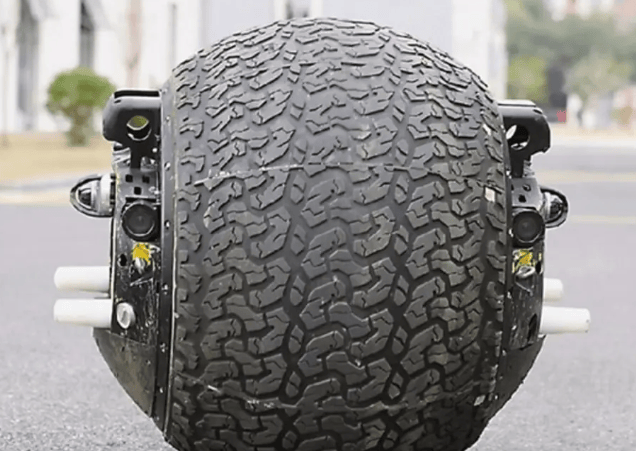
The uniqueness of the RT-G lies first in its uncommon spherical mobile structure. Compared to wheeled, tracked, and quadruped robots, the spherical robot encapsulates key components inside a high-strength composite spherical shell, moving by rolling. This design reduces the impact of external collisions, rain, sediment, and complex terrain on the internal systems. Luoten Technology describes it as a "flexible heavyweight" because, despite its considerable weight and size, it can operate in various environments such as roads, mudflats, shores, dams, and water surfaces, possessing amphibious capabilities. This structure is naturally suited for high-risk tasks like patrol, hazard removal, reconnaissance, and emergency response, as the robot can first enter areas that are inconvenient or unsafe for humans, transmitting on-site information back to the command center.
From a functional design perspective, the RT-G is not merely a rolling machine but a mobile perception platform for security patrols and operations in complex environments. Public information shows that the RT-G is equipped with multiple radars and multi-eye cameras, enabling intelligent fusion perception and real-time transmission of situational data and high-definition video to the command post. It can also monitor ambient sound fields, support voice interaction, pre-recorded warning broadcasts, and real-time two-way communication for interrogating, alerting, or warning suspicious individuals. The robot features both autonomous patrol and remote control modes, allowing it to fully automate amphibious patrol, monitoring, reconnaissance, and search-and-rescue tasks, or switch to remote manual control when human intervention is needed. For scenarios such as urban management, park security, border patrol, port shores, hazardous chemical areas, and disaster rescue, the core value of such equipment lies not in replacing all human labor but in assuming front-end perception and initial response roles in dangerous, repetitive, high-intensity, and uncertain environments.
The technical approach behind this robot also reflects the trend of specialized robots transitioning from laboratory prototypes to real-world equipment. While the spherical structure appears simple, its practical implementation requires solving multiple engineering challenges, including attitude stability, rolling drive, sealed protection, environmental perception, communication transmission, path control, energy management, and impact resistance. Particularly in amphibious scenarios, the robot must maintain mobility on land while avoiding capsizing, water ingress, or loss of control on water surfaces and mudflats. In urban patrol scenarios, it must also balance crowd safety, obstacle avoidance, video transmission, task scheduling, and remote control. The international attention on the RT-G indicates that Chinese specialized robot companies are exploring non-traditional robot forms better suited for extreme environments, beyond conventional inspection robots, quadruped robots, and unmanned vehicles.
At the industry level, the popularity of the RT-G also reflects a new shift in China's robotics industry: scenario demands are driving innovation in robot form factors. Industrial robots primarily serve standardized production lines, while service robots are increasingly entering malls, hotels, hospitals, and homes. However, tasks such as security patrol, emergency rescue, water area inspection, and hazardous environment reconnaissance impose higher requirements on robots in terms of mobility, protection, and environmental adaptability. Although spherical robots cannot perform complex manual operations like humanoid robots or climb stairs or perform fine grasping, they offer differentiated advantages in impact resistance, sealing, amphibious capability, and rolling mobility. If future iterations continue to improve autonomous navigation, target recognition, group coordination, and task execution capabilities, they may expand from single-point patrol equipment to applications in urban security, energy facility inspection, port waters, disaster sites, and special operational environments.
Currently, the RT-G is best understood as a specialized mobile platform rather than a simple "robot police officer." Its value lies in integrating AI perception, remote communication, amphibious mobility, and high-protection structure into a deployable carrier, providing personnel with earlier on-site information, lower-risk approach methods, and more stable operational capabilities in complex environments. Future market progress will depend on product reliability, battery life, task adaptability, cost control, customer procurement cycles, and safety boundaries in different application scenarios. As demand for intelligent equipment in patrol security and emergency rescue continues to grow, the RT-G and similar spherical robots are expected to become distinctive new examples in China's specialized robotics sector.
This article is compiled by Wedoany. All AI citations must indicate the source as "Wedoany". If there is any infringement or other issues, please notify us promptly, and we will modify or delete it accordingly. Email: news@wedoany.com