en.Wedoany.com Reported - A new study shows that by 2050, the area developed for offshore wind power in the North Sea could reach 58,500 square kilometers, equivalent to 11% of the total sea area.
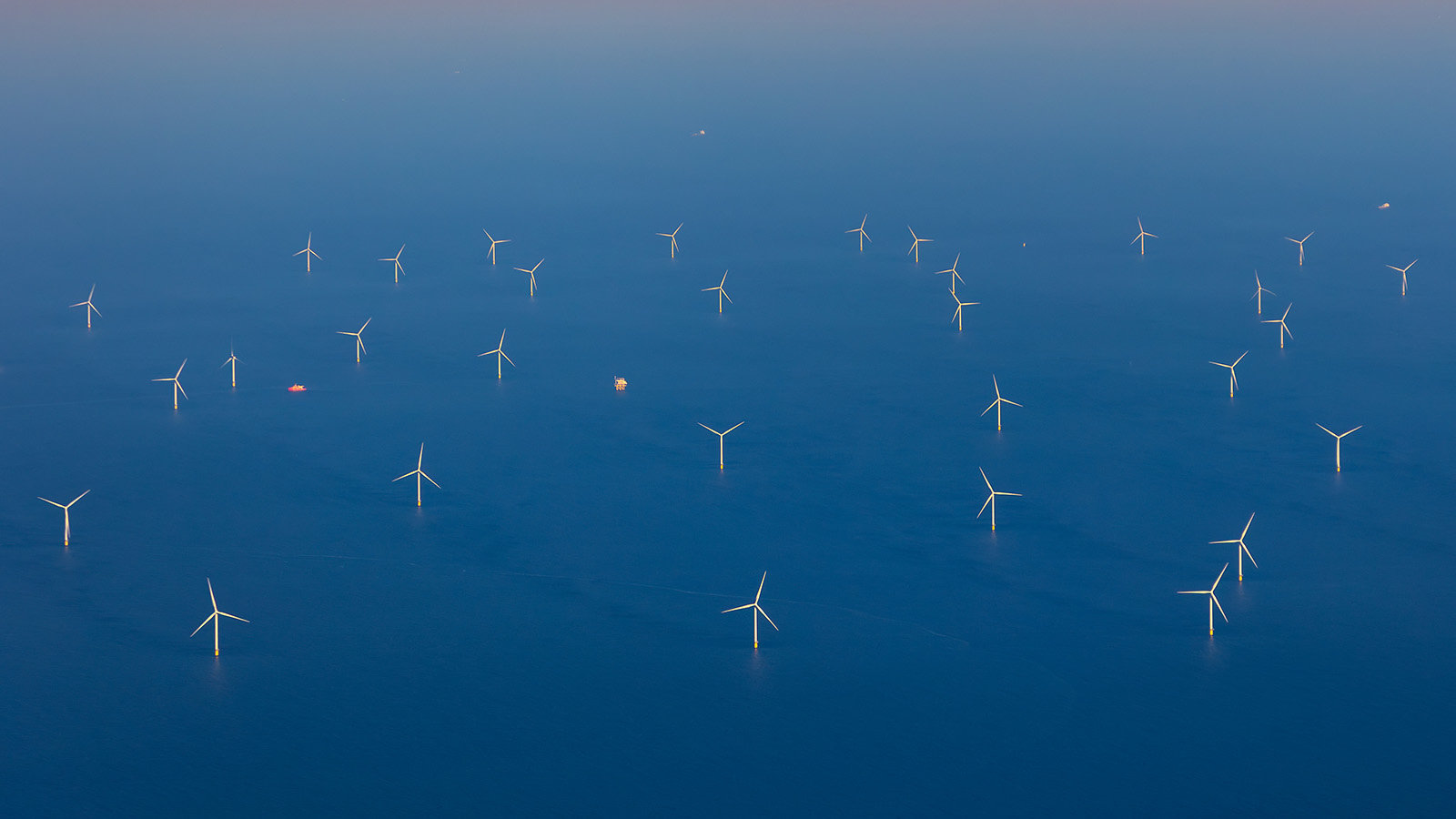
The study was led by Heriot-Watt University. The research team conducted a comprehensive survey of existing offshore wind farms and projects already included in national plans across seven countries bordering the North Sea: the Netherlands, Belgium, Denmark, Germany, the United Kingdom, Norway, and France. To match the target installed capacities announced by each country, the study also incorporated hypothetical wind farms.
Dr Simon Waldman, Assistant Professor of Energy Technology at Heriot-Watt University's School of Energy, Geoscience, Infrastructure and Society, noted that the scenario illustrates what could happen if countries follow through on their commitments to advance offshore wind construction. It is not a prediction of the actual state of the North Sea in 2050, but rather a projection based on current data and national ambitions. In constructing this scenario, the team extensively consulted international ocean and energy datasets, covering national targets, spatial planning, seabed depth, wind and wave records, existing infrastructure, and anticipated turbine technology.
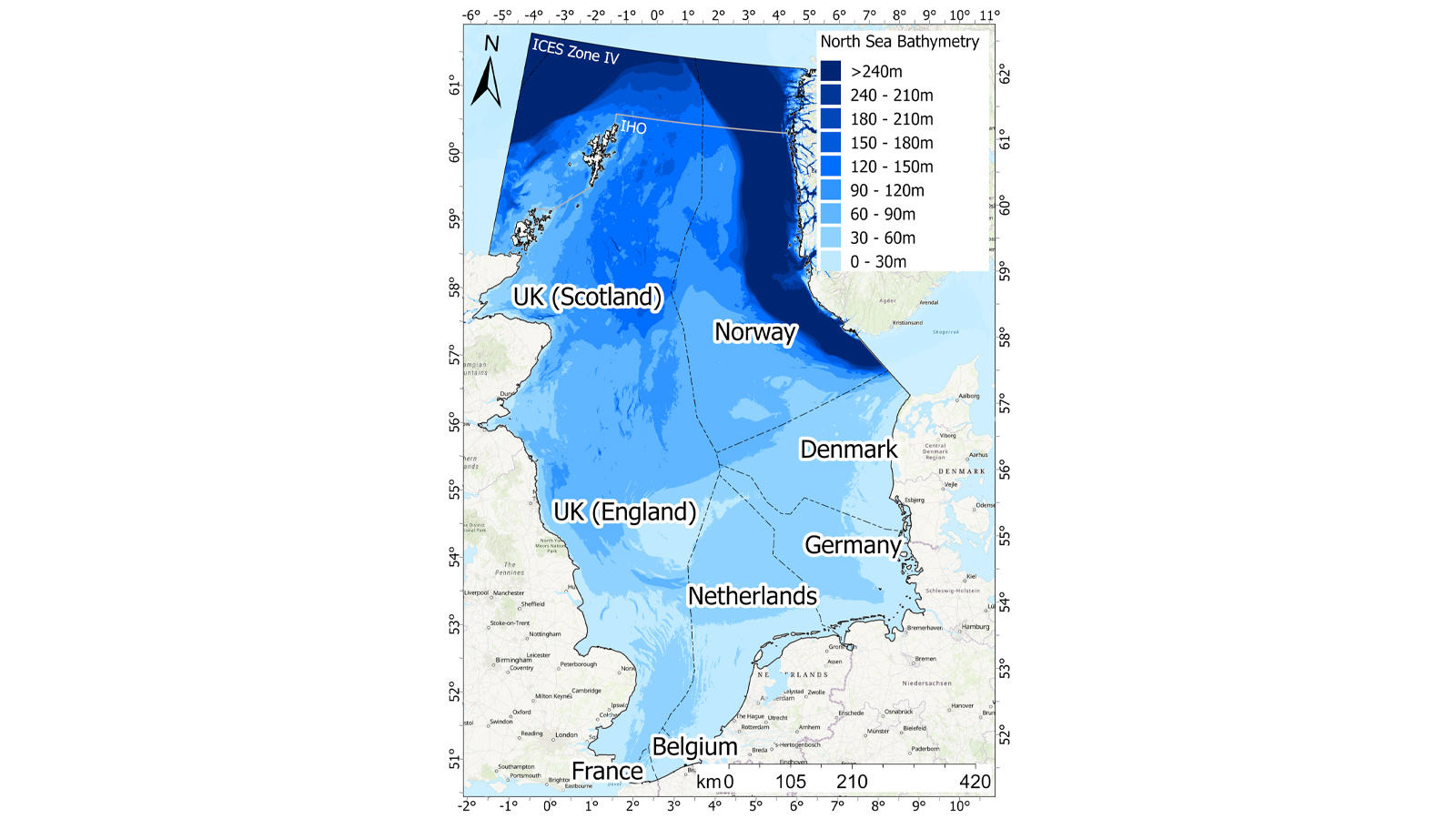
Looking ahead to 2030, the UK is expected to remain the country with the largest offshore wind capacity in the North Sea, with approximately 4,200 turbines in operation. Germany and the Netherlands follow, with around 2,700 and 1,700 turbines respectively. By 2050, these three countries are projected to maintain their leading positions: the UK is expected to have around 6,300 turbines, Germany around 4,300, and the Netherlands slightly over 4,200. In terms of sea area occupancy, the Netherlands ranks first, with about 19% of its North Sea area occupied by wind farms by 2050; Belgium is second at 18%, followed by Denmark at 15%, Germany at 14%, the UK at 9%, Norway at 8%, and France at 7%. Overall, the share of the North Sea occupied by operational and planned offshore wind developments is projected to rise from approximately 1% currently to about 11% by 2050, covering an area of roughly 58,500 square kilometers.
The study aims to assess the impact of large-scale offshore wind deployment on the surrounding environment by simulating the potential locations of turbines. Waldman stated that the findings reveal the scale and practical considerations that would arise if offshore wind grows as promised. Debbie Russell, a marine ecologist at the University of St Andrews, added that large wind farms can generate atmospheric wakes extending 40 kilometers or more; individual turbines slow down the airflow behind them, and wakes from very large projects could cross national borders and affect other projects. She mentioned that there are early indications of developers experiencing energy losses due to adjacent wakes, while ecological concerns are also growing, as understanding how these structures alter marine systems is crucial. Grasping these interactions is essential for the industry's expansion. Professor Rodney Forster from the University of Hull's Hull Marine Laboratory believes that offshore wind development will grow significantly in the coming decades. As projects expand, it is necessary to understand their potential impacts on diverse ecosystems and the broader marine industry. The next step is to identify other marine uses that can coexist with or be located within operational wind farms.
This article is compiled by Wedoany. All AI citations must indicate the source as "Wedoany". If there is any infringement or other issues, please notify us promptly, and we will modify or delete it accordingly. Email: news@wedoany.com