en.Wedoany.com Reported - The Argentine government has released a new set of guidelines for the nuclear energy sector, outlining four priority goals: expanding high-value-added exports, strengthening energy security, maintaining and developing national technical capabilities, and consolidating the country's leadership in a region with greater geopolitical influence. The document, titled "2026 Argentine Nuclear Policy Guidelines" (Diretrizes para a Política Nuclear Argentina 2026), was published on the 76th anniversary of the National Atomic Energy Commission (Comisión Nacional de Energía Atómica, CNEA).
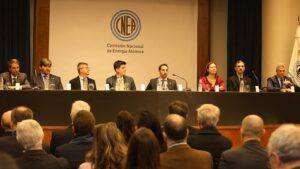
The document establishes a clearer division between political leadership and technical operations in the nuclear field and, for the first time, opens space for private capital to participate in nuclear projects. The new strategy adopts a model aimed at combining corporate investment with CNEA's capabilities in research, development, and professional talent cultivation. Argentina's Nuclear Affairs Secretary, Federico Ramos Napoli, stated that CNEA should be built on four pillars: research, development, and innovation; training of highly qualified human resources; functioning as a technology observatory; and coordinating cooperation with professional organizations in the global nuclear sector. He noted that the goal is to transform the nuclear field into another significant sector of Argentina's economy, enabling the country to integrate into global value chains. "The country's dominant position in the international market does not mean a loss of sovereignty; rather, it consolidates three-quarters of a century of work," he said.
The document points out that over the past few decades, Argentina has built an internationally recognized foundation in nuclear science and technology but has failed to translate this knowledge into an industrial scale of equal magnitude. The current challenge is to bridge the gap between existing technical capabilities and the economic results achieved. The new strategy also proposes a shift in investment logic, advocating that future decisions should start by identifying market opportunities, followed by determining the necessary investments, rather than starting from a technical premise and then seeking commercial viability, as was the case with many past projects.
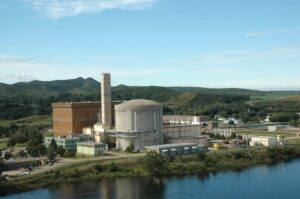
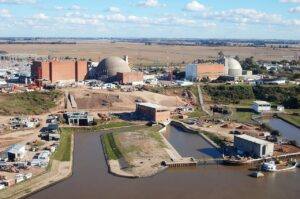
CNEA President Martin Porro stated that a lack of strategic coordination has limited the sector's potential for decades. Argentina already has the infrastructure, qualified professionals, and internationally competitive projects, but it needs to organize this potential and transform it into a larger-scale industry. "We are seeking a virtuous cycle where CNEA contributes research, development, and qualified professionals, while companies invest and take risks under strict government regulation and fiscal discipline," Porro wrote in a post on social network X. Currently, Argentina operates three nuclear reactors, generating approximately 7% of the country's total electricity. The first commercial reactor began operation in 1974. The country had developed the small modular reactor CAREM25, but the project was suspended by the current government. Uranium mining began in the 1950s and continued until the last mine closed in 1997 for economic reasons.
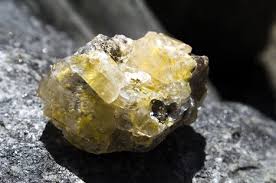
At the same time, the Argentine government is again advocating for the resumption of uranium mining in the country. Federico Ramos Napoli listed this as a priority for the current government in another article. Argentina stopped uranium production in 1997 when the San Rafael Mining-Industrial Complex (Complexo Mineiro Industrial San Rafael) in the Sierra Pintada area of Mendoza Province was closed. Since then, all fuel used by the country's nuclear power plants has been imported. Napoli noted that the international situation has changed significantly since the 1990s, driven by the expansion of nuclear energy in many countries. He believes Argentina has the conditions to restore self-sufficiency in uranium production and even become an exporter. The secretary also stated that environmental remediation work at Sierra Pintada has been progressing since the beginning of the year. The site holds the country's largest known uranium reserves, and according to the government, only about 20% of the resources were extracted during its entire operational period.
This article is compiled by Wedoany. All AI citations must indicate the source as "Wedoany". If there is any infringement or other issues, please notify us promptly, and we will modify or delete it accordingly. Email: news@wedoany.com