en.Wedoany.com Reported - On June 4, China Southern Power Grid and CNOOC signed a strategic cooperation agreement in Guangzhou. Qian Zhaoyang, Chairman and Party Secretary of China Southern Power Grid, and Zhang Chuanjiang, Chairman and Party Secretary of CNOOC, jointly witnessed the signing. Chen Ye, Chief Economist of China Southern Power Grid, and Zhu Lei, Assistant General Manager of CNOOC, signed the agreement on behalf of their respective parties. According to the cooperation arrangement, the two sides will strengthen strategic alignment in areas such as source-grid coordination, multi-energy complementarity, integration of science and industry, electricity market development, and international business expansion, fostering a closer synergistic relationship among oil, gas, electricity, and new energy sectors as well as market-oriented businesses.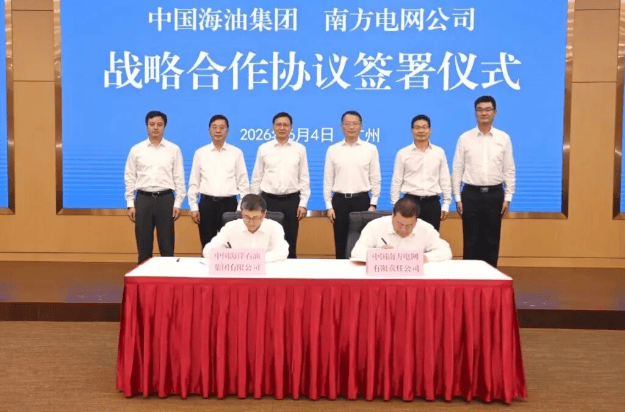
The core of this signing lies in further expanding the cooperation boundaries between power grid enterprises and offshore oil and gas companies.
From the perspective of industrial division of labor, China Southern Power Grid is responsible for power supply and grid operation in regions including Guangdong, Guangxi, Yunnan, Guizhou, and Hainan, and has long been connected to the power generation side, load side, market side, and dispatch system. CNOOC, on the other hand, possesses resources and project foundations in offshore oil and gas exploration and development, natural gas supply, offshore wind power, energy equipment, and marine engineering. In the past, these two types of enterprises operated in different chains of the power system and oil and gas system, with relatively limited business overlap. However, the energy transition is reshaping the traditional division of labor. The growth of new energy installed capacity, rising demand for natural gas peak shaving, accelerated offshore energy development, and the advancement of electricity market reforms necessitate earlier planning and coordination among oil and gas companies, power grid enterprises, and new energy companies. The strategic cooperation between China Southern Power Grid and CNOOC around source-grid coordination, multi-energy complementarity, and electricity market development means that the two sides will not only cooperate on individual projects in the future but may establish a more complete linkage mechanism across energy production, transmission and distribution, consumption, trading, and end-user services. For China Southern Power Grid, offshore oil and gas platforms, coastal energy bases, natural gas power generation, new energy projects, and large industrial loads all require more stable grid access, dispatch support, and market mechanisms. For CNOOC, the development of oil and gas resources and the layout of new energy also require the power system to provide consumption space, grid connection conditions, green electricity trading, and comprehensive energy service support. If the two sides reorganize their respective advantages within the same energy system, the value of cooperation will no longer be limited to the "signing" itself but will be reflected in whether subsequent projects can form operable, measurable, tradable, and replicable energy synergy solutions.
Source-grid coordination is the most engineering-oriented cooperation direction in this agreement.
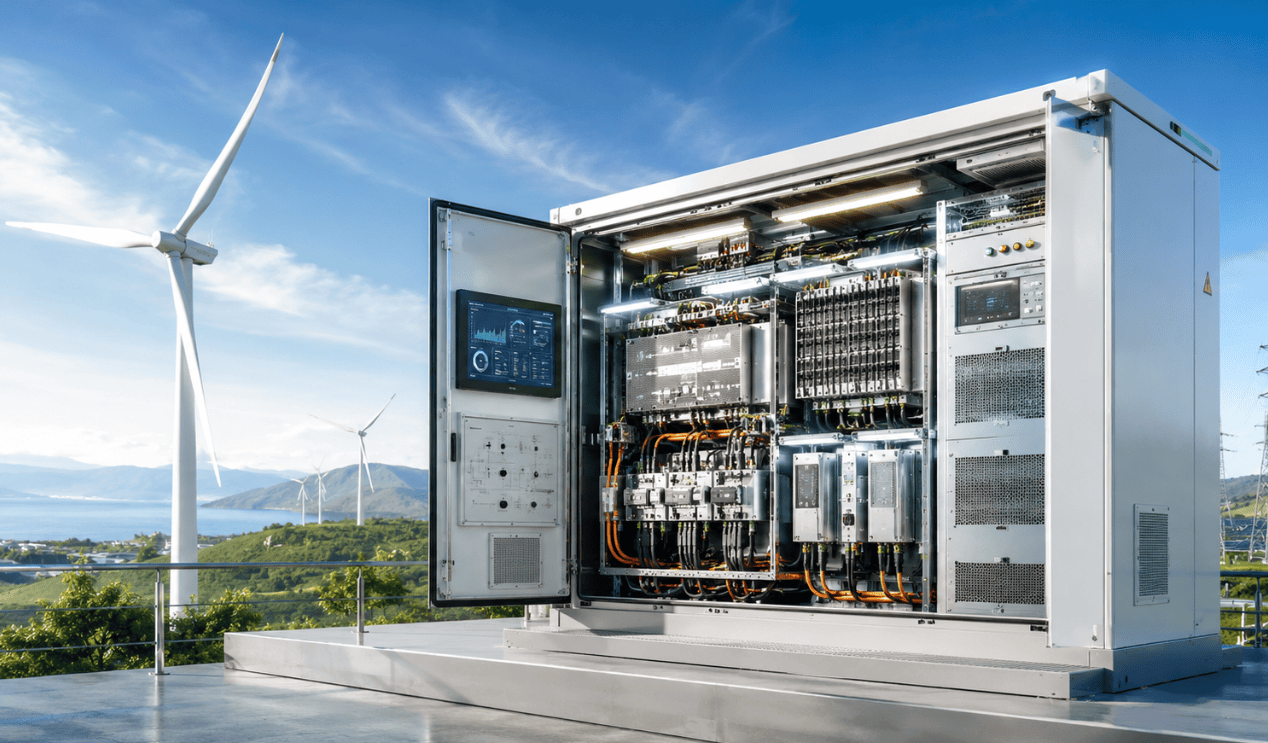
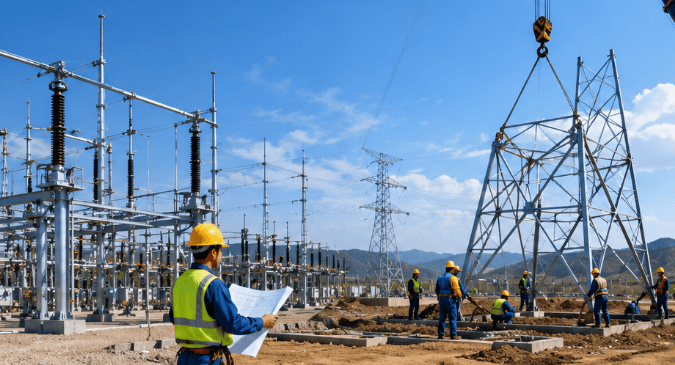
The new energy development, offshore wind power construction, natural gas power generation supporting facilities, and coastal energy base layout of oil and gas companies are all inseparable from grid planning, access capacity, consumption space, and dispatch mechanisms. In the past, energy projects were more often advanced as single varieties—oil and gas for oil and gas, electricity for electricity, and new energy for new energy—with limited overall coordination between projects. As the construction of the new power system accelerates, power sources, grids, loads, and energy storage must be designed synchronously; otherwise, problems such as restricted grid access, insufficient consumption, or unstable revenue after project completion are likely to arise. Enhanced alignment between China Southern Power Grid and CNOOC in source-grid coordination may provide more systematic solutions for offshore wind power bases, electrification of oil and gas fields, shore power supply, natural gas peak-shaving power sources, integrated energy stations, and energy use in large industrial parks. Multi-energy complementarity further integrates oil, gas, electricity, new energy, energy storage, and end-user loads into a single optimization framework. Natural gas offers flexible peak-shaving advantages, new energy has low-carbon attributes, and the grid possesses configuration and dispatch capabilities. If these resources can complement each other through market mechanisms and technological platforms, the energy system can achieve higher efficiency in balancing security of supply, low-carbon transition, and cost control. The integration of science and industry is also noteworthy. CNOOC has deep expertise in deepwater engineering, offshore platforms, marine equipment, and energy technology, while China Southern Power Grid has a foundation in digital grids, power dispatch, energy storage applications, and electricity market mechanisms. If the two sides collaborate on offshore energy digitalization, power equipment reliability, green electricity consumption, carbon management, and energy data platforms, it may drive the upgrading of equipment, software, engineering services, and operational systems.
The development of the electricity market and international business expansion give this cooperation greater commercial scalability. Electricity market development is crucial for whether mechanisms such as green electricity, peak shaving, ancillary services, capacity value, and demand response can truly generate price signals. If CNOOC's energy projects participate in green electricity trading, comprehensive energy services, or cross-regional energy allocation, they need the electricity market mechanism to provide a path for revenue realization. China Southern Power Grid also requires more central energy enterprises to participate in market construction, enriching the power source structure and regulatory resources. In terms of international business, China Southern Power Grid has locational advantages in Southeast Asian power interconnection, cross-border power cooperation, and regional energy cooperation, while CNOOC has experience in overseas oil and gas resources, marine engineering, and energy project development. There is synergy between the two in the "Belt and Road" regions and surrounding energy markets. If oil-electricity synergy, land-sea coordination, market integration, and domestic-international linkage are implemented in specific businesses, it may cover areas such as overseas energy project development, power infrastructure construction, comprehensive offshore energy development, linked natural gas and electricity supply, green and low-carbon industrial parks, and energy service platforms.
In recent years, China Southern Power Grid has established strategic cooperative relationships with multiple central energy enterprises. This signing with CNOOC further completes its central enterprise synergy map in the oil, gas, and offshore energy sectors. As the energy transition enters deeper waters, it is difficult for a single enterprise to independently complete the entire chain of resource development, grid connection and consumption, market trading, technical services, and international expansion. Strategic cooperation among central enterprises is shifting from traditional resource complementarity to systemic capability complementarity. The key going forward will not just be the signing of the agreement, but whether the two sides can achieve substantive progress around specific project lists, responsibility divisions, market mechanisms, technical platforms, and business models. For enterprises in power equipment, oil and gas equipment, new energy engineering, energy storage, digital energy, environmental management, and comprehensive energy services, the project spillover opportunities brought by such central enterprise cooperation are also worth continuous attention.
This article is compiled by Wedoany. All AI citations must indicate the source as "Wedoany". If there is any infringement or other issues, please notify us promptly, and we will modify or delete it accordingly. Email: news@wedoany.com