China's Qianfan Constellation Reaches 162 Satellites, Industry Chain Accelerates Delivery
en.Wedoany.com Reported - China's low-earth orbit (LEO) satellite internet industry chain is accelerating into the delivery phase. Key industry issues currently include batch satellite manufacturing, intensive launches, stable operations, and reducing access costs.
The constellation deployment pace continues to accelerate. On May 17, 2026, the ninth batch of Qianfan constellation satellites was launched from the Hainan Commercial Space Launch Site aboard a Long March 8 carrier rocket. Public information shows that the number of Qianfan satellites in orbit has reached 162, surpassing the halfway point towards the interim goal of 324 satellites by the end of 2026. Production capacity, launch schedules, and supply chain stability during the deployment phase are key areas of focus. The increase in satellite numbers drives continuous procurement cycles for single-satellite manufacturing, rocket launch capacity, ground tracking, telemetry, and command (TT&C), as well as terminal equipment. On the policy front, a 2025 guideline issued by the Ministry of Industry and Information Technology proposed developing over 10 million satellite communication users by 2030 and promoting the large-scale application of models like direct-to-cell satellite connectivity. Satellite communication is now entering the procurement lists of telecom operators, automakers, airlines, shipping companies, energy enterprises, and emergency response systems.
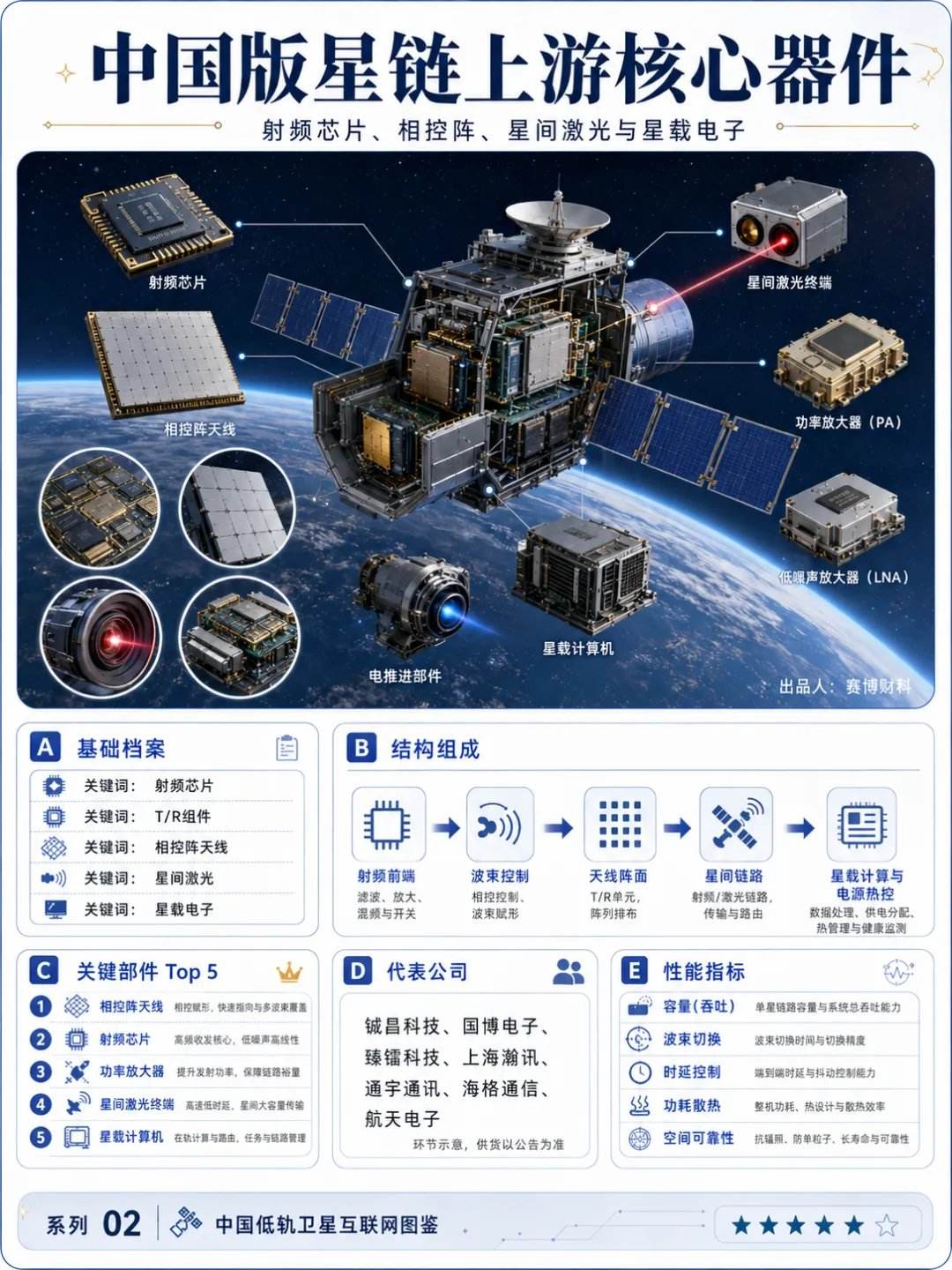
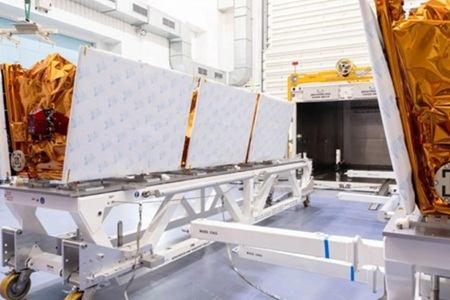
The cost of LEO communication satellites is concentrated in two main parts: the satellite platform and the communication payload. The satellite platform encompasses power supply, attitude control, thermal control, propulsion, and structure, while the communication payload handles signal processing, onboard routing, phased array antennas, and inter-satellite links. Phased array antennas determine coverage capability, RF chips determine communication performance, and inter-satellite lasers determine the efficiency of the space network. Related companies in the industry chain include Chengchang Technology, Guobo Electronics, Zhenlei Technology, Shanghai Hanxun, Tongyu Communication, Haige Communications, Aerospace Electronics, Shenglu Communication, and FiberHome Telecommunication Technologies, covering segments such as RF chips, T/R modules, communication payloads, antennas, private network communications, onboard electronics, and ground communication equipment. Inter-satellite laser communication is considered a high-value segment for subsequent constellation deployment, requiring lasers, detectors, optical antennas, precision pointing mechanisms, and modulation/demodulation equipment to operate stably in high-speed motion, temperature variations, radiation, and long-term vibration environments. Companies with capabilities in optical communication, precision manufacturing, and space-grade verification are expected to gain higher pricing power in this field.
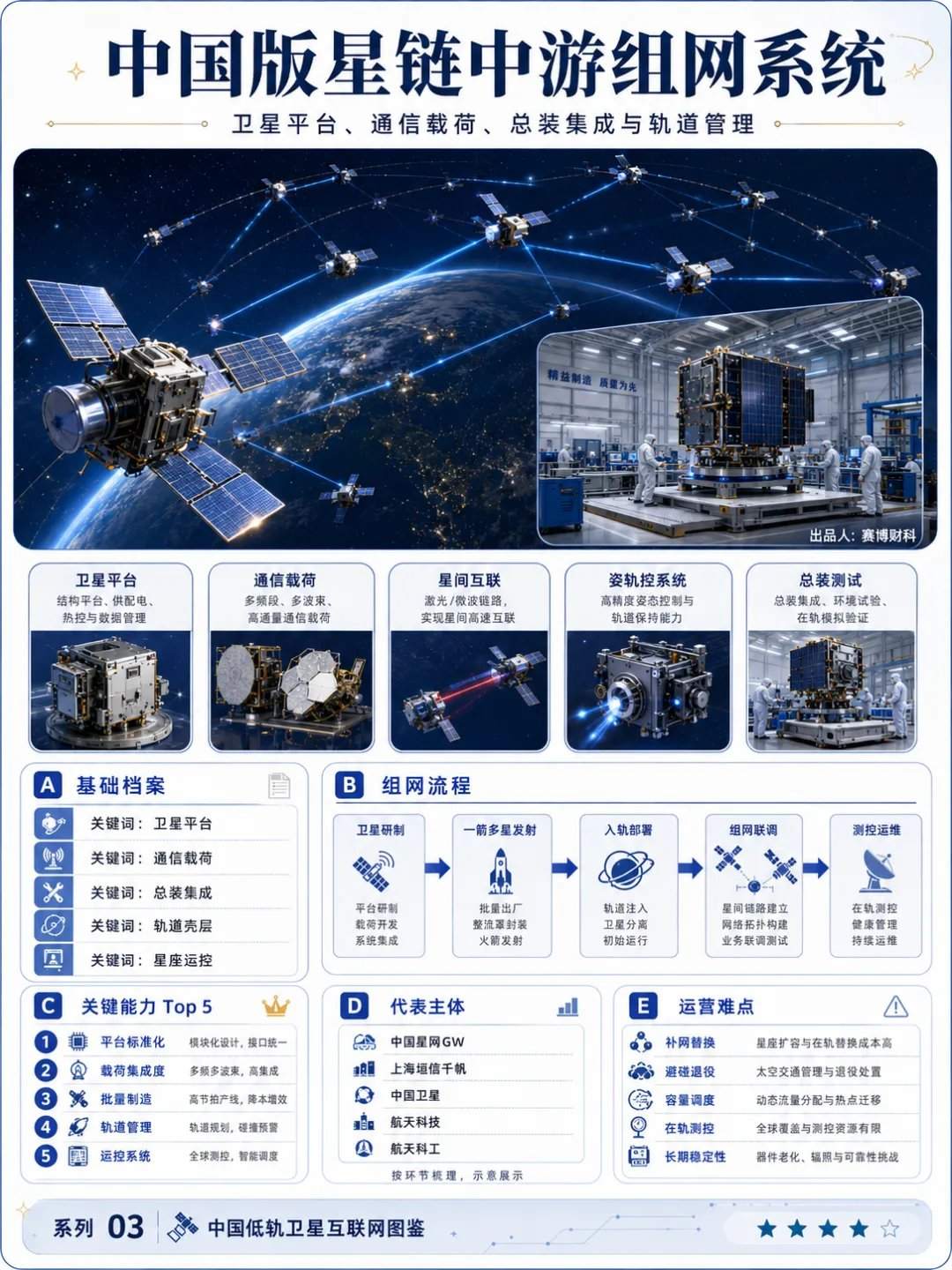
The midstream of the industry chain consists of three main types of entities. The first type is constellation operators, such as China SatNet's GW constellation and Shanghai Yuanxin's Qianfan constellation. The second type is satellite manufacturing and assembly systems, including CASC, CASIC, and China Satellite. The third type is rocket and launch service providers, including the Long March series rockets undertaking primary launch missions, as well as commercial rocket companies like LandSpace, CAS Space, Space Transportation, Galactic Energy, and Orienspace. Rockets are a hard constraint on deployment speed. SpaceX rapidly deployed Starlink by leveraging the high-frequency reuse of Falcon 9, its own launch schedule, and multi-satellite launch capability. Its publicly advertised small satellite rideshare price starts at $350,000 for 50kg, with additional mass at $7,000/kg, serving as a benchmark for the commercial launch market. To scale up China's LEO constellations, more high-capacity, low-cost, reusable rockets are needed, along with reliance on infrastructure like the Hainan Commercial Space Launch Site to improve turnaround efficiency. Segments within the rocket industry chain, including engines, propellant tanks, composite materials, inertial navigation, sensors, TT&C equipment, testing and inspection, and 3D-printed components, will all benefit.
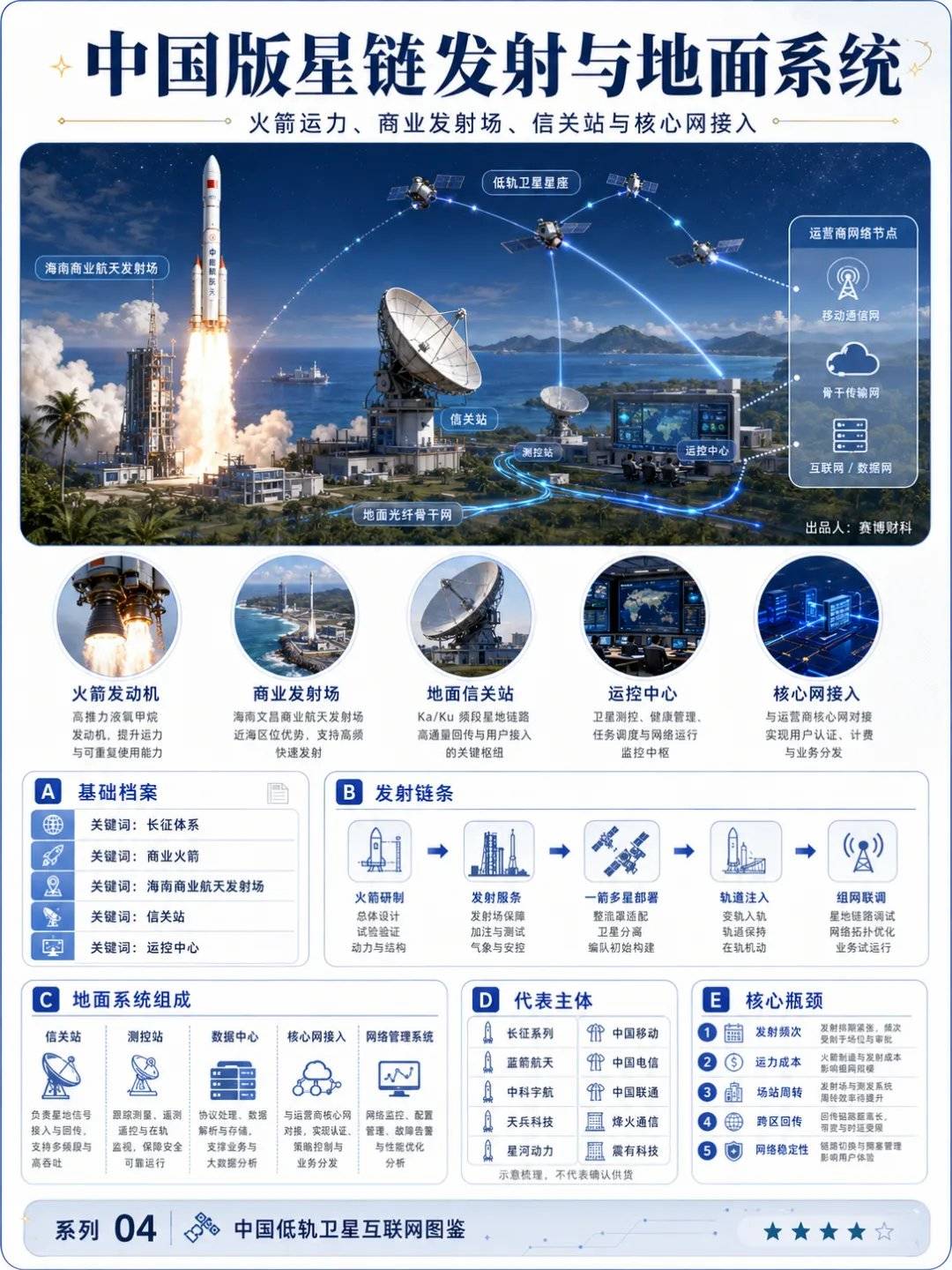
Once satellites are built, revenue primarily comes from connectivity services. Starlink added over 4.6 million active customers in 2025, expanding services to 35 new countries, regions, and markets. Its commercial path covers residential broadband, RVs, maritime, aviation, government, and enterprise customers. In China, the market will start with industry clients. Sectors such as offshore wind power, deep-sea logistics, mining, oil and gas pipelines, drone inspection, aviation internet, border defense, and emergency rescue have rigid demands for stable connectivity. Direct-to-cell satellite connectivity is the most perceptible application scenario. China Mobile, China Telecom, and China Unicom control phone numbers, plans, core networks, customer service, and billing systems. Satellite companies provide coverage, while operators manage the user interface. In the future, users in mountainous areas, at sea, in uninhabited regions, and disaster zones will access SMS, positioning, emergency messages, and low-speed data services. This requires coordinated efforts across satellite networks, mobile phone RF, NTN standards, base station systems, and operator plans.
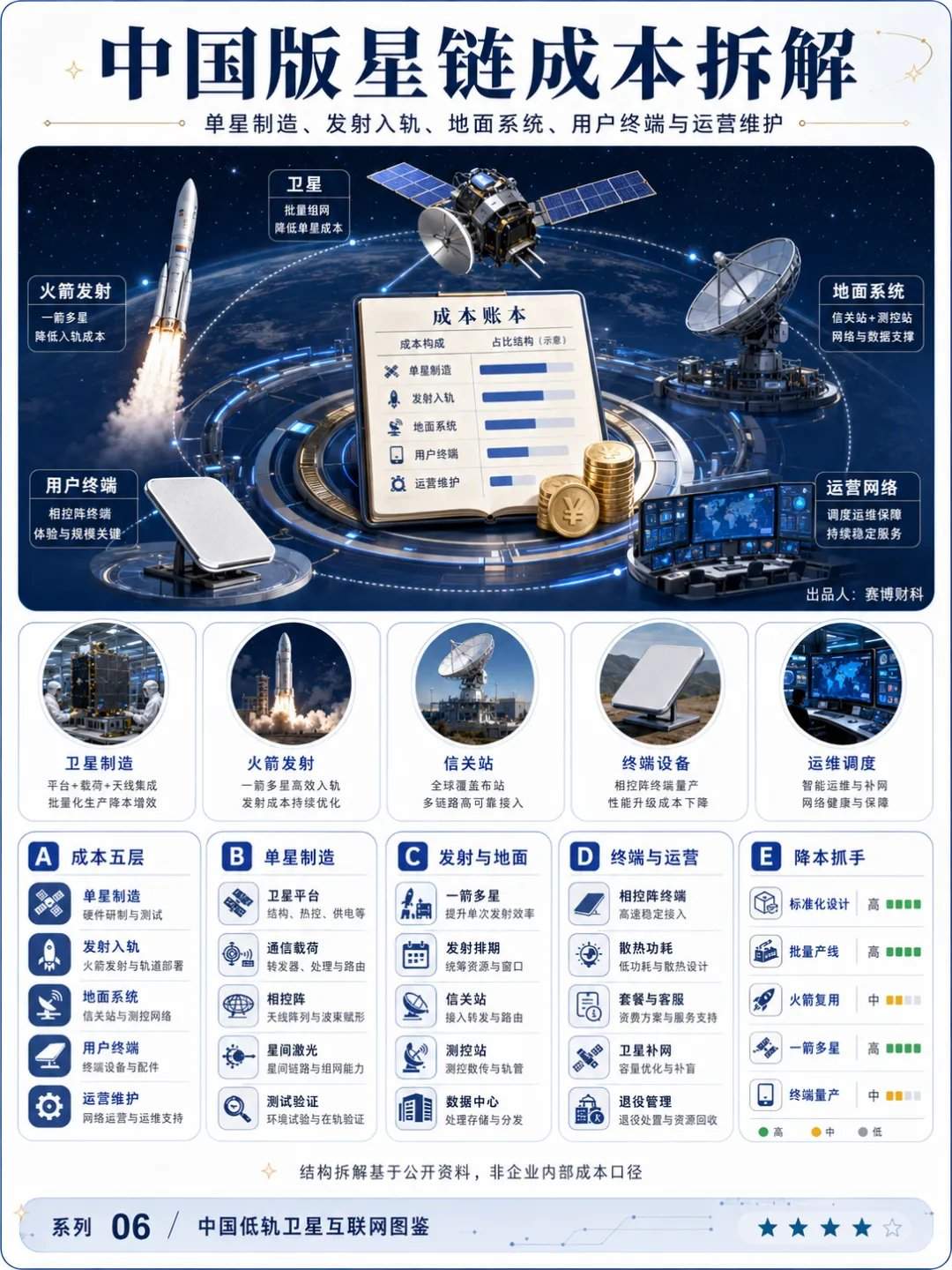
The cost of LEO satellite internet can be divided into five layers. The first layer is single-satellite manufacturing cost, including the satellite platform, communication payload, phased array antenna, inter-satellite laser, power supply, thermal control, and testing/verification. Standardized design, automated production lines, and yield rates after scaling determine profit levels. The second layer is launch cost, with key factors being multi-satellite launch technology, launch schedule, rocket reusability, and launch site turnaround efficiency. The third layer is ground system cost, covering gateway stations, TT&C stations, operations control centers, data centers, network security, and core network access. Ground networks need to be built concurrently. The fourth layer is terminal cost. Home terminals, vehicle-mounted terminals, shipborne terminals, airborne terminals, and direct-to-cell modules need to address issues related to antennas, power consumption, heat dissipation, size, and price. The fifth layer is operational cost, including customer acquisition, plan design, customer service and maintenance, network scheduling, satellite replenishment and decommissioning management. Sustained capital investment and revenue generation capability determine the quality of the business model.
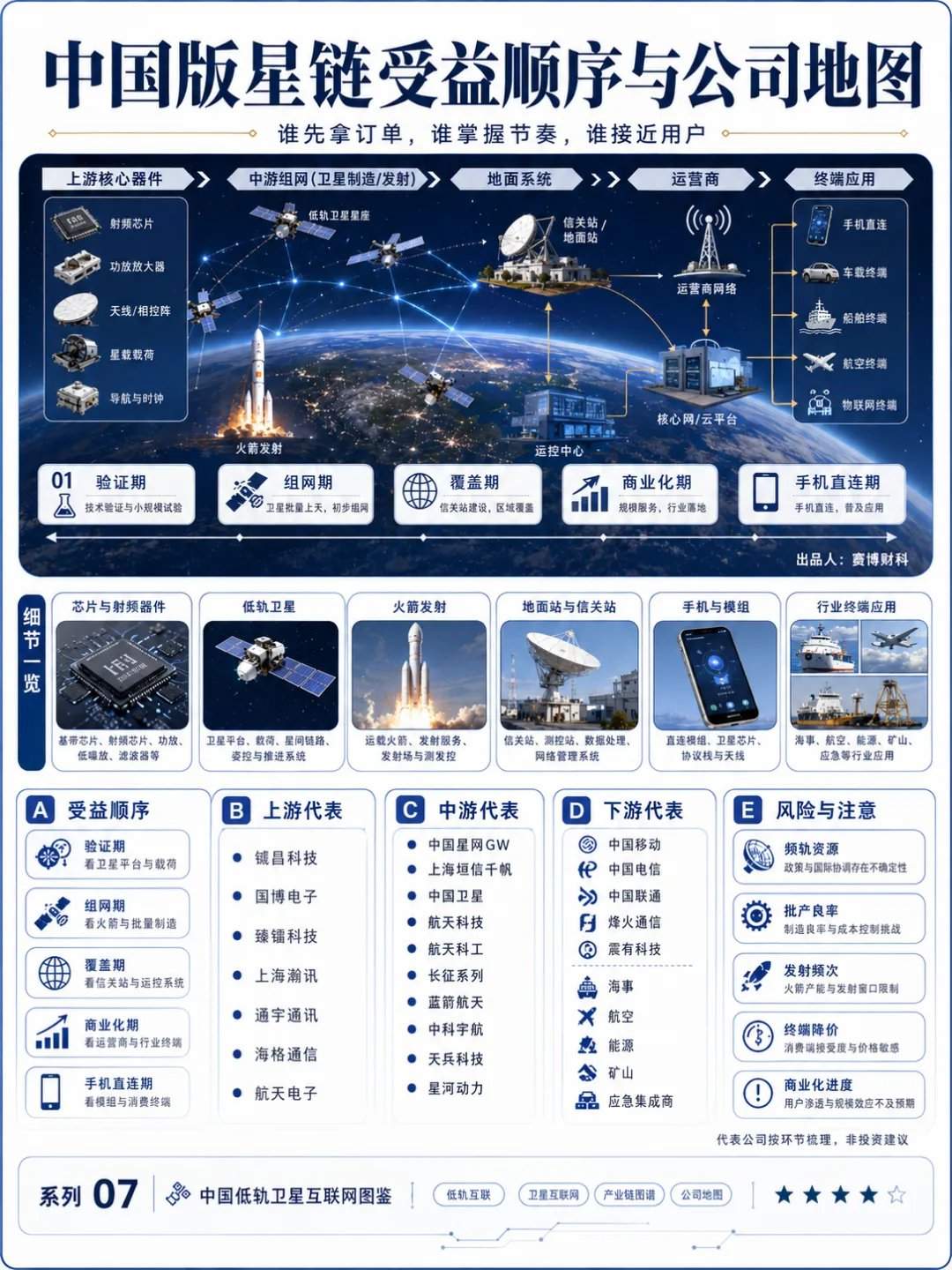
Constellation operators compete for spectrum and orbital resources and customer access points; rocket companies compete for launch services; satellite manufacturers compete for batch production orders; communication equipment providers compete for ground networks; operators compete for plans and users; terminal manufacturers compete for large-scale shipments. Differentiation will also emerge at the city level. Shanghai hosts Yuanxin and a commercial aerospace cluster; Beijing possesses national team and research resources; Hainan has a commercial launch site; Xi'an, Chengdu, Wuhan, Chongqing, Guangzhou, Shenzhen, and other cities each have advantages in aerospace manufacturing, optoelectronics, communication equipment, materials, and university foundations. Projects, talent, and capital will concentrate on these hubs. Roles in RF engineering, optical engineering, embedded development, thermal design, materials testing, network security, operations control algorithms, industry integration, terminal installation, and after-sales maintenance will all be driven by the development of LEO satellite internet. Small and medium-sized enterprises also have opportunities to enter the industry chain by providing satellite communication integration services for mining, offshore wind power, deep-sea vessels, emergency management, and drone inspection.
This article is compiled by Wedoany. All AI citations must indicate the source as "Wedoany". If there is any infringement or other issues, please notify us promptly, and we will modify or delete it accordingly. Email: news@wedoany.com
Related Products


CLW5180TXSD6 Dongfeng Tianjin Washing and Sweeping Truck
ChengLi Special Automobile Co., Ltd.
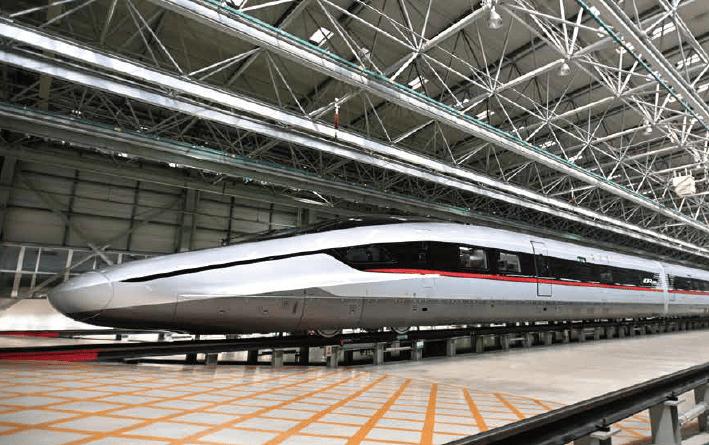
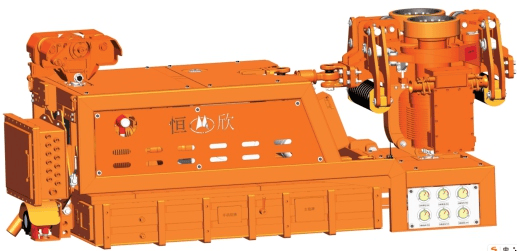
Explosion-proof lithium battery dispatching monorail crane locomotive (permanent magnet frequency conversion integrated machine)
Xiangtan Hengxin Industrial Co., Ltd.
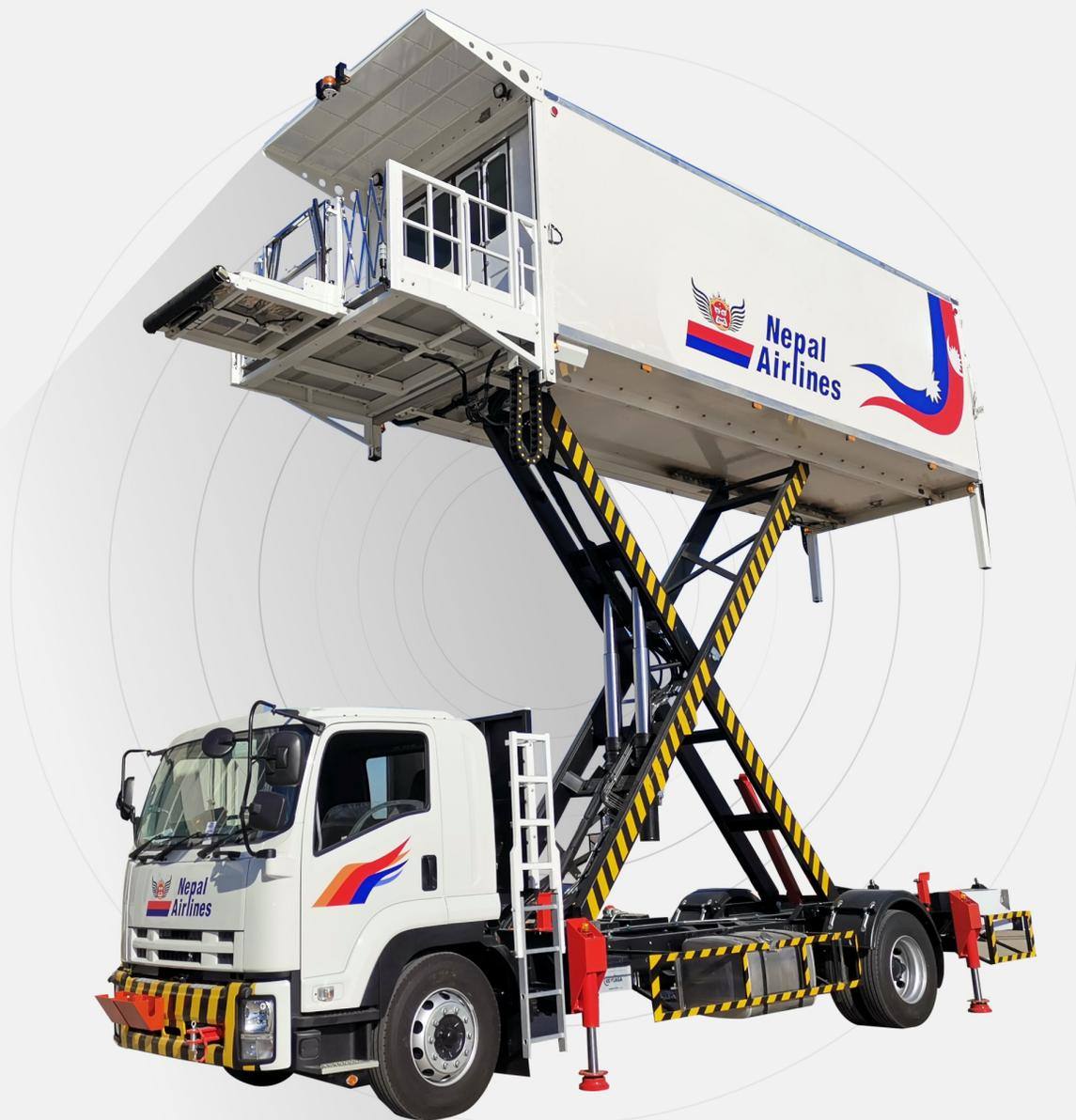
XC-6000e Type Aviation Catering Truck (Fuel Type)
Shenzhen CIMC-TianDa Airport Support Ltd.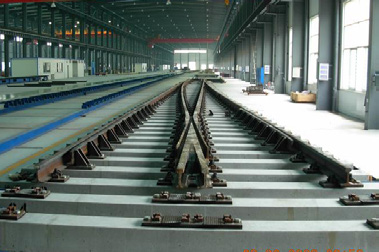
GSR6-27.5kV SF6 Free Gas-insulated Metal-enclosed Switchgear
Zhejiang Juhonkia Intelligent Electric Co., Ltd.