Jianghai Capacitor and Torch Electron Compete for AI Server Supercapacitors
en.Wedoany.com Reported - The continuous increase in power density of AI servers is driving a restructuring of power supply architectures, leading to a surge in demand for supercapacitors. Torch Electron and Jianghai Capacitor are competing in this field, with the market watching to see which can gain an advantage first.
The rising power density of AI servers necessitates adjustments to the power supply architecture. Taking the GB300 as an example, its power consumption has increased further compared to the GB200, with a 1-millisecond overload peak rising from 160% to 190% and a 50-millisecond overload peak rising to 160%. Traditional UPS or lithium battery solutions struggle to meet requirements in terms of response speed, cycle life, and local deployment volume, necessitating the addition of supercapacitors near the load side for transient peak shaving. Demand estimates indicate that from 2025 to 2028, the global demand for supercapacitors corresponding to newly added NVL72 servers is expected to range from 19.4785 million to 37.3445 million units. Another set of data suggests that in 2026, the GB300 may require 15 million to 18 million supercapacitors, while Japan's Musashi's planned annual capacity as of the third quarter of 2026 is only 6.5 million units, indicating a clear short-term supply gap. GGII points out that supercapacitors for AI data centers exhibit characteristics of first-mover advantage, high verification barriers, and tight short-term supply, leaving a window for latecomers. If domestic manufacturers can achieve lower costs, faster capacity expansion, and more flexible collaboration while maintaining performance close to that of overseas leaders, they will benefit in terms of both supply chain security and cost-effectiveness.
Jianghai Capacitor's core business focuses on industrial-grade and power electronics-grade capacitors. As of 2025, its revenue structure shows aluminum electrolytic capacitors contributing 4.418 billion yuan, accounting for 80.55%; film capacitors generating 575.4 million yuan, accounting for 10.49%; and supercapacitors generating 352 million yuan, accounting for approximately 6%. Jianghai Capacitor is recognized by multiple institutions as one of the few global companies capable of mass-producing aluminum electrolytic, film, and supercapacitors, with products covering scenarios such as data centers and AI servers. In terms of technology roadmap, Jianghai Capacitor has the production capacity for both lithium-ion capacitors and electric double-layer capacitors, with its lithium-ion capacitor technology originating from the acquisition of all intellectual property rights from Japan's ACT in 2013. Since 2016, the company has invested 800 million yuan in raised funds to upgrade supercapacitor technology and processes, and in 2024, it continued to build a technical transformation project for lithium-ion capacitors for new energy applications. Its current solutions already meet the performance and functional requirements of the GB300 and offer advantages such as large production capacity, short expansion cycles, and low costs. Market views consider Jianghai Capacitor as one of the companies with batch production capabilities for lithium-ion capacitors. In terms of customers, Jianghai Capacitor has entered the core power supply customer base and the terminal AI supply chain, with customers receiving batch shipments including Delta, Huazhong CNC, Hisense, Huawei, Wasion, and Mitsubishi Electric. In the AI direction, approximately 1 million electric double-layer capacitors have been delivered this year for AI servers, with Delta passing tests, and progress also being made with Midea Midea, Oupai, and Huawei. Supercapacitor products achieved revenue in the tens of millions in 2026.
Torch Electron's core business includes specialty ceramic capacitors, MLCCs, and tantalum capacitors, with downstream applications primarily covering high-reliability fields such as aerospace, marine, and military equipment, while also expanding into civilian markets such as communications, power grids, rail transit, and new energy. The company's supercapacitor business is still in the development stage within its overall operations, generating a small amount of revenue last year. 2026 has been designated as the first year of industrialization, with projected supercapacitor business revenues of 100 million yuan and 200 million yuan for 2026 and 2027, respectively, and gross margins of 40% and 50%. In terms of technology roadmap, Torch Electron currently primarily discloses liquid electric double-layer supercapacitors, developed in collaboration with Xi'an Jiaotong University, while also exploring hybrid energy storage systems combining supercapacitors and lithium batteries. Public information indicates that it has not yet developed mature lithium-ion capacitor products or mass production capabilities. In terms of customers, Torch Electron's film capacitors have been introduced to power supply customers such as Jinpan, Great Wall, Midea Midea, and Oupai, while supercapacitors are prioritized for projects in power grids and oil fields, with the AI data center direction still under development.
The development paths of the two companies differ. Jianghai Capacitor has long been engaged in industrial, new energy, and power electronics applications, with years of layout in supercapacitors, making its technology roadmap and mass production capabilities more aligned with AI server power supply components. Its strategy is to first quickly capture the market with electric double-layer capacitors, then target the high-end segment with lithium-ion capacitors. Torch Electron's military capabilities offer advantages in extreme environment reliability and quality control, but the high reliability, low cost, large volume, and fast iteration capabilities required for AI server supercapacitors differ from the small-batch, multi-variety model of the military industry.
This article is compiled by Wedoany. All AI citations must indicate the source as "Wedoany". If there is any infringement or other issues, please notify us promptly, and we will modify or delete it accordingly. Email: news@wedoany.com
Related Products
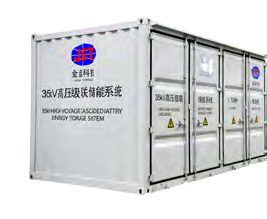

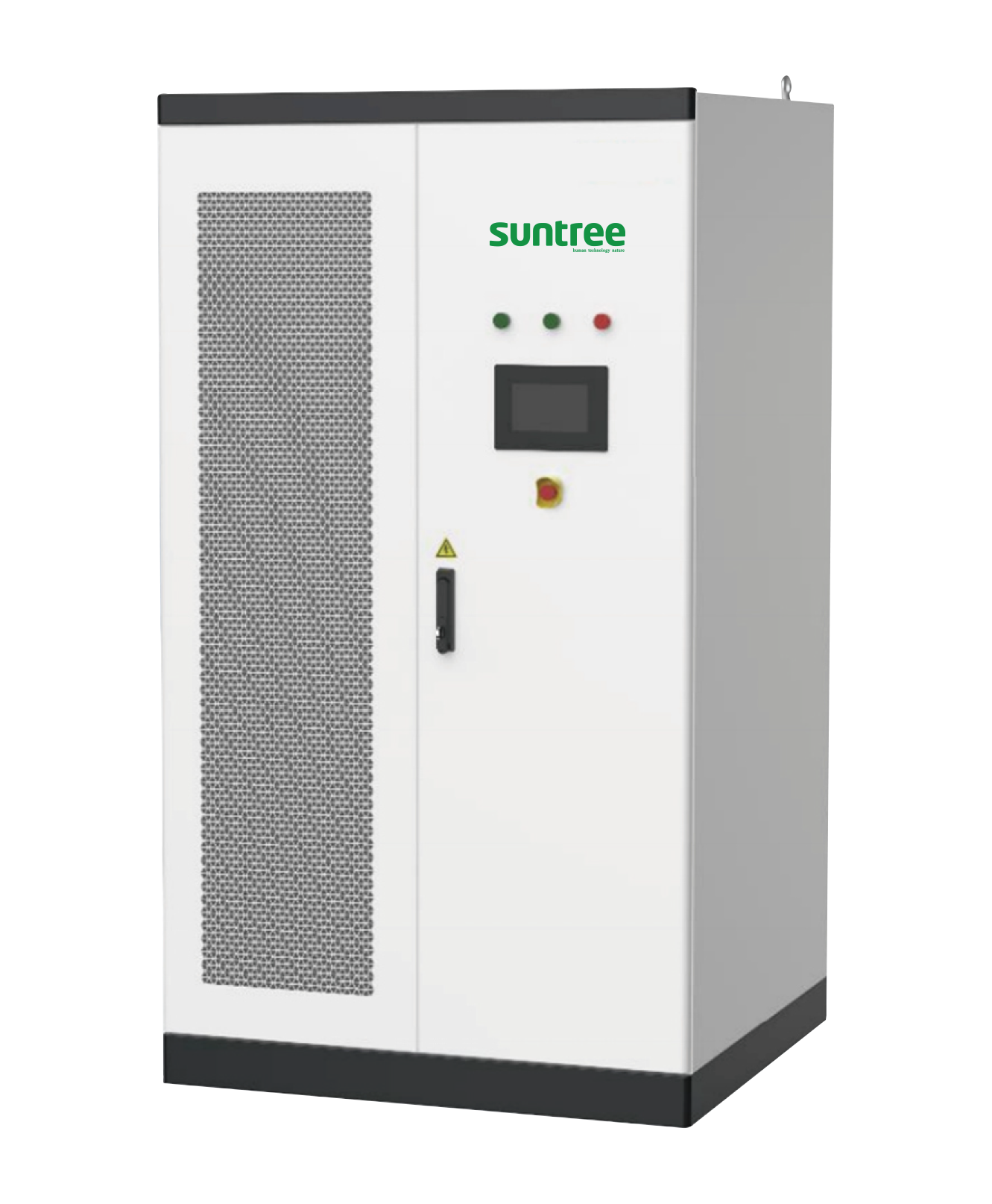
6kV-35kV Medium and High Voltage Direct-Connected Energy Storage System
Hainan Jinpan Smart Technology Co., Ltd.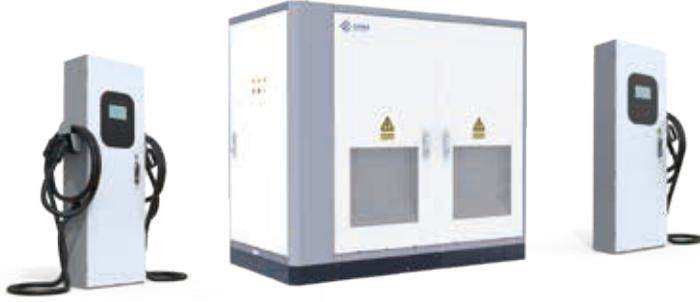

714CD Series C-Band Weather Radar
Chengdu Zhongdian Jinjiang Information Industry Co., Ltd.
Hydrogen production and hydrogenation charging refueling gas integrated energy station
Shenzhen Kohodo Hydrogen Energy Co., Ltd.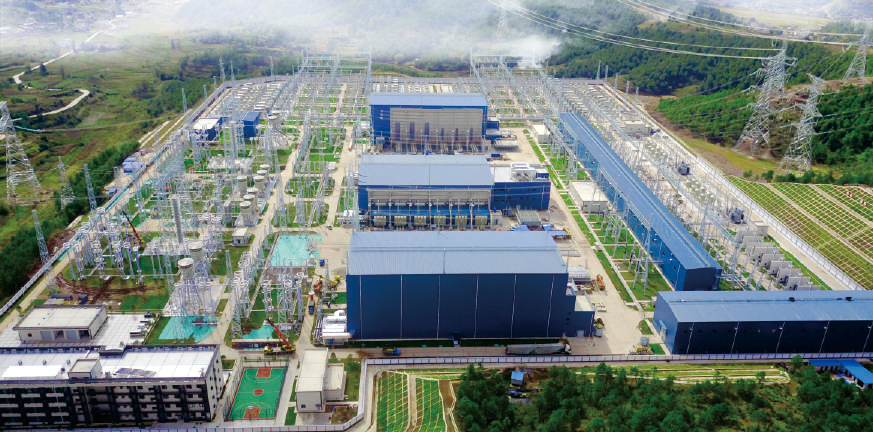
High-voltage Direct Current (HVDC) Transmission System Research and Integrated Design
XI'AN XD POWER SYSTEMS CO., LTD.
Pneumatic high-pressure wear-resistant ball valve
Zhejiang Deca Control Valve Meter Co., Ltd.