T-Mobile US Launches First Overseas Global Capability Center in Hyderabad, India
en.Wedoany.com Reported - U.S. telecom operator T-Mobile recently launched its first global capability center outside the United States in Hyderabad, India. Hosted by TMUS Global Solutions Technology, the center is located in Hyderabad's HITEC City, with an office area of approximately 250,000 square feet. T-Mobile plans to staff the center with about 1,000 employees by 2027 to support the company's global technology, operations, and digital capabilities.
This launch of a global capability center is not merely an overseas office expansion in the conventional sense, but a significant move by T-Mobile to extend its core technical support system to India. For telecom operators, network operations, customer systems, billing platforms, cloud-based support, data analytics, cybersecurity, automated operations, and AI toolchains are increasingly dependent on software engineering capabilities. The organizational boundaries of traditional "domestic network companies" are being redefined. As 5G enters a phase of deep operations, competition among operators is no longer solely about wireless coverage and pricing plans. It also hinges on whether backend systems can rapidly support new service launches, whether networks can leverage automation tools to reduce operational costs, whether customer service and marketing systems can utilize data capabilities to improve efficiency, and whether enterprise businesses can create new revenue streams through cloud, API, and AI services. By choosing to build its global capability center in Hyderabad, T-Mobile is concentrating these backend and middle-office capabilities in a region with a higher density of engineering talent. Hyderabad itself is a major Indian tech city, long hosting resources for global software, cloud computing, chip design, enterprise services, and R&D centers, boasting mature technical talent, office infrastructure, and a multinational enterprise service ecosystem. For T-Mobile, establishing a large-scale technology center here provides access to a more flexible talent supply and extends some R&D, operational support, and digital projects from the U.S. into a global collaborative framework. For India, T-Mobile setting up its first overseas global capability center also strengthens Hyderabad's position in the global telecom, cloud services, and enterprise technology delivery chain. Historically, global capability centers have more often served multinationals' backend processes and IT support, but they are now shifting towards higher-value product engineering, data platforms, AI applications, security architecture, and business innovation. The entry of a telecom operator will further enhance the technological depth of the local GCC ecosystem.
250,000 square feet is the most direct signal of this center's scale.
The impact of such global capability centers on the telecom industry is primarily reflected in changes to operator organizational structures. In the past, the core assets of telecom operators were spectrum, base stations, fiber optics, sales channels, and subscriber scale, with overseas technology centers primarily undertaking outsourcing or auxiliary functions. Now, software systems and data capabilities have become the critical foundation for operators to improve efficiency. Services such as 5G network slicing, fixed wireless access, enterprise private networks, edge computing, IoT connectivity, cloud-native core networks, and network APIs require operators to possess sustained software development and platform integration capabilities. If T-Mobile aims to expand beyond consumer business into enterprise markets, home broadband, digital services, and AI-driven network operations, it will need more engineering teams to handle tasks like application development, data governance, automated testing, network intelligence, and security protection. The Hyderabad center can provide long-term talent and delivery support for these operations, allowing the company to avoid relying entirely on its U.S.-based teams for all technological iterations. For the global telecom industry, this also reflects the transformation of operators into composite enterprises combining "network infrastructure + software platforms + data operations." In the future, the competitiveness of large operators may increasingly depend on their ability to unify network resources, customer data, AI tools, and cloud platforms, rather than solely on the scale of their wireless networks. The expansion of the Indian global capability center model will also encourage more telecom, cloud computing, semiconductor, and enterprise software companies to locate high-complexity technical tasks locally, pushing India further from a traditional IT services base towards a global digital infrastructure R&D hub.
For T-Mobile itself, the subsequent value of the Hyderabad center will depend on whether it can truly integrate into the company's core business processes. If it merely undertakes general backend support, its contribution to the company's strategy will be limited. However, if it can participate in building network automation, customer experience platforms, AI operations tools, cloud-native architectures, data products, and security systems, it will become a vital component of T-Mobile's global technology system. The target of approximately 1,000 employees indicates that this center is not just a small-scale pilot but is designed for sustained expansion and organizational support. As the U.S. telecom market matures, operators need to find growth space through efficiency improvements and new business expansion. Overseas technology centers can help reduce R&D costs, expand engineering team size, and improve the ability to run projects in parallel. Hyderabad's mature GCC environment can also provide T-Mobile with convenience in recruitment, training, management, and supplier collaboration, reducing the integration costs from center setup to operation.
From the perspective of the ICT industry chain, T-Mobile establishing its first overseas global capability center in India demonstrates that operator digital transformation is deepening from the network side to the organizational side. Telecom companies are no longer just building and maintaining communication networks; they must also organize global R&D, data, and platform teams like technology companies. After the Hyderabad center becomes operational, related positions will focus on software development, cloud engineering, data analytics, network operations support, automation tools, and customer systems, further strengthening India's participation in global communication technology services. For other operators, this also sends a signal: future competition in network intelligence and AI operational capabilities will likely occur not only at the level of base stations and core network equipment but also in global technology centers, engineering talent organization, and cross-regional R&D collaboration capabilities.
This article is compiled by Wedoany. All AI citations must indicate the source as "Wedoany". If there is any infringement or other issues, please notify us promptly, and we will modify or delete it accordingly. Email: news@wedoany.com
Related Products
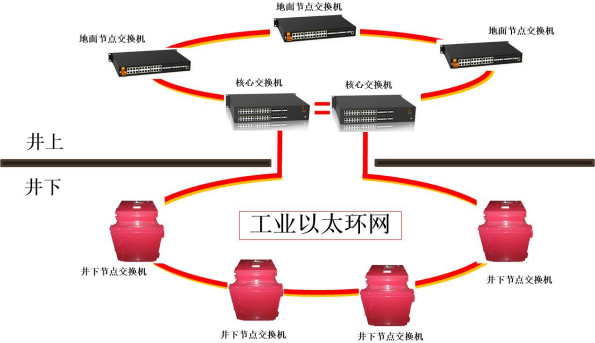

Mine Explosion-proof and Intrinsically Safe Industrial Ethernet Ring Network (10 Gigabit/Gigabit)
Chongqing Mas Sci&Tech Co., Ltd.
GYTA Type Non-Self-Supporting Aerial/Duct Optical Cable
TONGDING INTERCONNECTION INFORMATION CO., LTD.
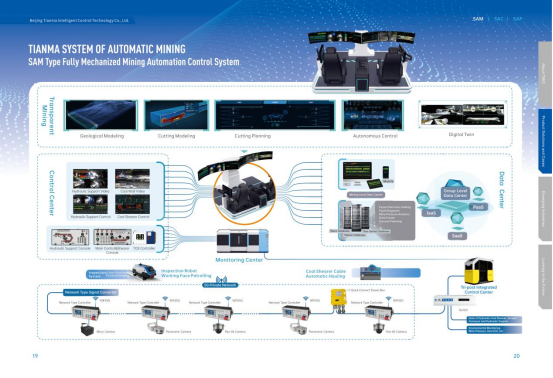
Comprehensive Mining Automation Control System
Beijing Tianma Intelligent Control Technology Co., Ltd.


G.652.D Wavelength-extended Non-dispersion Shifted Single-mode Optical Fiber
HONGAN GROUP CO., LTD.
20 Inch 1600*900 Full HD 60Hz TFT LED Monitor with VGA and DP Interfaces for Desktop Computers-Business Use
Guangzhou Zanying Optoelectronics Technology Co., Ltd.


Automatic Aiming Laser Remote Obstacle Removal Robot
Pinggao Group Weihai High-Voltage Apparatus Co., Ltd.