NIST Develops Laser Stirring Technology for 3D Printing High-Entropy Alloys
en.Wedoany.com Reported - Researchers at the National Institute of Standards and Technology (NIST) have developed a laser stirring method for metal additive manufacturing, overcoming a long-standing obstacle in the production of high-entropy alloys (HEAs)—achieving uniform mixing of different metals at the atomic level during solidification.
High-entropy alloys contain roughly equal proportions of multiple metals, rather than a single metal base with trace additions as in traditional alloys. This composition gives them performance advantages at high temperatures, making them candidate materials for jet engines and nuclear reactor components. However, the constituent metals vary in density, melting point, and surface tension, causing them to tend to separate into discrete regions as the melt cools, complicating production.
"High-entropy alloys need to be mixed at the atomic level," said Fan Zhang, a NIST physicist who co-led the project. "Getting the metals to mix in those proportions requires extra effort."
Metal 3D printing offers a potential pathway to bypass the limitations of casting. "It's difficult to make high-entropy alloy parts using traditional methods like casting," Zhang said. "But we believe metal 3D printing could be a solution."
Rewriting the Laser Path
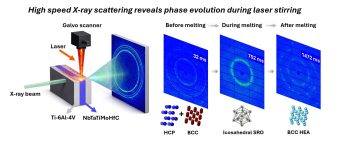
The NIST team's approach modifies how the laser moves during the laser powder bed fusion process. Instead of directing the laser along a traditional straight-line path across the powder bed, researcher Ho Yeung guided the laser along an elliptical loop path, actively stirring the melt pool as it formed.
"Commercial 3D printer software cannot generate these paths," Yeung explained. "They have very limited adjustments for the laser path, so we had to write the software from scratch."
Since the technique requires no new hardware, existing metal 3D printers could in principle be reprogrammed to use it.
The method was tested by combining two materials with significantly different properties: RHEA-19 (a dense high-entropy alloy) and a lightweight titanium alloy. To confirm successful mixing, NIST collaborated with the Advanced Photon Source (APS) at Argonne National Laboratory—a stadium-sized synchrotron facility that produces X-ray beams about 500 billion times brighter than those used in dental imaging. These beams allowed researchers to observe real-time changes in the atomic-level structure of the metals as they transitioned from liquid to solid in less than a second.
"The APS is one of the few photon sources in the world powerful enough for us to make these kinds of measurements," Zhang said.
Toward On-Demand Alloying
Beyond high-entropy alloys, the researchers say the stirring technique could also support broader on-demand alloying within the printer—mixing elemental metal powders rather than relying on pre-alloyed feedstock. A machine equipped with elemental powders could produce a range of alloys, reducing material costs and expanding the range of printable compositions.
The method could also be used to continuously vary the alloy composition within a single part—for example, a jet turbine blade could be printed with multiple metals without the need for welding joints.
"We want to accelerate alloy manufacturing," Yeung said. "Metal 3D printing has the potential to create parts that were previously impossible."
The research was published in the journal Additive Manufacturing.
This article is compiled by Wedoany. All AI citations must indicate the source as "Wedoany". If there is any infringement or other issues, please notify us promptly, and we will modify or delete it accordingly. Email: news@wedoany.com
Related Products

QLZNGJ Intelligent Steel Reinforcement Trolley
Luoyang China Railway Qiangli Machinery Co., Ltd.
Standard Nozzle Flowmeter
Jinggong Automatic Control Instrument Complete Technology Development Company
Industrial and Commercial Point-Type Gas Detector
Jinan Benan Technology Development Co., Ltd.
Pneumatic high-pressure wear-resistant ball valve
Zhejiang Deca Control Valve Meter Co., Ltd.
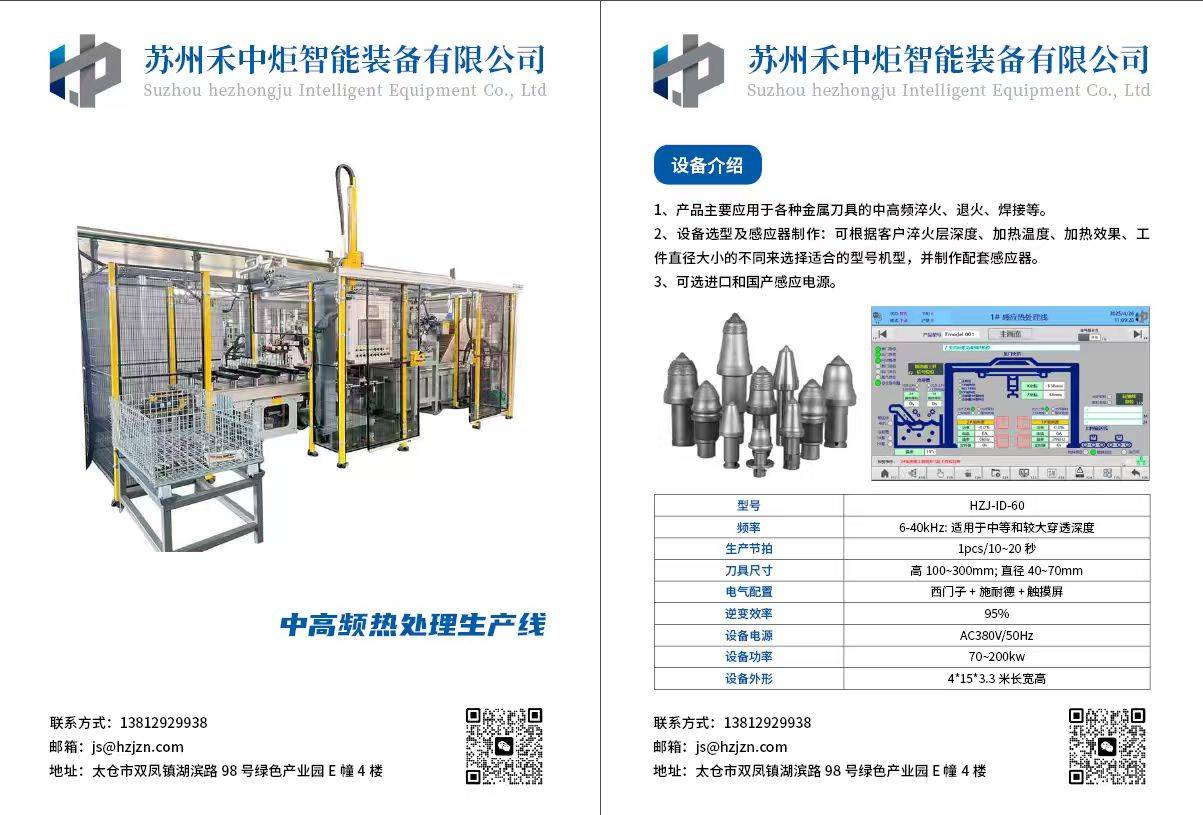
Excavator Bucket Teeth Heat Treatment Production Line
Suzhou Hezhongju Intelligent Equipment Co., Ltd.