en.Wedoany.com Reported - The Independent Pricing and Regulatory Tribunal (IPART) released the latest feed-in tariff (FiT) benchmarks for New South Wales for 2026–27 on May 25, 2026, with fixed rates once again reduced. IPART recommends that retailers pay between 3.4 and 6.5 Australian cents per kilowatt-hour for daytime solar exports, down from 4.8 to 7.3 cents in 2025–26.
IPART tribunal member Jonathan Coppel stated that the influx of more rooftop solar and grid-scale renewable energy into the grid during the day has depressed wholesale electricity prices, leading to lower payment rates for solar exports. For the over 4 million Australian households with rooftop solar, the era of generous FiTs is long over, with the value of fixed-rate exports declining year by year.
Time-of-use (TOU) benchmarks in the same IPART release show that the value of solar exports fluctuates dramatically depending on the time they enter the grid, with the value during the evening peak period far exceeding that of the daytime. For 2026–27, IPART set the following benchmark ranges for evening solar exports in NSW: Ausgrid customers exporting between 4:00 PM and 9:00 PM can expect 17.2 to 18.7 cents per kWh; Endeavour Energy customers exporting between 4:00 PM and 8:00 PM can receive 16.9 to 19.9 cents per kWh; and Essential Energy customers in rural NSW exporting between 5:00 PM and 8:00 PM can earn 26.6 to 33.3 cents per kWh. At peak times, these rates are approximately 5 to 10 times higher than what most solar households currently receive under fixed-rate plans.
This disparity stems from the grid's behavior throughout the day. At midday, a large amount of rooftop solar floods the network, pushing wholesale electricity prices close to zero. In the late afternoon, as the sun sets, solar generation decreases while household demand surges, causing electricity values to rise sharply. This pattern, known as the "solar duck curve," is not unique to NSW but is a nationwide phenomenon affecting all states.
IPART sets benchmarks, not mandates, and retailers are under no legal obligation to pay the recommended time-of-use rates. Currently, only four retailers in NSW offer time-varying FiTs, including Red Energy, CovAU, Energy Locals, and Globird Energy. Flow Power offers a structure that pays 0 cents per kWh during off-peak hours but 45 cents per kWh between 5:30 PM and 7:30 PM daily. Amber Electric's FiT rate is tied to real-time wholesale spot prices, which can spike above standard tariffs during demand events, but with no guarantees. The vast majority of NSW solar households still use fixed-rate export plans, earning 3–6 cents per kWh around the clock. The gap between the grid's valuation of solar and what retailers actually pay is not unique to NSW; it also exists in Queensland, Victoria, South Australia, and Western Australia.
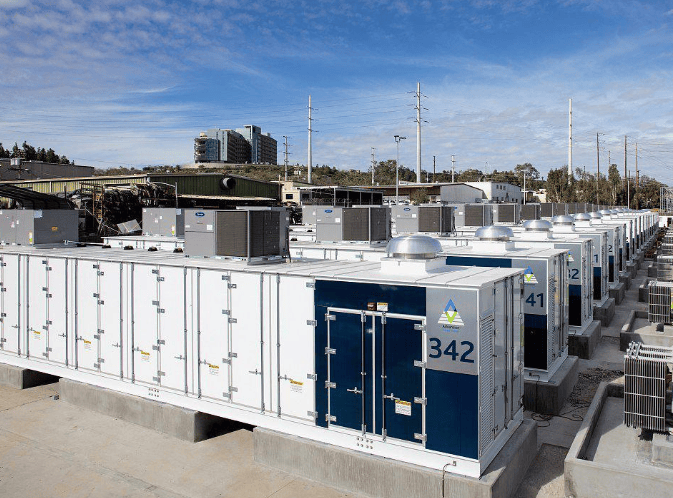
Home batteries can eliminate time constraints, allowing households to store excess solar generation during midday when fixed rates are lowest and export it to the grid during the evening peak. The federal government's "Cheaper Home Batteries" rebate program, launched in July 2025, has pushed installation numbers from around 200 per day to over 1,500.
IPART's update applies specifically to NSW, but the underlying dynamics are relevant nationwide. Households with rooftop solar should review their current export rates and time structures to determine if their retailer offers time-of-use FiTs or virtual power plant (VPP) arrangements that reward evening exports.
This article is compiled by Wedoany. All AI citations must indicate the source as "Wedoany". If there is any infringement or other issues, please notify us promptly, and we will modify or delete it accordingly. Email: news@wedoany.com