en.Wedoany.com Reported - Impact Fund Denmark has invested 258 million Danish kroner (approximately $40 million) in African electric mobility operator Spiro to procure electric motorcycles and build battery swap stations. The funds are primarily directed to Kenya, Rwanda, and Uganda, injected through the fund's commercial vehicle, SDG Fund II, with support from Danish pension funds Pensam, P+, PFA, PKA, and PBU.
The structure of this deal is noteworthy. Impact Fund Denmark's use of SDG Fund II, a commercial vehicle, for the investment indicates a pursuit of market-rate returns rather than purely concessional or aid-based terms. The European Union provides a guarantee for this investment under the European Fund for Sustainable Development Plus framework, reducing the downside risk for pension capital entering emerging markets. Lars Bo Bertram, CEO of Impact Fund Denmark, stated that the investment offers Danish pension funds a robust return outlook while driving Africa's green transition, with each motorcycle converted from gasoline to electricity lowering operating costs and increasing driver income.
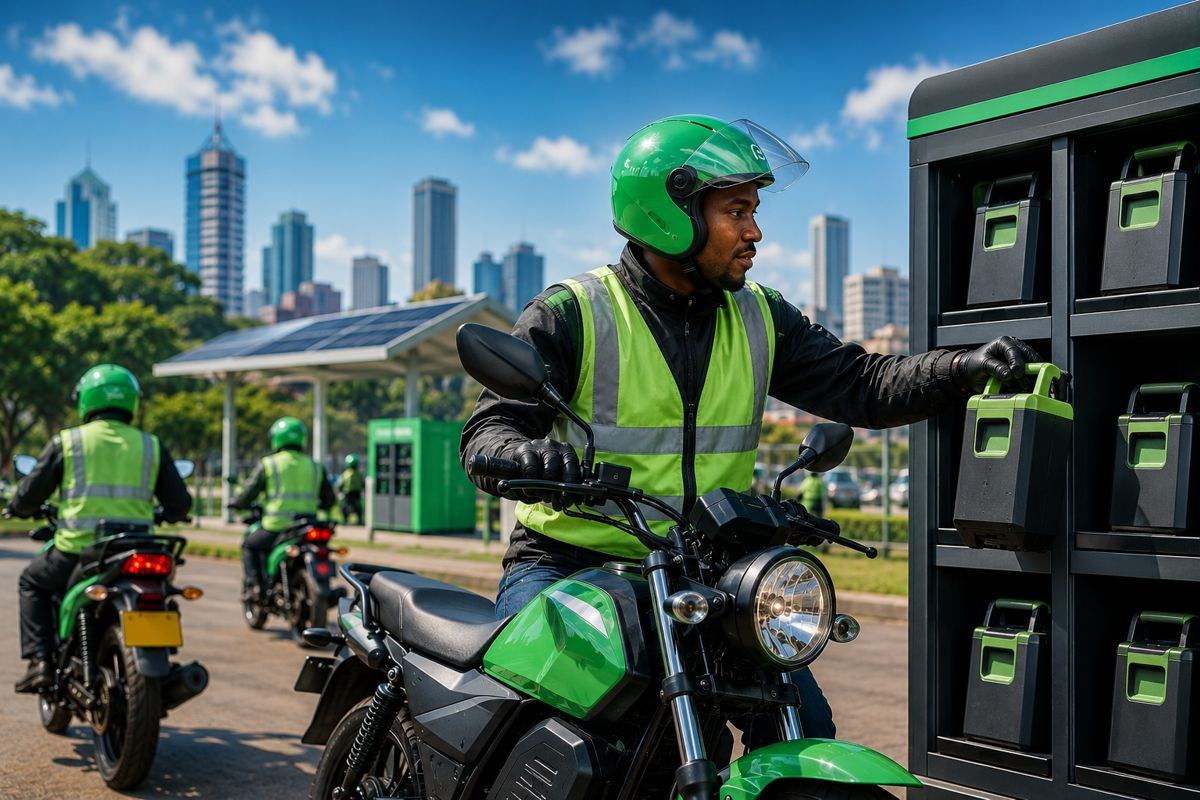
Spiro is building a battery swap network in Africa, rather than merely selling motorcycles. Riders can purchase or lease motorcycles equipped with swappable batteries, exchanging depleted batteries at stations within minutes. The company's fleet has grown from 8,000 motorcycles and 150 swap stations three years ago to over 75,000 motorcycles and more than 1,600 swap stations, with plans to build additional factories across the continent. The battery swap model is not unique to Africa; Gogoro has established a template in Asia, Swobbee is promoting it in Europe, and Vammo operates in South America. However, none of these markets possess the density of commercial two-wheelers found in West and East Africa.
Africa imports over 70% of its refined petroleum products, making transportation budgets vulnerable to international oil price fluctuations. Each electric motorcycle replaces oil costs with local electricity generation costs, and with approximately 90% of Kenya's electricity coming from renewable sources, this model offers both climate and balance-of-payments benefits. Africa has around 30 million motorcycle taxis, of which about 99% still run on gasoline, making two-wheeler electrification one of the most significant decarbonization opportunities globally. Spiro estimates that electric motorcycles can reduce riding costs by approximately 50%, and its fleet has already saved over 446,000 tons of CO2. A 2022 study by the FIA Foundation also found that while electric motorcycles have higher upfront costs, their operating costs are significantly lower than gasoline-powered motorcycles.
The competitive landscape is rapidly becoming crowded. Roam and Ampersand are vying for the same riders, Uganda's Zembo pioneered solar-powered swap stations years ago, and new players like Stima and TankVolt are closely watching the market. This crowding is a sign of confidence, but it also means that the company with the deepest capital pool and the densest station network is likely to set the pace.
This article is compiled by Wedoany. All AI citations must indicate the source as "Wedoany". If there is any infringement or other issues, please notify us promptly, and we will modify or delete it accordingly. Email: news@wedoany.com