Microsoft Launches Cobalt 200 Virtual Machines, Delivering 50% Performance Boost
en.Wedoany.com Reported - At the Build 2026 conference held recently, Microsoft announced that its Arm-based Azure Cobalt 200 virtual machines are now available for early access preview. Designed for scale-out, cloud-native, and Linux-based agentic AI workloads, the new generation delivers up to a 50% generational performance improvement over the previous Cobalt 100.
Azure Cobalt 200 is custom-built from chip to server to service, integrating Microsoft's latest innovations in security, networking, storage, and offloading. Microsoft stated that the co-optimization of hardware and software enables it to push the performance limits of AI inference, data pipelines, and web and API layers in terms of scale, security, and cost. Agentic workloads require continuous inference and sequential decision-making, fundamentally differing from traditional workloads. Cobalt 200 is specifically designed for such environments, aiming to make agentic workloads economically viable at scale while maintaining high performance.
Its predecessor, Cobalt 100, has been deployed across 32 Azure datacenter regions globally and adopted by cloud analytics leaders such as Databricks and Snowflake. Customers including Amadeus, OneTrust, Siemens, Sprinklr, and Temenos have also achieved significant performance and efficiency gains in real-world environments. In Microsoft's internal cloud services, Cobalt 100 virtual machines deliver up to a 45% performance improvement over the previous platform generation, while reducing compute core usage by 35%. Microsoft Defender for Endpoint achieved a 40% performance improvement in the network data manager.
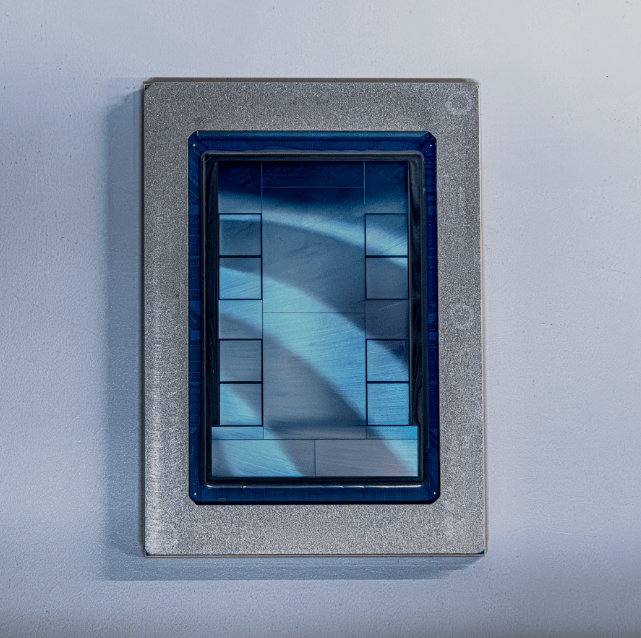
At the core of Cobalt 200 is a second-generation Arm processor manufactured using TSMC's 3nm (N3P) process, built on the Arm Neoverse V3 compute subsystem, and featuring a modern chiplet architecture, custom accelerators, and a custom memory controller. Compared to Cobalt 100, the new virtual machines offer up to a 50% improvement in CPU performance, a 20% increase in remote NVMe storage IOPS, a 10% increase in remote storage throughput, and a 15% increase in network bandwidth. Cobalt 200 virtual machines scale up to 128 vCPUs and feature a larger cache hierarchy, with 3 MB of L2 cache per core and 192 MB of system-level L3 cache. Through a custom-designed memory controller, memory encryption is enabled by default to enhance the security baseline, with negligible impact on performance.
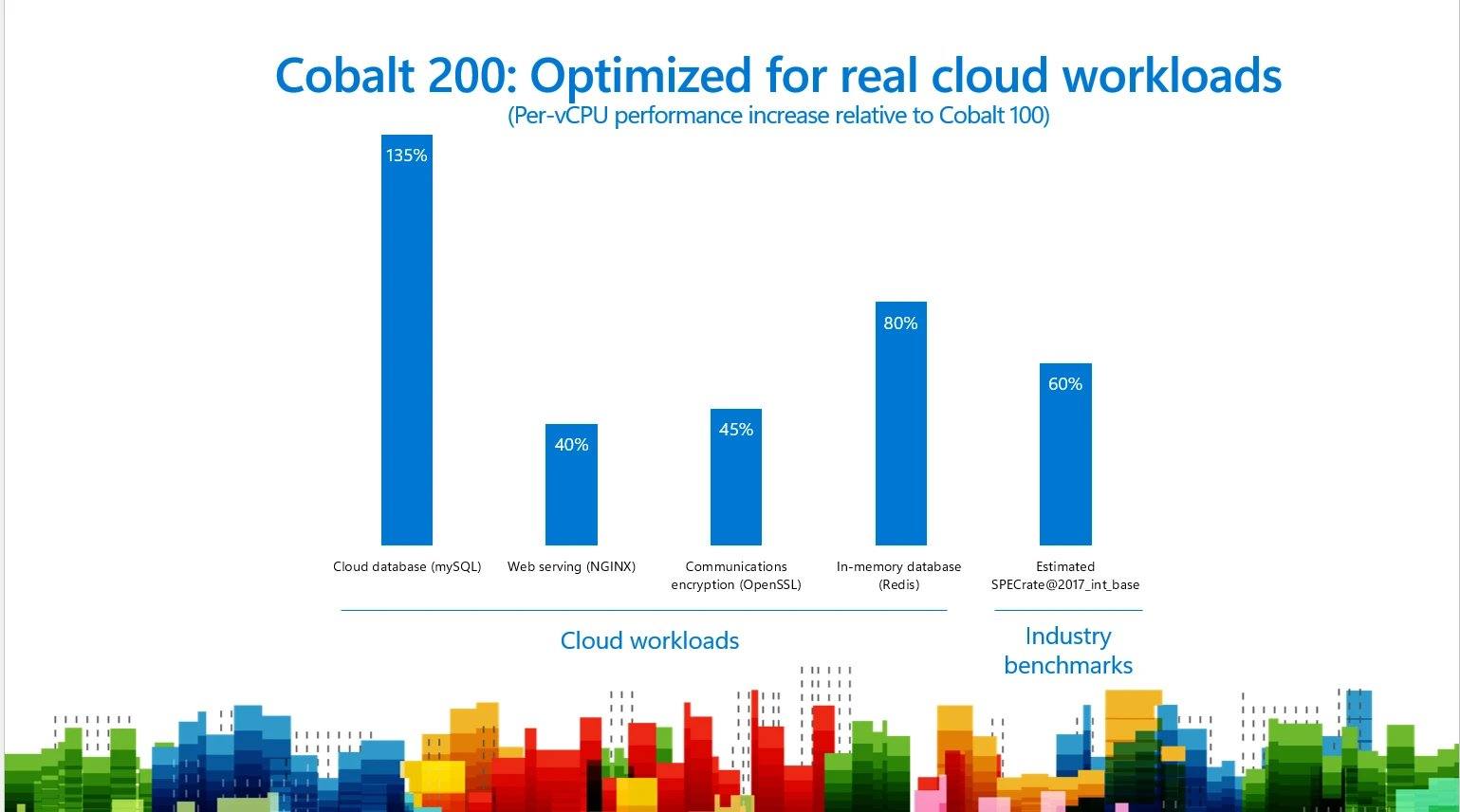
In real-world workload testing, Cobalt 200 demonstrated significant performance improvements over Cobalt 100: cloud database workloads improved by up to 135%, web server workloads by up to 40%, communication encryption workloads by up to 45%, and cache workloads by up to 80%.
In terms of customer and partner adoption, companies such as Teradata, Elastic, Arm, and Canonical have given positive feedback on Cobalt 200. Brandon Mincey, Engineering Fellow at Teradata, stated that early test results are encouraging. Yuvraj Gupta, Director of Product Management at Elastic, noted that preliminary tests show promising improvements in performance and cost efficiency. Eddie Ramirez, Vice President of Marketing for Arm's Cloud AI Business, pointed out that Cobalt 200, based on the Arm Neoverse CSS V3, reflects how customized Arm computing can empower the next generation of AI-driven services. Jehudi Castro-Sierra, Director of Public Cloud Alliances at Canonical, emphasized that Cobalt 200 brings key advancements for production Linux workloads on Arm, including features such as default memory encryption and built-in compression and encryption acceleration.
Cobalt 200 virtual machines are fully compatible with Cobalt 100 and support Arm-native versions of major developer platforms such as C++, .NET, Java, Python, and Rust. Infrastructure services like GitHub Actions and Azure Kubernetes Service also provide native support. Microsoft internal services such as Dataverse and Azure SQL Database have already adopted Cobalt 200. Mauktik Gandhi, Vice President of Platform Engineering for Dataverse, stated that baseline workload performance has improved by up to 60% compared to Cobalt 100. Shireesh Thota, Corporate Vice President of Azure Databases, noted that the built-in compression and encryption accelerators have a significant impact on database workloads, reducing the use of critical compute resources.
This launch introduces two new virtual machine series: the high memory-optimized Mpsv4 and the dense local storage Lpsv5. All Cobalt 200 virtual machines offer up to 85 Gbps of network bandwidth and 70 Gbps of remote storage throughput. Preview regions include West US 3, East US 2, Central US, Sweden Central, East US, West US 2, Spain Central, and Indonesia Central.
This article is compiled by Wedoany. All AI citations must indicate the source as "Wedoany". If there is any infringement or other issues, please notify us promptly, and we will modify or delete it accordingly. Email: news@wedoany.com
Related Products




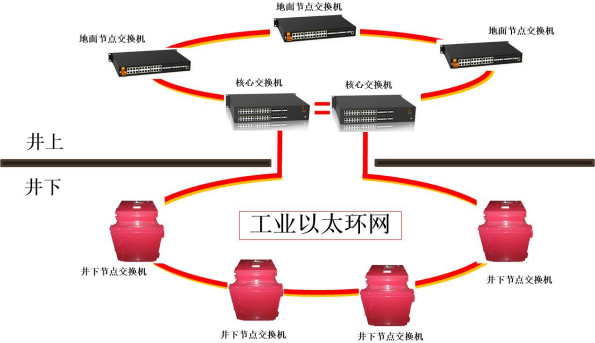
Mine Explosion-proof and Intrinsically Safe Industrial Ethernet Ring Network (10 Gigabit/Gigabit)
Chongqing Mas Sci&Tech Co., Ltd.

G.652.D Wavelength-extended Non-dispersion Shifted Single-mode Optical Fiber
HONGAN GROUP CO., LTD.

Multi-function Marine Monitoring Low-altitude Detection Radar Sea-air Boundary Ocean Dynamic Environment Measurement
Chengdu Dixin Technology Co., Ltd.
One-Stop Steward Service for the Entire Logistics System Integration Chain
Zhongding Intelligent (Wuxi) Technology Co., Ltd.
MUX Series Communication Interface Device for Security and Stability Control System
Nanjing NR Electric Co., Ltd.