en.Wedoany.com Reported - With the world's third-largest fiber optic connectivity, fourth place in the IMD World Digital Competitiveness Ranking, and the fourth-fastest median fixed broadband speed globally, Hong Kong already hosts over 100 data centers, making it a key node for digital infrastructure in Asia. This dense network topology provides international suppliers with a mature ecosystem to support future growth.
The deployment of digital infrastructure is inextricably linked to the complexities of cross-border data governance. While mainland China represents a trillion-dollar frontier market for international cloud and data center service providers, navigating its stringent cybersecurity and data localization rules remains a significant barrier to smooth market entry. Operating under a transparent common law jurisdiction, Hong Kong can serve as a compliance gateway, allowing global companies to legally and securely host core intellectual property. By routing data traffic through licensed telecommunications partners, international cloud and data center service providers can access the mainland Chinese market with low latency while adhering to global compliance standards.
Conversely, Hong Kong also acts as a "springboard" for mainland tech giants. Leveraging its regulatory system aligned with global standards, anchored by the internationally recognized Personal Data (Privacy) Ordinance (PDPO), these companies can seamlessly connect domestic operations with international networks, building critical trust with overseas enterprise clients.
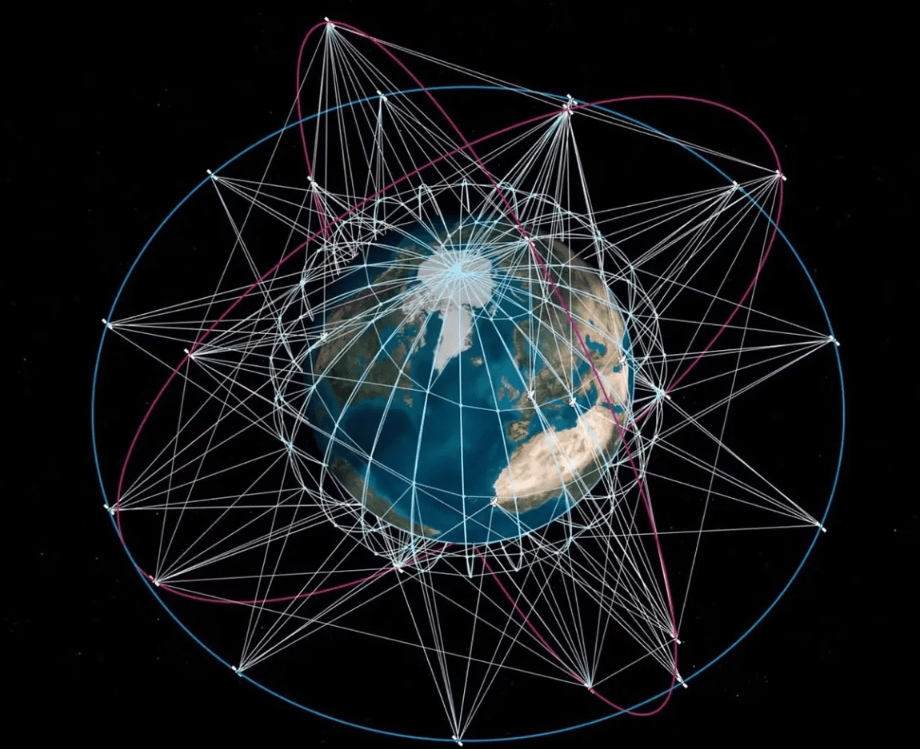
Hong Kong's dual role is physically underpinned by a highly developed telecommunications infrastructure. The city's network is supported by 12 submarine cable systems, 25 terrestrial cable systems, and 10 external communications satellites, a connectivity foundation unparalleled in the region. Furthermore, benefiting from a low-risk seismic profile and typhoon-resistant environment, Hong Kong offers dual-grid power supply with 99.999% reliability, meeting the stringent uptime requirements of dense high-performance computing and AI environments.
To meet the surging demand from artificial intelligence, cloud, and hyperscale operators, the Hong Kong Special Administrative Region Government has shifted to a proactive land policy. The Northern Metropolis is being positioned as the next tech-driven central business district and growth engine; as the area attracts innovation and technology enterprises, talent, and research activities, the government anticipates a continued rise in demand for cloud capacity, computing power, and high-end data centers.
Hong Kong Range Intelligent Computing Technology Company Limited's recent investment in Sha Ling indicates this demand is materializing into concrete infrastructure. Selected in March 2026 as the developer for the over 110,000 square meter Sha Ling data facility cluster, the company will deliver a total gross floor area of 250,000 square meters for data facilities, with approximately 90% designated for high-end data center use. Its projected cumulative investment is HK$23.8 billion, aiming to achieve a computing capacity of 180,000 PFLOPS by 2032, 36 times Hong Kong's current computing power.
In March 2026, China Mobile activated its large new flagship data center, adding approximately HK$10 billion in investment to Hong Kong's computing infrastructure. Spanning over 1 million square feet, the facility directly connects 5G, AI, and cloud services to the Greater Bay Area and global networks, while its PUE-optimized, ultra-low energy design reflects the industry's shift towards scaled, sustainable operations.
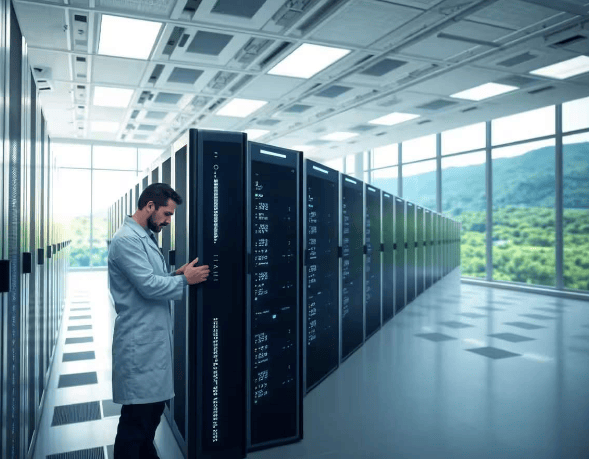
International operators are also accelerating their pace. Equinix's HK6 facility, a US$124 million investment, is slated for commissioning in 2026, located in Hong Kong's prime availability zone. This 17-story, 215,000-square-foot flagship facility can accommodate over 3,550 cabinets and is designed for the AI era. For high-performance computing, it employs liquid cooling technology to support high-density GPU workloads exceeding 50kW and is powered by 100% renewable energy through rooftop solar and power purchase agreements.
Institutional capital is strongly supporting infrastructure consolidation. Goodman has established a US$2.7 billion partnership, backed by major institutional investors such as PGGM, APG, and CPP Investments, to deliver six facilities with a total gross floor area of 2.3 million square feet and a total capacity of 325 megawatts. Driven by an estimated US$2 billion in hyperscale demand, this includes a major redevelopment project converting an existing industrial property into a 50-megawatt facility, planned for commissioning in 2026. This expansion brings Goodman's total Hong Kong portfolio to 392 megawatts and anchors a massive 225-megawatt campus on a key technology corridor.
As enterprise workloads become increasingly complex, the intersection of robust infrastructure, regulatory transparency, and strategic geographic location will define the next phase of digital expansion. For global enterprises and institutional investors, Hong Kong offers a reliable, risk-mitigated framework to navigate the complexities of the Asia-Pacific region and capture the structural growth of the digital economy.
This article is compiled by Wedoany. All AI citations must indicate the source as "Wedoany". If there is any infringement or other issues, please notify us promptly, and we will modify or delete it accordingly. Email: news@wedoany.com