en.Wedoany.com Reported - Recently, Turkish textile company Kipaş Textile commissioned two sets of German Monforts equipment at its new fabric dyeing and finishing plant in Kahramanmaraş, including a Thermex continuous dyeing line and a Monfortex compacting machine. Since commissioning and startup, both systems have been operating around the clock to enhance fabric dyeing, finishing, shrinkage control, and batch delivery capabilities.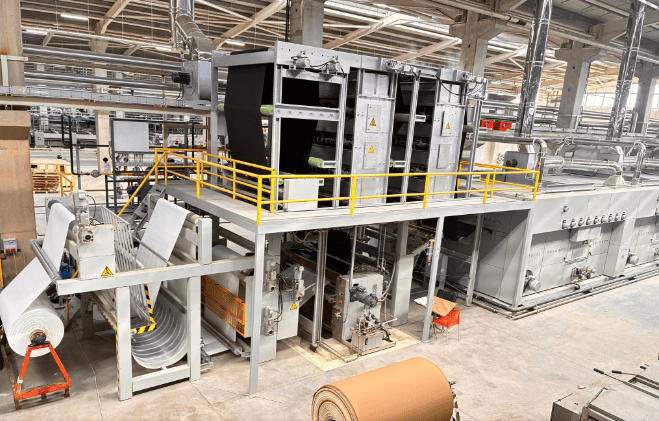
Founded in 1984, Kipaş Textile has grown into one of Europe's larger vertically integrated textile manufacturers, covering yarn, denim, non-denim fabrics, technical textiles, and sustainable fiber materials. The company currently employs approximately 5,500 people, produces about 400 tons of yarn daily, with an annual denim capacity of approximately 48 million meters and non-denim fabric capacity of about 36 million meters. With the Thermex and Monfortex systems operational at the new dyeing and finishing plant, Kipaş can maintain dyeing consistency, shrinkage control, and fabric hand stability over longer continuous production cycles, directly impacting apparel fabrics, technical textiles, functional fabrics, and export order delivery. Turkey's textile industry, close to the European market, offers advantages such as short delivery cycles, extensive manufacturing experience, and a complete supply chain. Upgrading dyeing and finishing equipment helps the company further transform traditional capacity advantages into high value-added fabric supply capabilities.
The Thermex continuous dyeing line is primarily used to improve the uniformity and reproducibility of dyeing for long-run fabrics, while also supporting quick changeovers for smaller batch orders.
The Monfortex compacting machine is used to control residual fabric shrinkage and improve fabric hand feel and finishing quality. Although compacting appears at the later stage of textile production, it directly affects the dimensional stability of finished garments, post-wash performance, and customer quality acceptance. For suppliers targeting international brands, technical textiles, and high-performance fabrics, the sophistication of dyeing and finishing equipment determines whether orders can simultaneously meet requirements for color stability, batch consistency, energy savings, and fast delivery. By centrally commissioning continuous dyeing and compacting systems at the new plant, Kipaş demonstrates that its expansion focus is not merely on increasing weaving volume, but on strengthening quality control and process flexibility in the finishing stage.
This equipment commissioning also aligns with Kipaş's sustainable textile roadmap. The company launched the fibR-e recycling platform at the end of 2025, partnering with Meltem Kimya in Adana, Turkey, to regenerate post-consumer garments containing at least 70% polyester into certified filament yarn and staple fiber. As international apparel brands demand higher standards for recycled materials, low-energy production, and traceable supply chains, fabric manufacturers need to simultaneously possess recycled fiber processing capabilities, stable dyeing and finishing capabilities, and large-scale delivery capabilities. With the new dyeing and finishing plant equipment operational, Kipaş can integrate recycled fibers, technical textiles, fashion fabrics, and high-performance products into a more complete production chain, enhancing its competitive position in the European nearshore supply and sustainable textile market.
Subsequent implementation results will be primarily reflected in the new plant's line stability, order changeover efficiency, energy consumption performance, and customer certification progress. With ITM 2026, the International Textile Machinery Exhibition in Turkey, taking place in Istanbul, the automation, continuous processing, and green production capabilities of Turkish textile manufacturers will continue to attract attention. Kipaş's newly commissioned dyeing and finishing system provides an observable example for local textile enterprises upgrading from scale manufacturing to high-quality fabric production.
This article is compiled by Wedoany. All AI citations must indicate the source as "Wedoany". If there is any infringement or other issues, please notify us promptly, and we will modify or delete it accordingly. Email: news@wedoany.com