en.Wedoany.com Reported - Brazil's largest underground transmission line, the Riacho Grande Project (Projeto Riacho Grande), began operation at the end of March in the state of São Paulo, spanning 44.6 kilometers with an investment exceeding 1.1 billion reais. Developed by ISA Energia Brasil, the facility was energized five months ahead of the deadline set by the National Electric Energy Agency (ANEEL).
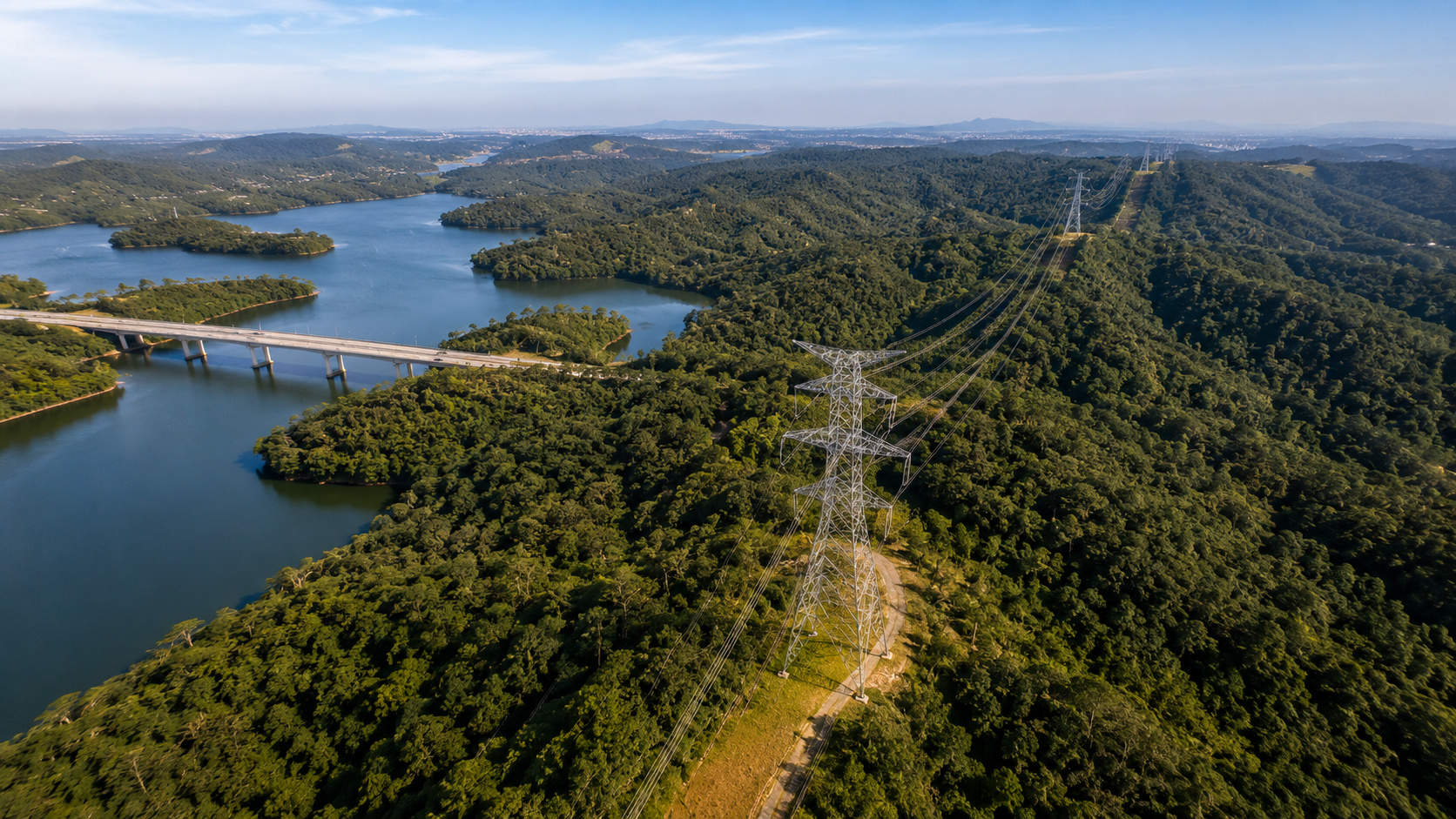
The project connects the city of São Paulo to the ABC Paulista region, an area with high energy demand, developed industry, and dense urbanization. Infrastructure combines 345 kV underground and overhead lines, including a 9-kilometer overhead section, enhancing power supply capacity in one of the most stressed areas of the national electricity system. With its unprecedented scale in underground transmission, the Riacho Grande Project integrates high-voltage transmission, complex urban engineering, and direct energy supply enhancement. Although other underground lines operate in Brazil, none match the scale of this project.
The new configuration allows electricity from the Itaipu Hydroelectric Plant to directly supply the ABC region and parts of São Paulo city, making the system more secure during peak consumption, overloads, or extreme climate events. The work includes the expansion of the Miguel Reale Substation (Subestação Miguel Reale) and the Sul Substation (Subestação Sul), as well as the construction of the new São Caetano do Sul Substation (Subestação São Caetano do Sul). The facility has an installed capacity of 800 MVA and plays a central role in distributing the power transmitted by the project.
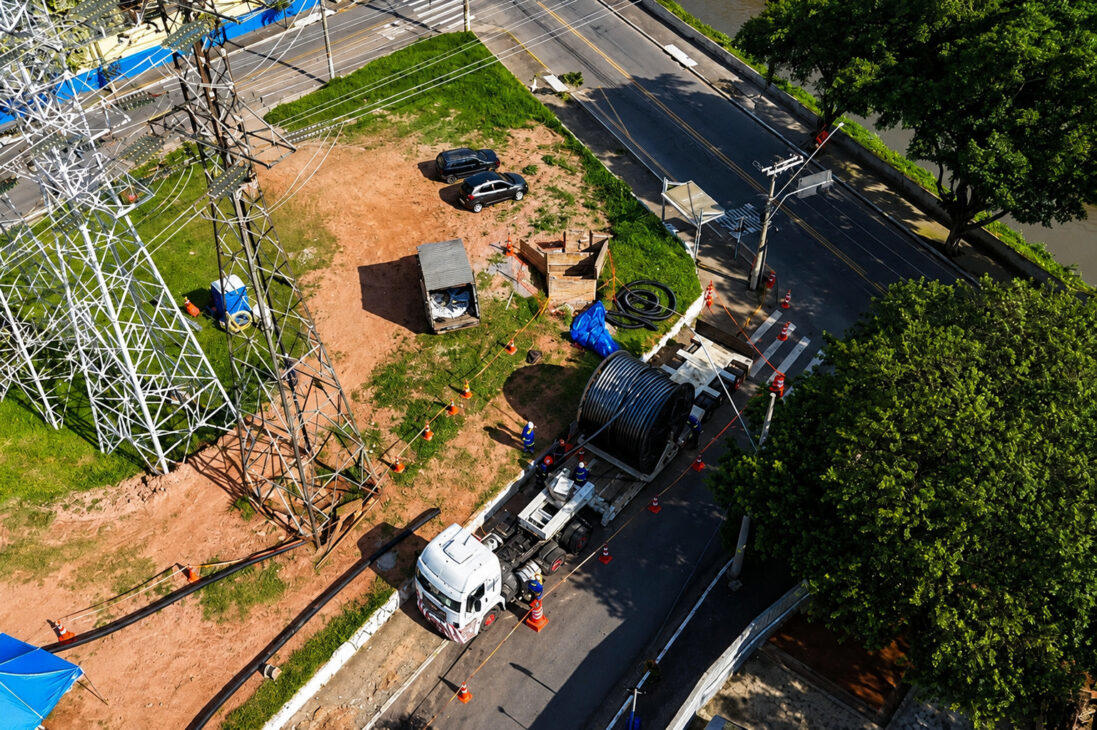
Laying over 40 kilometers of underground cables in a metropolitan area required engineering and logistical solutions to minimize impacts on traffic and residents' daily lives, with the design needing to traverse a highly complex urban area. The São Caetano do Sul Substation was built on an 11,800-square-meter site using Gas-Insulated Switchgear (GIS) technology, which occupies less space and generates lower noise, particularly important in densely populated urban areas.
Serving over 2 million people, the substation is equipped with three 400 MVA transformers, two operating continuously and the third as a backup to enhance operational reliability. The project also includes the construction of a 120-meter-high tower near the Billings Dam and connections to existing substations, combining underground sections, overhead lines, and auxiliary facilities at critical points in the system.
The underground cables are equipped with a real-time monitoring system for network operation and maintenance, enabling continuous technical tracking and faster response in case of anomalies. According to data from ISA Energia Brasil, the project created approximately 2,200 direct and indirect jobs during construction.
The project comes into operation amid growing energy demand and increasing pressure on transmission networks, especially in metropolitan areas. According to the National Electric System Operator (ONS), such projects enhance operational flexibility and strengthen the security of the National Interconnected System. Brazil's Ministry of Mines and Energy assesses that expanding the transmission grid is crucial to keeping pace with consumption growth and integrating new generation sources.
In a region where consumption, industry, and population grow in tandem, can an underground project of this scale redefine urban electricity security?
This article is compiled by Wedoany. All AI citations must indicate the source as "Wedoany". If there is any infringement or other issues, please notify us promptly, and we will modify or delete it accordingly. Email: news@wedoany.com