US Fiber Broadband Association Celebrates 25th Anniversary, Record 11.8 Million Fiber Deployments in 2025
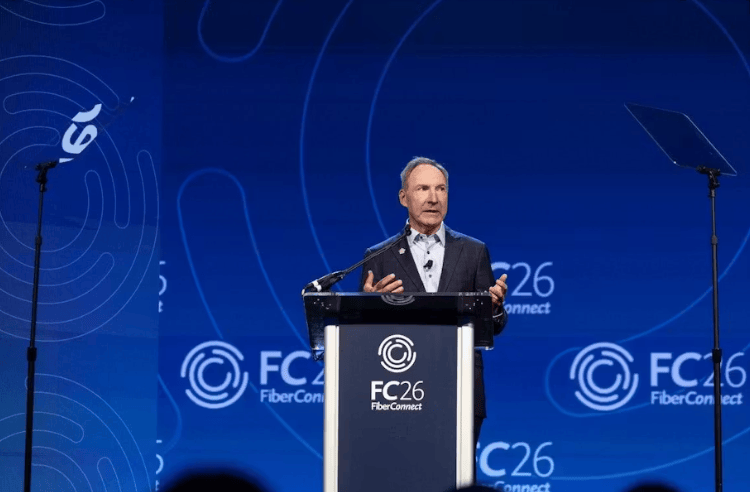
en.Wedoany.com Reported - The Fiber Broadband Association (FBA) celebrated its 25th anniversary and reviewed multiple milestones at the 2026 Fiber Connect Conference held in Orlando, Florida. In 2025, the industry set a new record by deploying fiber to 11.8 million households, surpassing the record set in 2024, and is expected to exceed this figure again this year. According to FBA research, when accounting for multiple fiber passes, the total addressable market for fiber-to-the-home in the United States is approximately 130 million households.
Fiber deployment has entered a historic investment cycle. Currently, over 100 million households have access to fiber, with an additional 60 million households expected to be covered within the next five years. The number of active fiber providers nationwide has reached 1,560, including 42 new fiber providers, and 71 have doubled their coverage in the past six months.
Fiber construction has become one of the largest infrastructure expansions in modern history, with over 90% of growth driven by private capital. Companies involved in the construction include altafiber, AT&T, C-Spire, GFiber, T-Mobile, Verizon, and Ziply. According to data from the U.S. Telecom Association, broadband providers invested nearly $90 billion in communications in 2024, bringing cumulative investment since 1996 to approximately $2.2 trillion. An additional tens of billions of dollars will be invested over the next five years to support fiber expansion required for AI, 5G, and 6G wireless networks, meet steadily growing broadband demand from households and businesses, and upgrade traditional copper and coaxial cable networks to fiber for improved reliability, scalability, and resilience.
AT&T plans to cover over 60 million fiber locations by 2030, roughly doubling its coverage. Fiber investments yield returns such as increased market share, higher average revenue per user, reduced operating costs, lower carbon footprints, higher service attachment rates, and future-proof networks for demand growth driven by new applications and technology deployments.
According to the latest RVA consumer research, broadband demand is no longer driven by a single application or trend, and user usage patterns have become more layered and diverse. Video still dominates downstream traffic, but real-time uploading, streaming, collaboration, and interaction with AI systems are driving continuous growth in upstream demand. Broadband is no longer just a tool to support digital life but a foundation for the evolution of economic and social systems. AI, automation, distributed work, rural migration, and immersive technologies are converging on the network simultaneously.
Research discussed by RVA Principal Mike Render on the "Fiber Breakfast" program shows that AI adoption rates continue to rise in both personal and professional domains, covering areas such as writing assistance, search, coding, modeling, decision-making, and automation, with significant productivity impacts already evident. RVA estimates that AI can improve productivity by approximately 36%, though this figure may be underestimated. AI not only consumes information but also continuously generates and exchanges it with other systems. As agent-based systems become more prevalent, background traffic from automation, analytics, and machine-driven workflows could fundamentally alter network usage patterns.
The research also indicates that bandwidth-intensive technologies are evolving faster than traditional streaming. Security cameras, cloud uploads, two-way video, AR/VR applications, automation systems, robotics, and future multi-sensory applications are all driving networks toward higher symmetry, lower latency, and greater consistency and reliability. User demand for bandwidth does not stop after connecting to the network but continues to grow as existing applications become more complex and new applications emerge.
More importantly, fiber and AI are mutually independent. AI infrastructure requires low-latency, high-capacity, resilient interconnections. As AI evolves from centralized training clusters to distributed inference and edge intelligence, fiber demand will continue to grow regardless of the technology used for the last-mile connection.
Fiber-to-the-home is not an endpoint but part of a larger 21st-century ecosystem. This ecosystem includes middle-mile networks, data centers, and cloud connections, supporting essential digital economy services such as banking, e-commerce, education, entertainment, healthcare, and public safety. Fiber has become strategic economic infrastructure, and communities with advanced fiber networks have an advantage in attracting data centers, advanced manufacturing, technology investments, and healthcare.
Over the next five years, the fiber connection network supporting reliable high-speed broadband nationwide will continue to grow, expand, and accelerate. The first-generation information economy, built on connectivity, will be upgraded through the application and proliferation of AI, giving rise to the thinking economy. The thinking economy is an economic form that creates value through the use of information, processing it intelligently and taking immediate action. Its three key characteristics are speed of understanding, quality of decision-making, and speed of action. Fiber forms the nervous system connecting everything and everyone, with information continuously flowing in from the network edge, analyzed, stored, and processed by intelligent agents to improve productivity, increase convenience, and accelerate processes.
AI is transforming business processes and daily life, but human oversight remains necessary for supervising decisions and outcomes. For example, AI provides advanced tools for disease detection and treatment, but treatment plans still require review and approval by doctors. Fiber also provides the infrastructure for quantum technologies to solve challenges in logistics optimization, drug and materials discovery, and manufacturing, as well as deeper biological insights for geological resource discovery and medical applications. The telecommunications industry's 30 years of development and optimization of photonic high-speed data transmission provide ready-made components and pathways for connecting geographically distributed quantum sensors and networked quantum computers.
The FBA will further elaborate on the concept of the thinking economy and the necessity and role of fiber in supporting AI across the entire ecosystem in the coming months. Similar to the first-generation information economy, the FBA will upgrade from its FTTH origins, expanding its focus and influence to cover a broader infrastructure ecosystem, including the middle mile, data centers, and the ways fiber enables the thinking economy.
This article is compiled by Wedoany. All AI citations must indicate the source as "Wedoany". If there is any infringement or other issues, please notify us promptly, and we will modify or delete it accordingly. Email: news@wedoany.com
Related Products



Comprehensive Mining Automation Control System
Beijing Tianma Intelligent Control Technology Co., Ltd.


Mine Explosion-proof and Intrinsically Safe Industrial Ethernet Ring Network (10 Gigabit/Gigabit)
Chongqing Mas Sci&Tech Co., Ltd.
TWP16 P-Band Tropospheric Wind Profile Radar
China Huayun Meteorological Technology Group Co., Ltd.

Multi-function Marine Monitoring Low-altitude Detection Radar Sea-air Boundary Ocean Dynamic Environment Measurement
Chengdu Dixin Technology Co., Ltd.


Automatic Aiming Laser Remote Obstacle Removal Robot
Pinggao Group Weihai High-Voltage Apparatus Co., Ltd.
Conveyor Belt Intelligent Monitoring System
LUO YANG WIRE ROPE INSPECTION TECHNOLOGY CO., LTD.