US Shentel CEO: Starlink Only Affects Its Rural Traditional Broadband Market
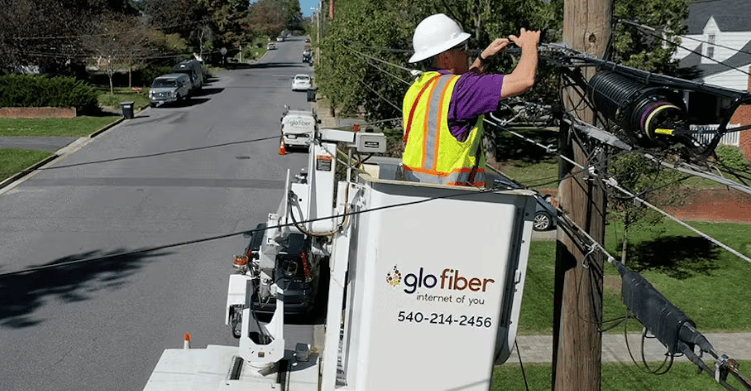
en.Wedoany.com Reported - Shentel experienced subscriber losses in its rural traditional markets in the first quarter, but the company believes its fiber broadband services can compete with Starlink at competitive prices. Shentel CEO Ed McKay stated during the first-quarter earnings call that Starlink's impact is limited, primarily affecting the most remote areas of the traditional broadband market, while almost no impact is seen on the Glo Fiber network and most traditional coverage areas.
Starlink (whose parent company SpaceX plans to go public later this year) has launched a $15 promotional discount and is offering equipment typically priced at $350 for free. McKay noted that increasing broadband speeds is a key strategy for Shentel to address subscriber churn.
McKay stated that the company significantly boosted broadband speeds in rural traditional areas at the end of the first quarter. He pointed out that most of the lost customers were on older rate plans, and the company subsequently offered these customers higher value at the same price, which will help mitigate churn. After completing all planned Glo Fiber market launches, Shentel has shifted its focus to increasing coverage households in existing markets across Virginia, Pennsylvania, Maryland, and Ohio.
Shentel's integrated broadband network covers eight states, with over 19,000 miles of fiber route miles and total broadband coverage exceeding 700,000 households. McKay said the company remains on track to complete Glo Fiber expansion by 2026, reaching 510,000 coverage households. In the first quarter, Shentel added approximately 6,000 customers and nearly 7,000 revenue-generating units (video, voice, and data), a 9% year-over-year increase, bringing total served customers to 94,000. Over the past 12 months, the company added more than 23,000 data customers and over 26,000 total revenue-generating units. First-quarter Glo Fiber total revenue-generating units exceeded 110,000, up 31% year-over-year.
Fiber coverage households are also increasing. In the first quarter, Shentel added 22,000 coverage households, bringing the total to over 449,000. Penetration rate rose to 20.9%, up 30 basis points from the fourth quarter and 150 basis points year-over-year. Facing competition from satellite broadband and fixed wireless access, Shentel is mitigating subscriber churn by launching new speed tiers. The first-quarter broadband data churn rate was 1.46%, stable quarter-over-quarter and slightly up year-over-year. Broadband data average revenue per user (ARPU) remained stable at over $77.
In the most remote markets without fixed wireline competitors, promotional activities from satellite competitors led to a slight increase in churn rates. The company implemented speed upgrades in these markets at the end of the first quarter, offering higher speeds at the same price to differentiate itself from satellite services. In approximately one-third of coverage areas competing with another fixed broadband competitor, the strategy of offering higher speeds at the same price remains effective in mitigating churn. Shentel is making progress in selling higher speeds: 82% of new residential customers in the first quarter chose 1 Gbps or higher, with 18% selecting 2 Gbps and 5% opting for 5 Gbps. Broadband data ARPU fell 1.6% year-over-year to $82, which McKay attributed to more aggressive pricing for new customers in competitive markets.
Driven by strong Glo Fiber expansion, market revenue grew by $6.4 million, a 34.6% increase, with data subscriber growth of 33.7% and stable data ARPU. First-quarter revenue rose 4.8% to $92.2 million. Commercial fiber revenue increased by $0.9 million (4.7%) year-over-year, primarily driven by existing customer growth in the enterprise and carrier verticals. Traditional broadband market revenue declined by $2.2 million, mainly due to a 14.6% drop in video revenue-generating units and a 1.6% decline in data ARPU. Despite some declines from traditional video churn, the traditional market is still expected to grow through publicly funded broadband projects. As of the end of the first quarter, Shentel had over 111,000 broadband data customers. By the end of 2025, data, voice, and video revenue-generating units exceeded 156,000, down 4% year-over-year. RLEC revenue fell by $0.8 million, primarily due to a 28% decline in DSL revenue-generating units and reduced government grant support income. CFO Jim Volk stated that half of the decline in DSL revenue-generating units was due to customers upgrading to broadband services. Looking ahead to the full year 2026, Shentel expects revenue of $370 million to $377 million and capital expenditures (net of grant reimbursements) of $220 million to $250 million.
This article is compiled by Wedoany. All AI citations must indicate the source as "Wedoany". If there is any infringement or other issues, please notify us promptly, and we will modify or delete it accordingly. Email: news@wedoany.com
Related Products


Industrial and Commercial Point-Type Gas Detector
Jinan Benan Technology Development Co., Ltd.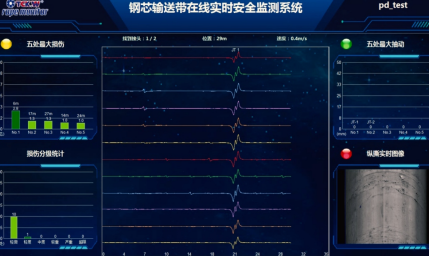
Conveyor Belt Intelligent Monitoring System
LUO YANG WIRE ROPE INSPECTION TECHNOLOGY CO., LTD.
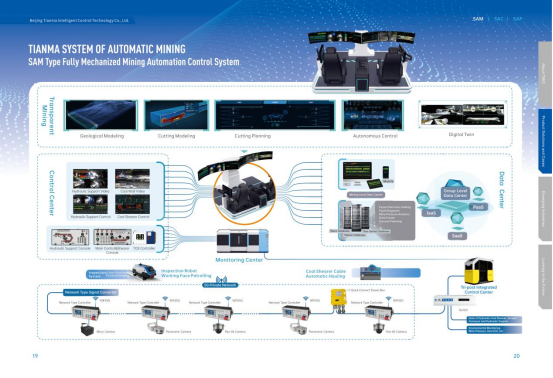
Comprehensive Mining Automation Control System
Beijing Tianma Intelligent Control Technology Co., Ltd.
Mine Explosion-proof and Intrinsically Safe Industrial Ethernet Ring Network (10 Gigabit/Gigabit)
Chongqing Mas Sci&Tech Co., Ltd.
Automatic Aiming Laser Remote Obstacle Removal Robot
Pinggao Group Weihai High-Voltage Apparatus Co., Ltd.