en.Wedoany.com Reported - On June 10, Toyo Technica Japan announced the launch of the "TestCenter D2 1.6T 4-Port Device," a 1.6T Ethernet network performance testing platform manufactured by VIAVI Solutions, USA. This product is designed for next-generation Ethernet networks driven by AI workloads and can be used to verify network performance, reliability, and interoperability in high-speed data centers, AI infrastructure, and cloud environments.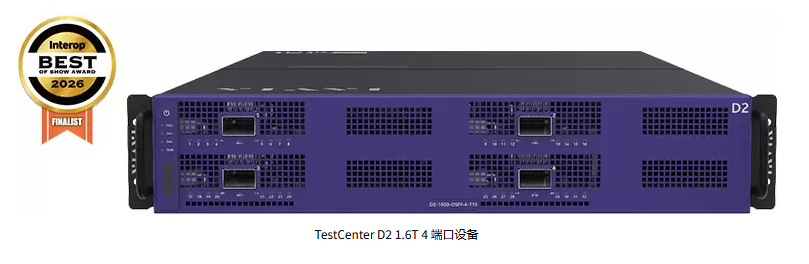
The launch of this testing platform directly addresses the trend of AI data center networks upgrading from 400G and 800G to 1.6T. As the scale of large model training and inference clusters expands, AI backend networks need to carry higher throughput, lower latency, and more stable data transmission between servers, GPU clusters, switches, and storage systems. Traditional network testing equipment struggles to fully replicate congestion, packet loss, latency jitter, and protocol interoperability issues in real clusters when faced with 1.6T-level links, complex AI traffic patterns, and multi-device interconnection environments. The TestCenter D2 1.6T device provides network equipment manufacturers, data center operators, cloud service providers, and R&D laboratories with a higher-bandwidth verification tool, helping them identify performance bottlenecks before equipment mass production, network construction, and system deployment.
Toyo Technica stated that this solution is specifically designed for 1.6T-class next-generation Ethernet networks running AI workloads, enabling comprehensive verification of network performance, reliability, and interoperability when building high-speed data centers, AI infrastructure, and cloud environments.
The expansion of AI computing infrastructure is elevating the priority of network verification. In the past, data center network testing focused more on port speed, throughput, latency, packet loss rate, and protocol consistency. In the era of AI clusters, the network is no longer just a connectivity resource but a critical system affecting training efficiency and inference costs. Synchronous communication between GPUs, parameter exchange, storage access, and distributed task scheduling impose stricter requirements on network stability. If the network cannot maintain stability under high loads, expensive AI computing resources will experience waiting and idling, directly impacting overall computing utilization. The emergence of 1.6T Ethernet equipment and testing platforms indicates that AI data centers are entering a phase of higher density, higher speed, and more complex interconnection, and testing and verification capabilities must also be upgraded accordingly.
Toyo Technica plans to showcase this solution at Interop Tokyo 2026, held from June 10 to 12 at the Makuhari Messe in Chiba. The product has been shortlisted for the "Best of Show Award" in the testing category at Interop Tokyo 2026. For the Japanese market, as cloud services, AI infrastructure, and enterprise data center upgrades progress, 1.6T Ethernet testing equipment will serve network equipment R&D, switch verification, data center construction, and next-generation cloud network deployment. Future market adoption will depend on the commercialization pace of 1.6T Ethernet equipment, the scale of AI data center investments, the maturity of network standards, and the growth of customer laboratory verification needs.
This article is compiled by Wedoany. All AI citations must indicate the source as "Wedoany". If there is any infringement or other issues, please notify us promptly, and we will modify or delete it accordingly. Email: news@wedoany.com