en.Wedoany.com Reported - The design philosophy of the stained glass windows at the Sagrada Família stands in stark contrast to that of European Gothic cathedrals, with its core focus on utilizing light rather than depicting specific figures or scenes for narrative purposes. The stained glass of this basilica was primarily completed by artist Joan Vila-Grau, who led the project from 1999 onward, employing the leaded glass technique over more than two decades to interpret the original vision of the late architect Antoni Gaudí. The blessing and inauguration ceremony for the Jesus Christ Tower is scheduled for June 10, 2026, presided over by Pope Leo XIV, coinciding with the 100th anniversary of Gaudí's death.
Gaudí's relationship with the Gothic style was complex; he admired it but did not wish to replicate it. Structurally, he created tree-like branching columns that bifurcate like trunks to free up interior space, and in terms of light design, he similarly transcended tradition. Unlike the stained glass in Gothic cathedrals, which often serves a narrative function, the colored glass at the Sagrada Família is designed as an architectural tool. Gaudí believed that "the sun is the best painter," so the primary function of the stained glass is to transform the interior space of the basilica through light and enhance its spiritual significance. In terms of color distribution, the most intense stained glass is installed at lower levels so that worshippers can identify the names of saints and holy sites; the upper windows are mostly white or transparent glass, which refracts white light through texture and irregular thickness, creating subtle color variations.
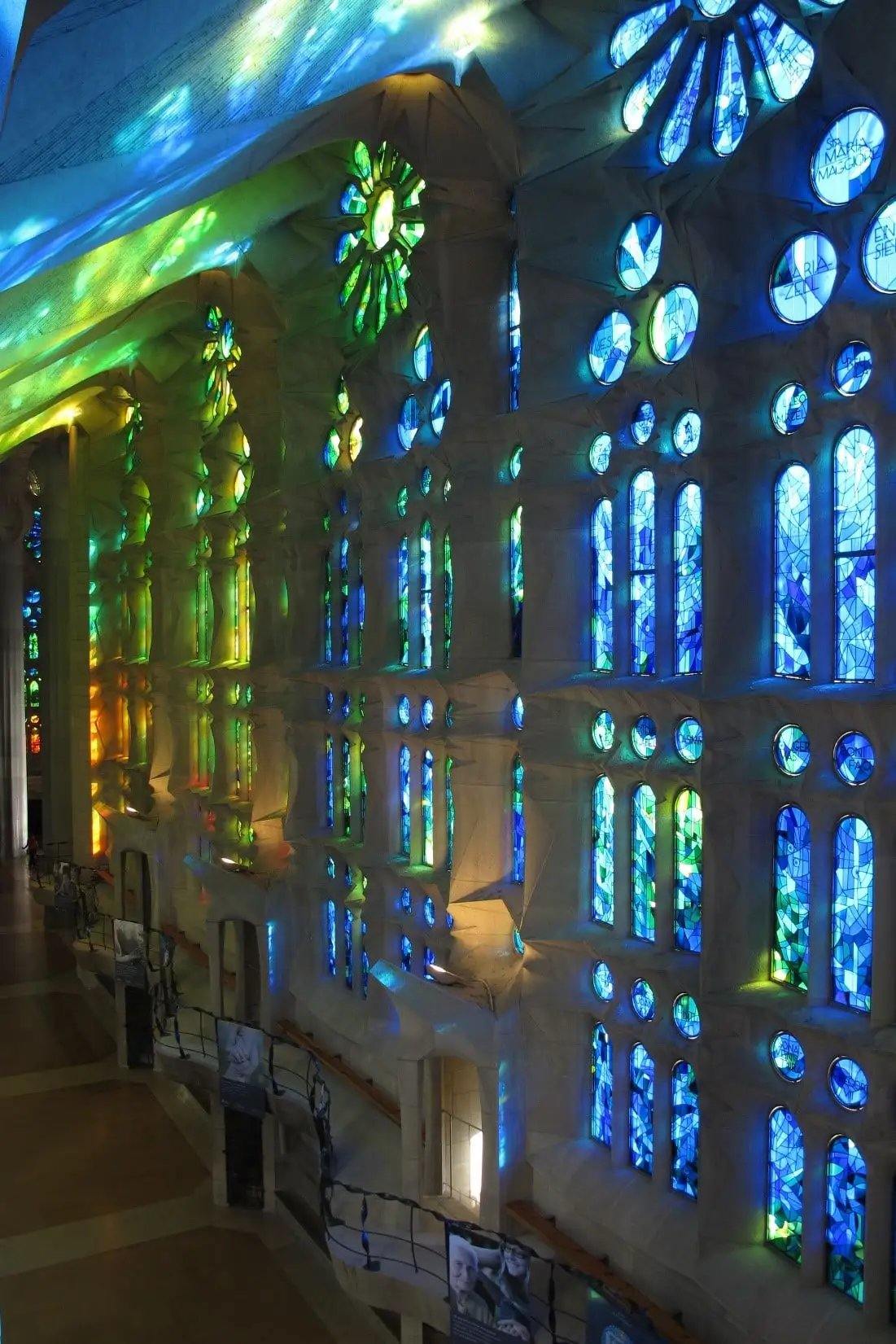
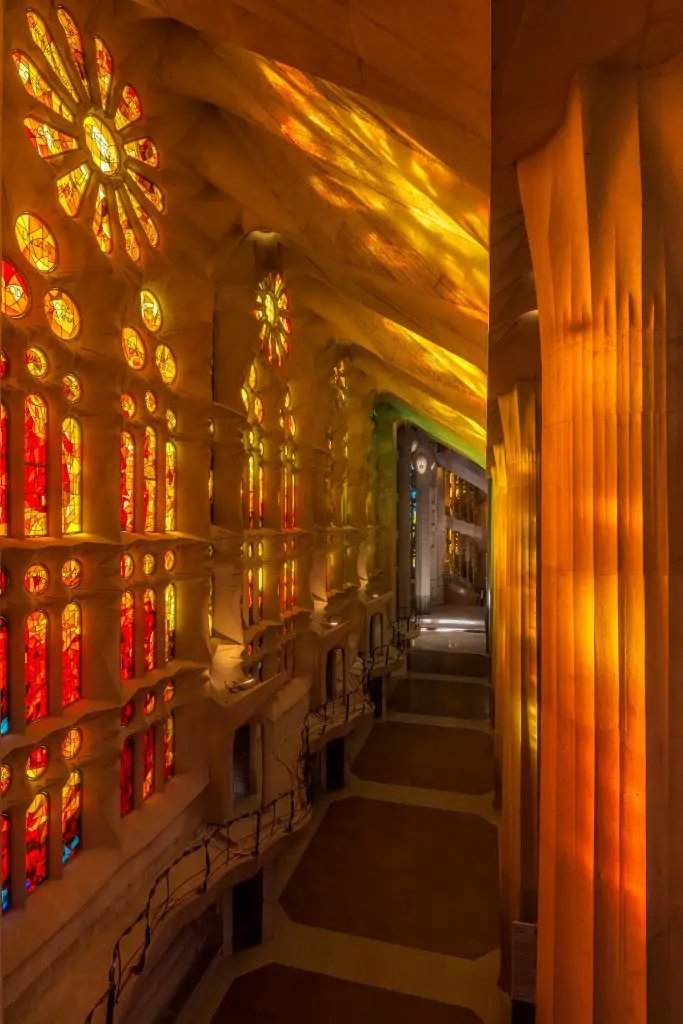
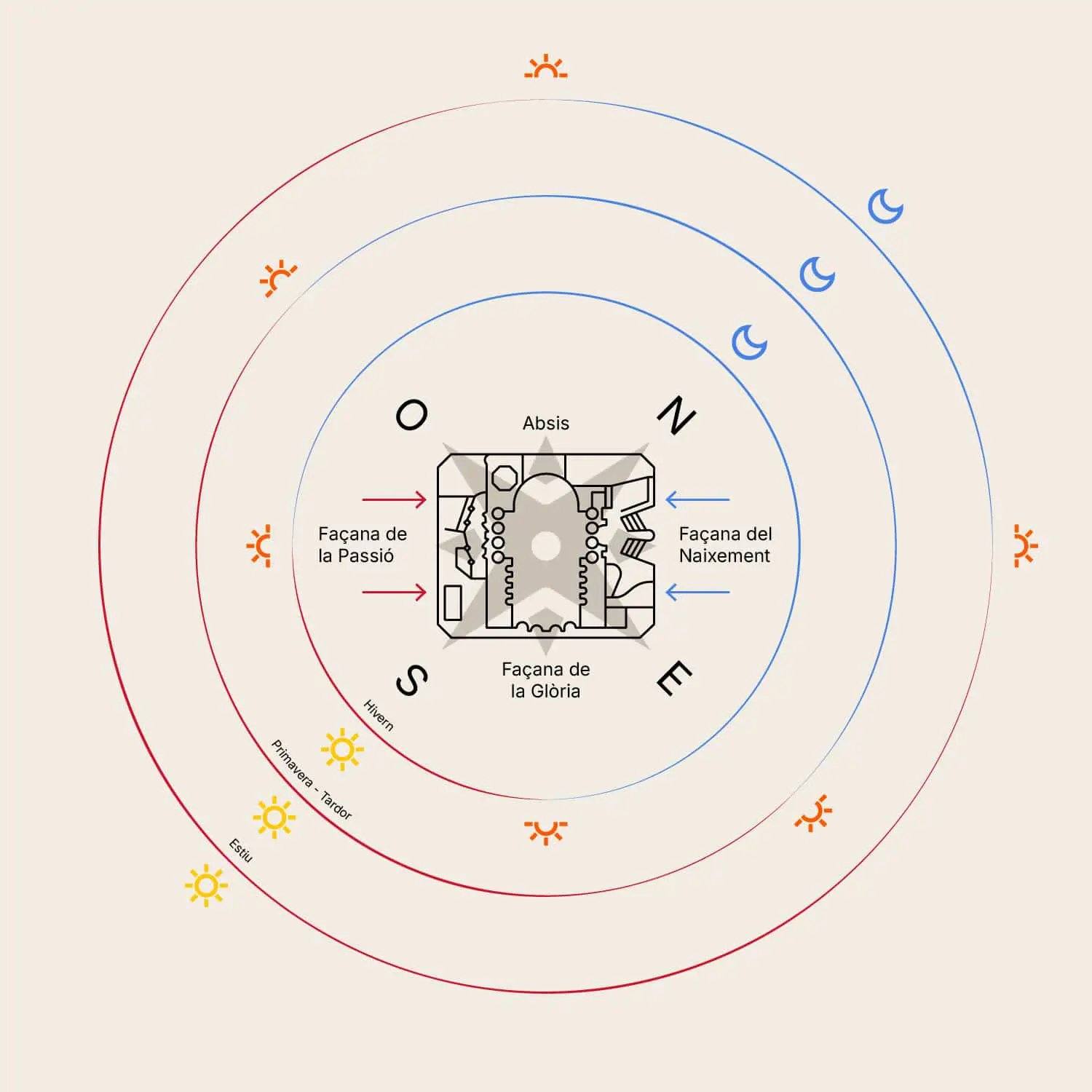
Gaudí considered the Earth's motion when designing the path of the sun. The orientation of the stained glass is arranged based on the sun's trajectory and the symbolic meaning of the facades: on the east-facing Nativity Facade, cool tones such as blue and green dominate, corresponding to dawn light; on the west-facing Passion Facade, warm tones like red, orange, and yellow dominate, corresponding to sunset and dusk. This design allows the basilica to narrate the birth and death of Jesus through color changes rather than relying on specific scenes. Since the sun's position changes throughout the year, the angle at which light penetrates the stained glass also shifts, causing the Sagrada Família to exhibit different lighting atmospheres in June and December. Around the summer solstice, light enters from the Nativity Facade at a specific angle, projecting the colors of the rose window onto the columns and vaults; around the winter solstice, light primarily enters from the Passion Facade.
Vila-Grau employed the leaded glass technique, assembling pieces of colored glass together with lead frames. The lead frames not only secure the glass but also bring rhythm, movement, and composition to the stained glass. At lower levels, the color comes directly from the glass itself; at higher levels, transparent glass predominates, with its texture and irregular thickness causing white light to refract and produce subtle nuances. According to official sources from the Sagrada Família, this treatment makes the stained glass more abstract and spatial, allowing visitors not merely to appreciate illuminated images but to be enveloped in the light environment created by the stained glass.
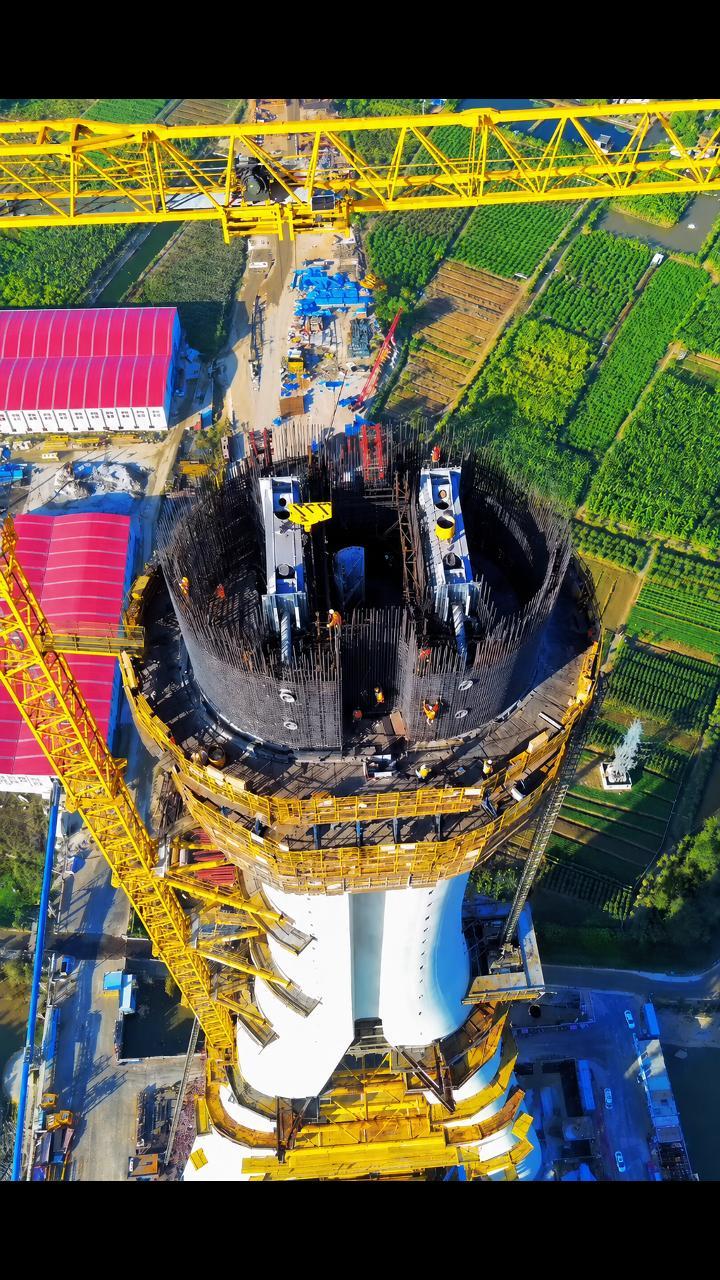
The Sagrada Família plans to hold the blessing and inauguration ceremony for the Jesus Christ Tower on June 10, 2026, during which Pope Leo XIV will preside over a commemorative Mass. Prior to this, the stained glass design of the building has already been regarded as Gaudí's creative practice of using light as a building material, with its application far exceeding traditional narrative functions.
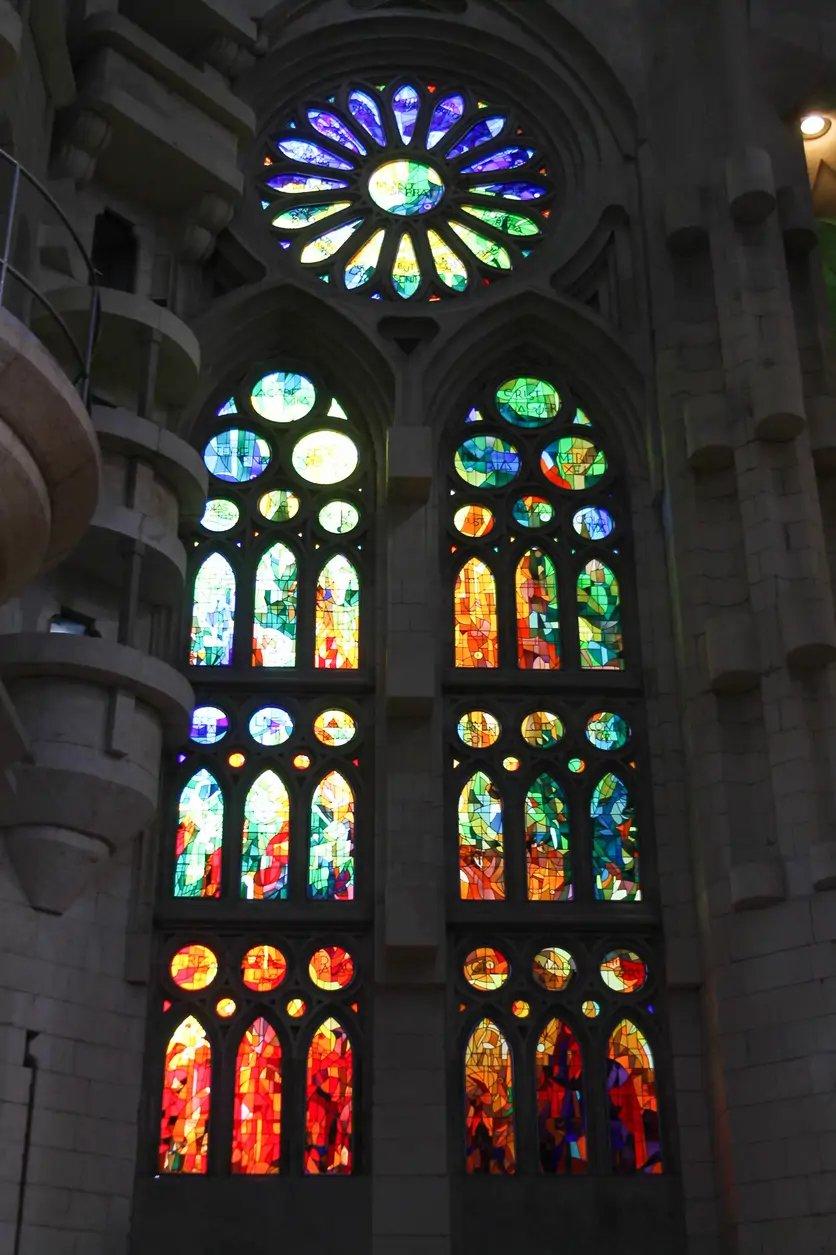
A comparison with European Gothic cathedrals helps to understand the modernity of Gaudí's design. In Gothic architecture, stained glass is typically a narrative surface used to present readable sacred scenes. At the Sagrada Família, the stained glass becomes more abstract, focusing more on creating atmosphere and spatial experience. Gaudí did not abandon symbolism, but shifted the symbolic content from specific figures to color, orientation, light height, and the changing seasons.
This article is compiled by Wedoany. All AI citations must indicate the source as "Wedoany". If there is any infringement or other issues, please notify us promptly, and we will modify or delete it accordingly. Email: news@wedoany.com