Harbinger Unveils Unmanned Hybrid Electric Platform, Receives Strategic Investment from In-Q-Tel
en.Wedoany.com Reported - Harbinger, an American industrial manufacturer, has announced the launch of an unmanned hybrid electric platform for defense customers. Under its newly established defense business unit, Harbinger Praesidia, the company will collaborate with government clients and prime defense contractors to configure the platform for mission applications including flatbed logistics, field communications, troop transport, perimeter security, and counter-drone systems. Meanwhile, In-Q-Tel (IQT), a nonprofit strategic investor serving the U.S. national security community and its allies, has joined Harbinger as a strategic investor.

The Harbinger Praesidia platform is based on the company's medium-duty plug-in hybrid chassis, designed from the ground up for commercial vehicles. These vehicles are already automation-ready, enabling full remote operation through Harbinger's proprietary internal API, facilitating integration with modern technology ecosystems. The chassis is designed and assembled in the United States, incorporating its battery system, software, drivetrain, and drive-by-wire technology. The platform design emphasizes payload, power, range, remote operation, durability, and flexible modification capabilities.
IQT's strategic investment in Harbinger aims to support the company's expansion into the government and defense markets. Sara Jones, an IQT principal, stated that Harbinger's vertically integrated vehicle platform combines power generation, energy storage, mobility, and configuration flexibility in a highly scalable manner to meet government and national security needs. Its model of integrating proven commercial vehicle technology with U.S.-based manufacturing aligns with IQT's investment focus on leveraging cost-effective commercial innovation for military applications.
John Harris, co-founder and CEO of Harbinger, previously led hardware engineering and manufacturing for Anduril's first product, the Sentry Tower. Harris noted that the government requires rugged vehicles capable of supporting a wide range of use cases without forcing operators to compromise on payload, range, exportable power, or durability. Harbinger's vehicles, designed, engineered, and assembled in the U.S., meet this need while supporting domestic manufacturing capabilities, which itself is a national security asset. These unmanned vehicles are designed to help keep soldiers out of harm's way without sacrificing performance.
Harbinger Praesidia vehicles are designed to be automation-ready, integrating drive-by-wire steering, braking, and acceleration technologies with redundancy in critical systems to support remote operation. A six-camera system provides a 360-degree bird's-eye view for situational awareness. The platform offers three wheelbases—158 inches, 178 inches, and 208 inches—to optimize either compact maneuverability or payload capacity. Gross Vehicle Weight Rating (GVWR) for each wheelbase ranges from 16,000 to 26,000 pounds, supporting payloads of up to 18,000 pounds.
The platform features a series hybrid powertrain, pairing high-torque electric motors with a compact gasoline engine and generator. In standard configuration, hybrid range exceeds 500 miles, with an all-electric range of approximately 105 miles, and can be powered by gasoline, electric vehicle charging, or a combination of both. The high-capacity battery system enables silent all-electric operation and can power mission equipment in the field. The vehicle can output up to 350 kilowatts of power to external systems, with the gasoline engine continuously delivering 48 kilowatts, plus a 15-kilowatt onboard inverter for split-phase AC output. Additional performance parameters include a top speed of 65 mph, a minimum turning radius of 21 feet, a gradeability exceeding 30%, and a side slope capability exceeding 20%. The vehicle is designed to operate in temperatures ranging from -30°C to 55°C and at altitudes up to 12,000 feet. AC charging (10% to 80%) takes approximately four hours, while DC fast charging takes about one hour.
Harbinger Praesidia includes features designed specifically for government and defense use cases: Stealth Mode disables exterior lights, audible warning devices, and the onboard generator for silent operation with minimal thermal signature; remote control and remote operation capabilities facilitate unmanned operation in hazardous or contested environments; remote auxiliary drive enables functions such as pallet deployment or liftgate operation; dual-network communication via radio and satellite connectivity; an integrated range extender provides continuous power; and an onboard AC power output system is included. The vehicle's integrated advanced mesh radio supports remote operation within line of sight up to 5 kilometers, while satellite communication enables beyond-line-of-sight operation. The vehicle can operate on challenging terrain including off-road, straight roads, curved roads, inclines, declines, slippery surfaces, snow, standing water, loose surfaces, potholes, and ruts. The company recently announced a partnership with Rheinmetall to develop and deliver next-generation robotic and unmanned ground vehicles.
Harbinger is an American industrial manufacturer focused on all-electric and hybrid medium-duty vehicle platforms, batteries, drivetrains, and auxiliary power solutions. The company designs and manufactures proprietary vertically integrated systems in the United States for applications including commercial vehicles, work trucks, defense vehicles, recreational vehicles, mobile medical units, and power storage. Its electric and hybrid vehicles are competitively priced with traditional diesel vehicles. The company has acquired Phantom AI, integrating its advanced driver-assistance systems into commercial vehicles and expanding the technology to third-party passenger vehicle applications.
This article is compiled by Wedoany. All AI citations must indicate the source as "Wedoany". If there is any infringement or other issues, please notify us promptly, and we will modify or delete it accordingly. Email: news@wedoany.com
Related Products

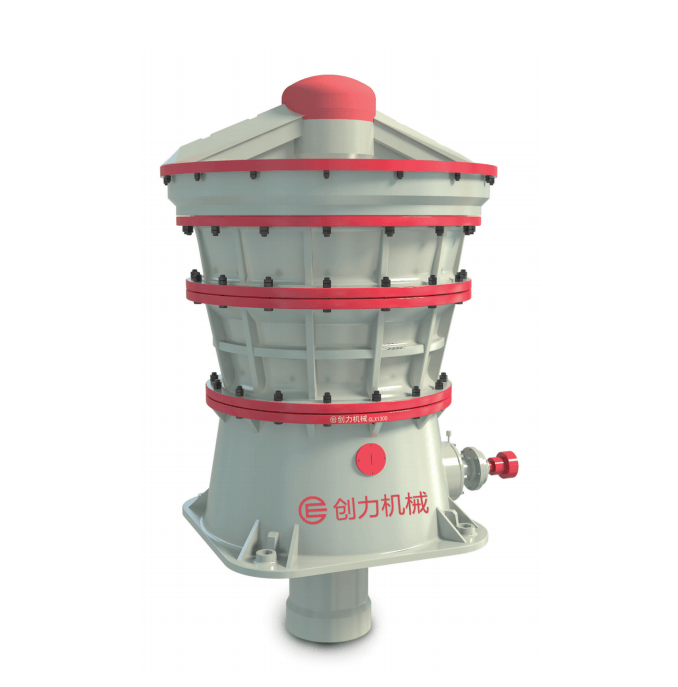
CLX Series Intelligent Hydraulic Gyratory Crusher
Guangdong CHUANGLI intelligent machinery Equipment Co., LTD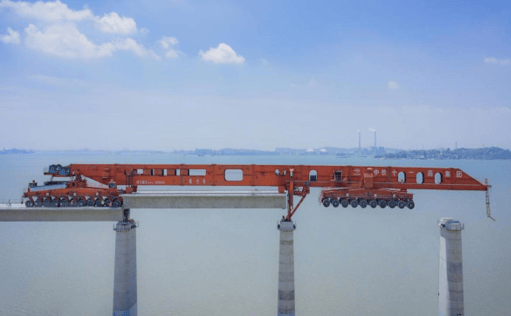
High-Speed Railway Lifting, Transporting, and Erecting Equipment: Integrated Transport and Erection Machine
Hanjiang Heavy Industry Co., Ltd. of China Railway 11th Bureau Group

Pneumatic high-pressure wear-resistant ball valve
Zhejiang Deca Control Valve Meter Co., Ltd.
QLZNGJ Intelligent Steel Reinforcement Trolley
Luoyang China Railway Qiangli Machinery Co., Ltd.